I love Paul Sheer's "LINUX: Rute User's Tutorial and Exposition" [1] It is about much more than just the shell, but you can stop whenever you want.
That was my "free" book recommendation, if you want to buy a "regular" book, then "The Unix Programming Environment" [2]
can't be beat. You can find a dirt cheap "low cost edition", or buy it second hand online.
"Sleep is for sissies." also reflected in the Ben Franklin maxim "There will be plenty of time to sleep once you are dead."
A friend had a short stint working in Taiwan and he was surprised by the fact that almost everyone took a nap sometime during the day. Long term thinking that.
This is what caused me to start using a password manager. I always knew that I should, but it seemed to be a major pain, if I had known how convenient it is, I would have switched to it long back.
Instead I first started off with my own "password generator":
    import random
    import string
    import sys

    def generate_random(length, simple):
        chars = string.printable[:-6] if not simple else string.letters + string.digits
        return ''.join(random.sample(chars, 1)[0] for x in range(length))

    def username():
        return generate_random(length=4, simple=True)

    def password(length):
        return generate_random(length=length, simple=False)

    if __name__ == '__main__':
        length = 6
        if len(sys.argv) > 1 and sys.argv[1].isdigit():
            length = int(sys.argv[1])

        for i in range(20):
            print username(), password(length)
It's also deceptive to say "iOS needs a whole OS update to update things like [...]", it needs an incremental update, which it gets, so how is that an issue at all? That you can't update them individually?
If an iPhone can no longer get a major version upgrade (e.g. a N.x upgrade not an N.0x upgrade), it also can't get any of its apps updated.
Some of my relatives who took my iPad 1s when I bought new Ipads for my kids are stuck on iOS 5.1.1. Those iPads are from September 2010, but stopped receiving any updates for system apps as of May 2012.
So yes, granular, loosely coupled updates are better than "rebuild the whole tightly coupled world and ship a firmware-diff" updates.
In particular, if an app is not tied to specific kernel features on Android, changes are it can have along life, because Android OS level services like Google Play Services can be independently updated as well.
Yes, this is true, especially in the past (up to the iPhone 4/ iPad era). Obviously hardware dependent features aren't there (eg siri when new, iOS7 camera, M7, etc) either.
Still, I have zero issues with iOS 7 on my iPad 2 and my parents are happy on their 4S.
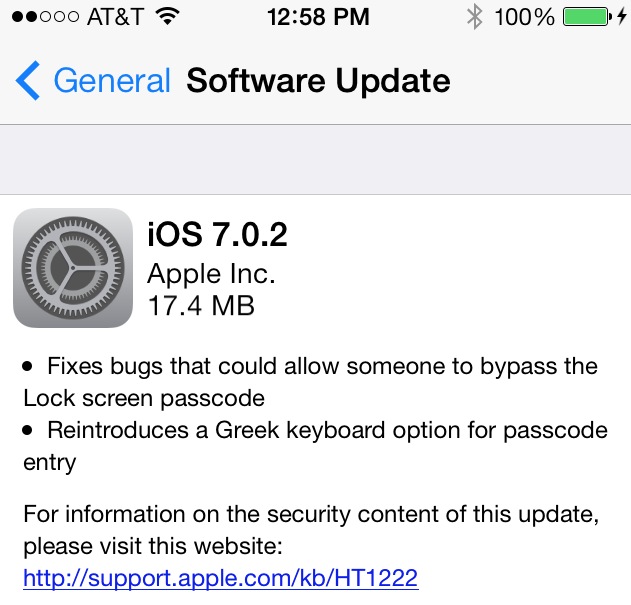
Yes, I believe that's the issue. I recall with the Maps debacle, you had to wait for a minor update of the OS to update the app itself. Obviously the "iOS needs a whole OS update" can be seen in two ways, we know that going from say 7.0.1 to 7.0.2 means that a few things on the source changed and they recompiled, but for the end user, they don't receive a patch of say 15MB with what has changed. So in that respect iOS needs a whole OS update to update things like Maps (not the data obviously, but the source of the app).
The issue there is that for someone living in a country where data is expensive, a 10MB download is better than an ~800MB one every time there's some bugfixes/app updates. Plus from my knowledge, Play Store can deliver a patch of the app, instead of downloading the whole 10MB.
Right but there were many other good mapping apps at the time Apple introduced their maps app, and since then there has also been the Google-developed Google Maps app — all these are updated individually.
Aside from Maps (for which there were alternatives) the other apps haven't really had any urgent patches bundled into minor OS upgrades that I can recall.
I was cherry-picking Maps, but I remember that not all iOS apps were updated to the iOS7 look and feel when it came out, it was only at point releases that the few that weren't updated received the update. If Apple has a new shiny Safari browser ready, they have to bundle it with the whole OS update instead of pushing an update on the App Store.
One could even say that the advantage of Google being able to system app updates on the Play Store is that Android apps competing with iOS ones (not a great comparison, but Google Now and Siri) have an advantage in that Google keeps on pushing updates regularly as and when they are ready, whereas Apple would update Siri during a major OS update or the incremental ones. [I am aware that back-end services/responses are updated regularly by both, but I'm referring to code which would change an app's behaviour].
> I was cherry-picking Maps, but I remember that not all iOS apps were updated to the iOS7 look and feel when it came out
This is not true for apps that come with the OS. Some Apple apps were updated later, but only those that come from the App Store like any other regular 3rd party app.
The advantage Google has to be able to update core apps from the store instead of through OS updates is specific to Android's nature, because it allows them to work around OS updates not being available to customers (because of carriers, OEMs, whatever). Apple doesn't have that problem because they update the OS themselves. Also, Google likes to update its software more often than Apple does.


That was my "free" book recommendation, if you want to buy a "regular" book, then "The Unix Programming Environment" [2] can't be beat. You can find a dirt cheap "low cost edition", or buy it second hand online.
[1] http://rute.2038bug.com/index.html.gz
[2] http://cm.bell-labs.com/cm/cs/upe/