There's a tremendous advantage in making new things feel "comfortably familiar". His iPad drawing apps are great examples. I showed Paper to a Mom recently, who immediately purchased the full kit for her kids.
It's interesting to me that the riotously successful iPhone 4 has a somehow more familiar form than the iPhone 3. The Braun influence let Apple step out of a specific time and make an object that doesn't feel out of place on a Mad Men set.
It has a comfortable approachable familiarity, unlike the other plasticky gizmos at the mobile booth in the mall. These are known materials, glass and brushed steel, familiar to the touch, and emphasize the touchability of its OS.
I think that definition misses most of the point that the similarity is a deliberate throwback. I'd say a skeuomorph is a (often otherwise unnecessary) design feature that makes a new object feel familiar.
"Skeuomorphs are material metaphors. They are informational attributes of artifacts which help us find a path through unfamiliar territory. They help us map the new onto an existing cognitive structure..." — Nicholas Gessler
> You seem to be saying the he's very talented, so it's likely not a lack of ability, but a lack of will.
False dichotomy ... If a developer does quality work as claimed above, its unlikely he's missing deadlines from lack of will, wasting time, or laziness.
Thankfully the post continues by offering more likely reasons:
> there are blocks in his way preventing him from executing ... feature creep, unexpected maintenance, infrastructure problems, people problems... figure out how to help fix those problems, rather than just hand-waving as "missing deadlines".
> he is consistently missing deadlines and has failed to be very productive. His work is of top quality (why I selected him), but his progress is disappointingly slow
Programmers "misunderestimate" deadlines. There are countless books written about this, and very little to do about it other than recognize it as an inconvenience.
The largest factor is usually "scope creep", where business interests inject additional details as the project progresses, each of which adds time but rarely get adjusted into the estimate. All these time deficits accumulate and interact to snowball delays far beyond expectations of both technical and marketing teams.
Either stoically push deadlines back for every change, or ruthlessly postpone these requests till future releases.
Also keep in mind that if your startup is doing something new, you're often asking for deadlines on "inventing the lightbulb". It will work when it works.
Startup development is usually not "engineering". Building a bridge is a known and quantifiable effort. Inventing a new business engine is often not.
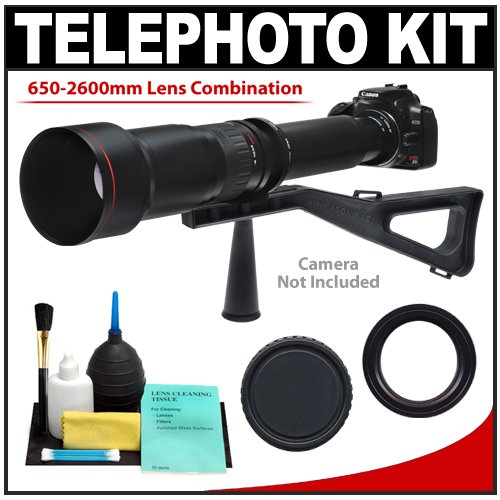
In the video I didn't see a medium white Canon lens as illustrated there. I'm not sure guessing at what a man in a hostile zone is brandishing from behind a corner is going to help:
Whatever it is, don't duck in and out behind corners pointing your black tube at military gunships or approaching convoys. Don't bet your life on whether the guy behind the turret paid to keep the zone clear can sort that out while you pop in and out of view.
Right, because photo stills from "collateralmurder.com" are intended to convey the ease of identification from a moving helicopter during a live situation? There are other form factors for RPGs:
I wouldn't want to be wrong on the fly about whether it was an RPG or a black telephoto barrel that's sticking around the corner aiming at my crew. Presumably I'd use other cues to help decide.
The site leaves out stills showing the key decision-triggering factor - surreptitious behavioral cues. Here is one they left out:
The site talks about the cameraman shooting a picture of "whatever is occurring further down the street" but the video, even in slow replay (that the airmen didn't have in the moment), suggests the man is taking cover then popping out to aim at the helicopter. The man appears to "engage" the helicopter. Thinking in context of 2007, that was incredibly dumb:
Want a picture of an American chopper while you're walking in a hostile zone with militia carrying what even "collateralmurder.com" admits "might be a weapon" and "appears to be a weapon" -- ok, stand in the middle of the street with your camera, wave your obvious press card while wearing your obvious press jacket, and take your picture. Don't duck around corners then share the intel with your gun carrying group.
Troops made a call about the RPG vs camera (though certainly doesn't look like a white Canon lens as shown in the website, looks black, and that tube and the way he aims it sure looks like bazooka or anti-tank RPG considering troops can't see around the corner). After that judgment call was based on behavior more than identifying the weapon, what happened after that could have been interpreted as combatants feigning nonchalance until their next chance to ambush from behind cover.
Even assuming it's an unmarked photographer, presence of a war correspondent in a hostile zone does not mean the armed men with him are not combatants, that they should be immune from attack, or that they should be free to wander around armed studying long distance photo intel of their enemy to better plan an ambush.
If a helicopter is not a good platform to do this work from then it shouldn't be done from a helicopter.
The whole reason this stuff happens is because at 'stand-off' range the person in the chopper might be safe but those on the ground are no longer to be identified. It's the doctrine of force protection that is the cause here, not some hyped up kid with a trigger happy finger. He shouldn't have been there in the first place.
Helicopters are not good at police work, they're good for killing people long distance without too much discrimination. Better zoom lenses would be a mixed bag, it would give you even less field-of-view with a more jittery aim.
Choppers are great at evacuation and for killing people and destroying stuff.
Boots on the ground are better at identifying friend-or-foe (and even then there are plenty of mistakes) but are more vulnerable.