I heartily agree! I love how the structure of contra dancing connects so many people. The local dance community has made the city I live in actually feel like my home now.
The specific moves and calling during the dances make it so easy for beginners to pick it up, but there’s a lot of flair and flourishes that advanced dancers can add to keep things interesting.
Since starting a couple years ago I’ve made so many incredible friends, gone to dance camps, and began calling my own dances! I never expected to be on stage with a microphone but now it almost feels normal to have a hundred people act out the dance moves I give them.
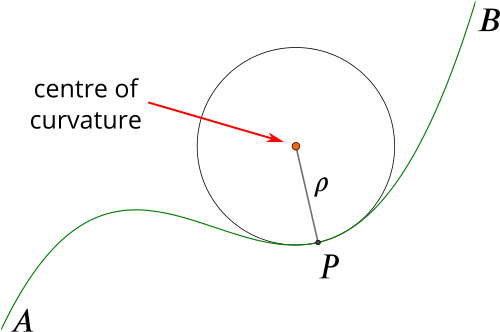
Thanks. Unfortunately, I noticed an error I made during some rewording: "an low-curvature-radius-but-still-near-horizon effective theory". The indefinite article should be "a", and the reciprocals are wrong -- the radius of curvature near the horizon is high and the magnitude of the curvature scalar is low (it's a function on position in spacetime and goes to infinity as one approaches r=0; that behaviour of the Kretschmann scalar is used to show there's an actual curvature singularity rather than some artifact of a choice of how one chooses the "r" coordinate).
There's a fun way you can try seeing individual photons yourself! With a Nuclear Spinthariscope, somewhat popularized in this XKCD comic
https://xkcd.com/2568/
You can buy them for about $50 from some science education sites. It's quite a conversation starter, as long as you're ready to sit in the dark for 15 minutes.
This was a time me and my partner spent far too much effort building contraptions to try and stay cool. Sucking colder air from the apartment hallways, converting a single-hose portable A/C into a dual, and others.
But an especially effective project was an experiment to determine exactly what window covering would reduce heating from direct sunlight the most. We could only cover the inside of windows, and I had assumed aluminum foil would work best, but wasn’t sure.
I set up a test of various materials and stuck them to my window with a thermoprobe and some insulation. I tested printer paper, various foils, and plastics.
Plain old white printer ended up performing the best, and aluminum foil being significantly worse. Best part about paper was it still let a lot of visible light in, while reflecting IR.
I have 3 large skylights which cause the rooms they are in to get very warm in the evening when it’s sunny. I used the Gila window film that is designed to block heat and UV but allow light through. Though somewhat expensive at around $50/roll to cover 2 skylights, it works extremely well and I wish I had used the film when I first moved in. A huge difference in temperature though I don’t have the empirical numbers. The film is adhesive and requires you to do some acrobatics to apply upside down in a skylight but very doable with a helper. It should be removable with a hair dryer.
During the heatwave I set up an evaporative cooling system by hanging wet sheets in front of open windows on one side of the house.
I had a cool draft running through the house, and out open windows on the other side.
During the worst part of the heatwave I was re-soaking the sheets every 15 minutes, which was a hassle, but otherwise it worked well, I was able to bring the room temperature down by about 10°c.
For some background, you probably know that the AC works by sucking in air and then outputting one stream that's hotter and one stream that's colder. The cold air is blown into the room and the hot air is ventilated out the hose. The problem now is, that the hot air you blow out of the room creates a vacuum and in turn sucks in hot air from the outside. So you constantly take some of the nice cool air of your room and heat it up and blow it out of the building. The dual hose setup instead takes air from outside for the heating up part.
The dual-hose setup should go in tandem with a well isolated window insert. For my mod, I simply taped a cardboard box to the inlet side of the AC unit and created a second opening into the polycarbonate plate covering the window opening.
> Did you manage to get an improvement of efficiency?
Yes, definately. I didn't do any scientific measurement, but after the mod, my workspace did get a lot cooler than before.
> What model of A/C were you using ?
De Longhi Pinguino PAC N81
It probably helps quite a bit, especially when a lot hotter outside than in. (But that's often not the case where I live south of Seattle.) But when I move to IL, I'm thinking mini-split is much easier solution for 1-2 room apt.
not op but was in same situation for few years as in my region A/C is somehow luxury and a lot of landlords don't mount them.
the issue with portable A/C is that most of the units needs to stay inside apartment, the cooling happens by compression/decompression of coolant, which produces heat and cold. so the A/C unit is producing additional heat that it needs to chill, which makes it inefficient. also these units are loud as fuck, most of them above 65dB.
so if you are in need, look for units that have the ability to channel cold air to the house from outside. otherwise you should always avoid portable A/C as it is really inefficient.
I think it's probably good to know for every engine and besides, it's a beautiful book.
That being said, armed with my baby knowledge of programming patterns, I then did find it frustrating that today's engines are very high level and quite opinionated about how you code. Take for example Godot. It's not 'quite' an ECS and there are certain ways to script things which you should follow.
How to fit the patterns from this book into a Godot game is a whole other ballgame.
This book makes me want to write my own engine. Not to deal with the technical details, but to be in control of the program logic. This excellent book makes you want to worry about the stuff that engines abstract from in their own special way. That's not efficient from the standpoint of getting a game done - things are done in Unity or Godot in their specific way for good and battle-tested reasons.
I've been working on a game engine for several months now. It's a similar kind of hell to working on an OS (though easier to debug...until you start using threads), but it's fun.
Yes, absolutely, 100%. It's engine and language agnostic; many of the examples are written in C++ in lieu of pseudocode, but he also goes into where C# differs in behavior enough to affect the pattern.
It was my understanding that iOS devices have kernel or hardware checks prevent unsigned code from running. This is why JIT languages don't work there.
Is that true? If so, how to remote code execution exploits like this work?
Correct, most processes on iOS do not have the ability to JIT code. Usually exploits such as these rely on return oriented programming techniques (https://en.wikipedia.org/wiki/Return-oriented_programming) to bypass this, although Apple has added hardware mitigations for this in its newer chips.



The specific moves and calling during the dances make it so easy for beginners to pick it up, but there’s a lot of flair and flourishes that advanced dancers can add to keep things interesting.
Since starting a couple years ago I’ve made so many incredible friends, gone to dance camps, and began calling my own dances! I never expected to be on stage with a microphone but now it almost feels normal to have a hundred people act out the dance moves I give them.
reply