> Some banks have already begun dabbling in these areas without regulatory clarity. Earlier this month, U.S. Bancorp (USB.N) announced it was launching a cryptocurrency custody service for institutional investment managers.
This is fascinating. Within a mere 10 years, Bitcoin has gone from a toy to something now intersecting directly with the US banking system.
With each integration point, Bitcoin gets more difficult to legislate out of existence or destroy through capricious police action. Aside from Tether, this is one of the biggest risk factors cited by those who have studied Bitcoin in detail.
The fear that governments were going to take down bitcoin was always overblown. It has a basis in the libertarian idea that governments hate & destroy all good things, and bitcoin is a good thing, thus the government will hate & destroy it. Regulators were skeptical at first, but that quickly gave way to accommodation.
But this is what success always looked like for bitcoin. Most people want the ability to assign custodians to their assets; they want people to be able to identify their assets from other peoples' assets; they don't care about the ability to bury digital treasure somewhere. And importantly, most people invest with an eye on ROI, not for some philosophical purpose.
Bitcoin is mainstream, and has been for a while. And now the mainstream buyers are want mainstream financial management structures which are opposed to the views of the people who bought btc before it was cool.
BTC is mainstream in all the ways that don’t matter. Fundamentally, it doesn’t work for everyday transactions. The only transactions for BTC now are through exchanges where the exchange never actually passes “physical” ownership to the bankee. That’s antithetical to the whole point of BTC.
BTC now is just mass FOMO over not coming in to the Ponzi scheme early enough to still make money.
Bitcoin doesn’t need to be used for everyday transactions, just like gold doesn’t need to be either. That’s not it’s strength. It’s strength is a store of value that is highly resistant to fiat type inflation.
The article begins with the idea that the causes of the Great Depression are not known or too numerous to pin down. It then continues by claiming that "recent scholarship has resulted in striking agreement on the reason for the crisis." The cause of the Great Depression was the gold standard, according to the article:
> ... The constraints of the gold-standard system hamstrung countries as they struggled to adapt during the 1920s to changes in the world economy. ... Central bankers continued to kick the world economy while it was down until it lost consciousness.
What this article ignores, like countless articles before and since, is the Roaring 20s. Articles like this treat the Great Depression as an event that hit the US economy out of the blue. But even superficial study of the ten years prior reveals something obvious: a massive, compounding, technology-fueled asset bubble.
The article also ignores the event that kicked off the Roaring 20s: the depression of 1920-1921:
This depression resolved itself under a gold standard regime and with minimal intervention by the Federal Government and Federal Reserve.
50 years ago the US abandoned the last vestiges of the gold standard. Today we find ourselves in the middle of a technology-fueled asset bubble. The US president talks, without a hint of embarrassment, about the need to borrow to continue to service debts. This is, of course, the very definition of a Ponzi scheme.
Whatever this comes to, we won't have the gold standard to kick around. It's been out of the picture for decades. What happens when the world's governments decide to outdo each other on how much currency they can conjure into being?
It's extremely HackerNews-ish of you to propose that the author of the article ignores your pet theory.
The author of the linked article is Barry Eichengreen, widely recognized as the premier scholar of the Great Depression. The article references about 900 pages worth of other articles, believe me: your pet theory about the 1920's events is considered in the conclusion. They're not ignoring it because they read fewer books than you.
> The US president talks, without a hint of embarrassment, about the need to borrow to continue to service debts.
Governments don't work like a household. What matters is borrow costs and use of funds. If a government can borrow and the net growth generated is greater than the interest rate on the debt, it's a good thing to borrow. Like any business debt.
A government can be in debt forever, the only thing that matters is borrowing costs and growth rate (and how the growth is generated see eg. Chinese real estate for malinvestment).
> It's extremely HackerNews-ish of you to propose that the author of the article ignores your pet theory.
What pet theory is that? All I did was to mention two historical episodes that preceded the event under discussion, and which the paper fails to mention.
> The author of the linked article is Barry Eichengreen, widely recognized as the premier scholar of the Great Depression.
So what? We're talking about the paper, not a person.
> The article references about 900 pages worth of other articles, believe me: your pet theory about the 1920's events is considered in the conclusion.
On what pages does the paper take up the issue of the speculative bubble leading up to the Great Depression?
> Governments don't work like a household. What matters is borrow costs and use of funds. If a government can borrow and the net growth generated is greater than the interest rate on the debt, it's a good thing to borrow. Like any business debt.
A main MMT talking point. Yes, I've read Kelton's book and yes, a government that prints its own currency is not like a household.
MMT is an experiment. For all our sakes, I hope its proponents are right.
> A government can be in debt forever, the only thing that matters is borrowing costs and growth rate (and how the growth is generated see eg. Chinese real estate for malinvestment).
What if malinvestment looks like investment until it doesn't?
That's right. If a individual accumulates too much debt, then the individual can choose to discharge obligations through bankruptcy resulting in loss of credit, or death of the debtor, and ultimately the lessor is on the hook for the risk, and those two parties with agency over the debt contract are the only two who directly must suffer consequences. (yes there is tangential collateral damage, like if there are dependents, but it's not a whole lot).
If a government goes into debt, it externalizes the consequences of the spending to the public. "well, we vote for our representatives who spend". But that's not true. Suppose you were 16 (or, even more extremely: -1 years old), and couldn't vote against representatives voting for something stupid, like, say the US government invading Iraq. You are still on the hook for paying off the costs of those decisions. Sovereign debt is an end-run around the principle of "no taxation without representation", and it's in a much more morally questionable place.
Or, you can choose to reject the principle of "no taxation without representation", which if you are happy to do that explicitly and publically I will shut up.
Finally, the burden of amortizing sovereign debt is often achieved through the printing press, which in the long run causes inflation. Households usually can't do this. This disproportionately hurts the poor, so that adds onto the moral objection to sovereign debt.
> Or, you can choose to reject the principle of "no taxation without representation", which if you are happy to do that explicitly and publically I will shut up.
That "principle" covers some territory a lot broader than the specific way you're requesting it be interpreted. The idea that those born into a country cannot be held accountable for debts accrued before they were born—or anything relating to the situation of the budget before they have a say in government, I suppose—is, I think it's fair to say, not a common interpretation of the slogan's meaning, now or (most certainly) in the past.
That's not even to say you're wrong, morally or whatever, but your tactic of trying to pin someone down with these words isn't a good one.
> but your tactic of trying to pin someone down with these words
Sir, this is hacker news.
Ok, but seriously, to put it in a less-memey way. Many of the posts that I post about topics where I feel like "the word must be spread" are performative but interesting. I actually don't give a shit about convincing the parent poster of mine. Most of those people are going to be closed minded, bias-confirming, and unreceptive to rethinking their belief structures. I care about giving ideas to receptive people who are reading it with a memorable twist. Probably most people have not considered the injustice of sovereign debt explained in the context of "taxation without representation". These folks can then digest what I have to say, and re-articulate it with their own personal touch (possibly more effectively than the way that I did), and then spread the word to 100 unreceptive people with a low yield (say, 2%) and 100 more receptive people, who will then spread it, etc.
Anyways, given your response it seems to already have worked. Here you have given an alternative way to deliver the same message. Fantastic. Also, my response has enough upvotes for me to think, "gee, here are X more people now have this brainworm about the fundamental unfairness of sovereign debt".
>Governments don't work like a household. What matters is borrow costs and use of funds. If a government can borrow and the net growth generated is greater than the interest rate on the debt, it's a good thing to borrow. Like any business debt.
If that was an attempt to show a difference from households, I don't see it, since those thing are equally true of households.
A house hold can spend to consume or invest, and I was only replying to the remark you made, not whatever new argument you might make later to salvage it.
In many ways, the concept of "printing money" is too simplistic to describe how the banking system and monetary systems interact with each other, especially once you get your head around the fact that money is (almost always) "created" endogenously through the expansion of balance sheets.
You can't just think like a customer going to the bank; you have to think of it like a number of actors in a complicated network of credits and debits as well as global trade with imports and exports.
The gold standard was abandoned because it is a terrible idea for civilizations that have technologies like accounting systems and currencies that are difficult to counterfeit. Tying economic expansion to the ability to mine and store one type of element doesn't make any sense.
There are countless asteroids out there with quadrillions of dollars of precious metals. Does that mean the first private company to create a currency "backed" by a claim to one of them is worth more than the US economy? No, of course not. The US economy produces food, shelter, water, goods, services, etc etc. It's worth far more than a chunk of atoms. Even if you could magically spirit those atoms into a vault somewhere, what do you do with them at that point?
Modern monetary theory is doing just fine, and so are all of the nations issuing fiat currency, selling bonds and notes, building infrastructure, and providing fertile ground for markets to do interesting things. Nostalgia for the gold standard is just way for people to claim the superiority of economic theories that are simply not useful anymore.
Modern monetary theory isn't doing fine and neither are the countries with fiat currencies. They're all in absolute crisis because their economies are built on ever-shifting quicksand.
The "gold standard" isn't a theory of economics, it's an observation. Money is a medium of exchange - a mechanism for judging the relative value of unlike goods. That is literally impossible if the thing used as money is non-economic, like fiat currency. The money must be itself a tradeable commodity. Commodities that are useful as money have all the traditional traits you learn in elementary school, and gold is the traditional and current best fit for those traits.
Belief in the viability of "monetary policy" and fiat currencies always comes from a belief that no one can really know how economics works, so whatever anyone does right now might not work in the future. Well, obviously that's going to be true of people who refuse to learn what economics as a field actually is.
> Modern monetary theory isn't doing fine and neither are the countries with fiat currencies. They're all in absolute crisis because their economies are built on ever-shifting quicksand.
Okay. What countries use representative currencies and how are they doing?
> The "gold standard" isn't a theory of economics, it's an observation. Money is a medium of exchange - a mechanism for judging the relative value of unlike goods. That is literally impossible if the thing used as money is non-economic, like fiat currency.
Are you saying the world economy is literally impossible?
> The money must be itself a tradeable commodity. Commodities that are useful as money have all the traditional traits you learn in elementary school, and gold is the traditional and current best fit for those traits.
You just said money a medium of exchange. As long as both parties agree to the transaction, and it wasn't a barter, whatever wasn't the good or service was the money.
And you don't mean the money must be a trade-able commodity. No one is going to walk around with a set of weights and tubs of water to determine the purity of coins so they can buy or sell a sandwich. You're making the argument that if the currency could be exchanged for lumps of metal at a treasury office that it would somehow be an improvement.
> Belief in the viability of "monetary policy" and fiat currencies always comes from a belief that no one can really know how economics works, so whatever anyone does right now might not work in the future.
I honestly have no idea what you're saying here. Which economists claim that no one can know how economies work?
> Well, obviously that's going to be true of people who refuse to learn what economics as a field actually is.
So far the fiat currency system has been a part of the most rapid progression of technology and trade in recorded history. I'm not saying it was the driver behind it, but that has been the dominant currency system in place for the last 70ish years. It absolutely has flaws, and absolutely can be ruined by corruption and poor governance. It also works so well that people who hate fiat currencies still use them every day. I'd bet .225 ounces of 99% pure gold alloy that you bought your lunch with it.
> So far the fiat currency system has been a part of the most rapid progression of technology and trade in recorded history.
There is an argument to be made that the progress would have occurred regardless of the currency system in place. That is to say it is nothing more than coincidence that fiat was in place during this period of progress. The progress is the result of capitalism not the currency system. However, had this progress occurred under a gold standard we would have been much better off. Fiat monetary policy has bled value from the economy for nearly 90 years. All of that value lost to inflation would still be in the economy if we had stayed on a gold standard.
Where do you get this notion from? If you separated the economic system from the global economy during the biggest expansion of the economy ever, we’d have been even better off? Based on absolutely what information?
The growth would have happened anyway. The economic system is just a way to trade wealth and keep score. It doesnt matter if it is fiat currency, gold or grains of sand that are traded. Being on a fiat system allows an outside player to siphon value out of the economy for their own gain the same as a tax. If we had been on a gold standard during this amazing growth period the only way an outside party could siphon off wealth is with taxes.
If we were on a gold standard and the government took 2% of every single transaction for the last 90 years we would still be better off. Inflation is a tax that is compounded over time.
Globalization has exploded since we got off the gold standard. It was heavily slowing the world economy down. There just isn't enough gold to represent all the amazing things people want to do.
With globalisation happening about the same time as coming off the gold standard I understand the conclusion.
There are two flaws in the logic leading there. First, globalisation is the result of the technonogy, particularly transportation and materials, available. Second, even with a gold standard the value of gold increases over time. A single unit of gold is able to buy more as the economy it represents grows. On the ground, with dollars pegged at an amount of gold, you would see this as prices decreasing as they were for the history of the US gold standard.
>Money is a medium of exchange - a mechanism for judging the relative value of unlike goods. That is literally impossible if the thing used as money is non-economic, like fiat currency. The money must be itself a tradeable commodity. Commodities that are useful as money have all the traditional traits you learn in elementary school, and gold is the traditional and current best fit for those traits.
If "money" is a physical medium of exchange then advanced economies do not have or need "money".
Our modern banking system simply lets people promise each other goods and services. It's effectively a system built around relationships.
Food for thought. In 1964 you could take two silver dimes and purchase ~1 gallon of gas. Gas was ~20 cents per gallon. Dimes were 90% silver.
Fast forward to 2021. You could take two silver dimes to a coin dealer, sell them for fiat currency, and purchase 1 gallon of gas. Gas is ~$3.50 per gallon, silver is ~$23 per oz, and 2 silver dimes from 1964 contain ~5grams of silver.
But using 2021 dimes, you need 35 dimes to purchase a gallon. Precious metals have kept their value. Fiat currency has lost nearly 90% of its value since moving off the gold standard. The government needs more money, they print it. Based on their promise to pay it back later, with cheaper inflated currency.
Paper currency representing a given quantity of gold/silver/etc is a good idea. When you divorce it from that backing value is when governments print money to inflate. We all lose when that happens.
Gas is more expensive because fossil fuels are more difficult to extract, we have some environmental standards instead of none, consumption has skyrocketed, and there's an organization called OPEC that maximizes the price. Pretending that none of that would be true if dimes still had silver in them is ridiculous.
If you had taken those same two 1964 dimes and put them in a DJIA index fund, you'd have $7. That's because storing shiny things in a vault does not contribute to economic activity. It doesn't invent anything, manufacture anything, provide any service, or create any new markets.
No one thinks that their economy would be better off with a huge stockpile of gold instead of a huge stockpile of CPUs. No one thinks that a reduction in mining capacity should restrict the amount of currency available for business loans. Representative currency is a vestigial technology that is no longer useful.
Precious metals are not typically considered as drivers of economic activity. They are used as hedges or backstops. Your $7 in an index fund after 57 yrs doesn't sound that productive being only 2x what the value of the silver is.
As I have said many times on HN, a gold standard protects the wealth of the people from government excess. That is also why the gold standard was ended by government.
The inflexibility of a gold standard is a benefit. More gold or an increase in gold value is required to represent greater wealth. The gold can be traded for or mined. However, the gold standard ensures that the dollar you earn today maintains purchasing power for as long as you care to keep it. Your gold backed dollar can't be made worthless in a generation by the excess of politicians seeking money, power, and control.
Politicians are people subject to all the same emotions as you or I. Money and power are powerful motivations for corruption. There is access to a lot of both in government. The gold standard was a check on greed at the government level and in turn a restriction on the power government had to manipulate the economy for the benefit of a few.
Housing wouldn't cost a million$ if not for inflation. There has always been demand, and people always found ways to meet it. But with inflation, especially high rates, your mortgage was paid back with dollars worth less than when the house was first purchased or built.
How is this a concession to the old? Why is it that someone worked for 30 yrs to pay off their mortgage shouldn't get the same treatment, mainly "appreciation" due to inflation that everything else gets?
Honest question - is this the same argument we hear about "forgiving" student loans, meaning having people who didn't sign up for them, agree to them, utilize them, or even go to college, pay of the debts of those who did?
> More gold or an increase in gold value is required to represent greater wealth.
Not true. A restriction in supply can raise the price, and the discovery of new sources can lower it. Plus wealth is entirely subjective. Would you rather have a warehouse full of food, water, and ammunition during a crisis, or a warehouse full of gold? (Hint: people may not want to trade food for a soft metal that can't be fashioned into anything but decoration.)
> The gold can be traded for or mined.
It can also be lost in a shipwreck[1] contributing to a banking panic[2].
> However, the gold standard ensures that the dollar you earn today maintains purchasing power for as long as you care to keep it. Your gold backed dollar can't be made worthless in a generation by the excess of politicians seeking money, power, and control.
Of course it can. Private banks failed all the time, despite claiming that you could trade their notes for gold/silver. Governments can simply abandon the gold standard (and they did).
It all comes down to the fact that gold backed currency does not solve the primary problem of credibility and corruption at the levels of institutions and governments. It only adds another variable. Your ability to trade your paper for gold is still dependent on the ability and willingness of that bank or government to make the exchange. If they say no, what are you going to do?
The next step you could take is to refuse currency and to use only gold/silver/clam shells/whatever to do your transactions, which simply puts you at a huge disadvantage in any modern economy. Literally no one is going to do business with you if they have to add the burden of authenticating your clam shells to buy your product or rent your time.
In the end, there is no functional difference between "We promise that we will give you a grain of gold for this dollar if you ask" and "We promise to not mismanage this currency into hyperinflation." During an existential crisis, both promises may be broken. Hell, they probably will be broken. But the promise on the paper you're holding isn't going to matter either way.
Before your examples Europe had the Great Bullion Famine during the 15th century that caused deflation across the continent due to the lack of gold. This was ended when the Spanish started flooding Europe with vast amounts of gold from the Americas, which then caused massive inflation instead.
Yes, all of those bad things can happen. A gold standard is not perfect. The goal isn't to be perfect. It is to have a currency that is fair to the greatest number of people. Gold is a currency trusted by all, fiat is a currency of force.
In crisis I would rather have the food, water, and ammunition. What a silly strawman. A warehouse full of survival supplies is incredibly valuable during crisis but it is not durable and must be maintained when not in crisis. For the long term representation of wealth I would rather have a vault of gold just like every nation on the planet. Nearly everything else degrades in a fraction of a lifetime. Gold will be exactly the same after sitting untouched for millennia. For the long life of nations this is extremely important. For the comparatively short life of a human this is less important but still valuable.
A casino is the best analog that I can thing of at the moment. When you want to play in the economy of a casino you are required to change your dollars for chips. You have to trust that the casino is not going to steal your dollars and will actually give them back. They practice full reserve banking where every dollar represented by chips is in their vault. The same is true for a gold standard economy as practiced sans full reserve. Gold is the money, banks do the job of verifying gold and exchanging for easily carried and traded tokens, dollars. You have to trust that banks or governments aren't going to steal your gold. If you don't trust them you change your dollars back to gold. If a lot of people lose trust you get bank runs. With fractional reserve banking there isn't enough gold to pay back every dollar and you get crisis and bank failures.
With any currency its value comes down to trust. A gold standard allowed people a way to keep their wealth in a durable form in times of low trust with no conversion cost. It allowed people to "take their ball and go home" so to speak. No governments needed to trust another country's fiat. The money exchanged in trade had a real, verifiable, persistent value.
Yes, a gold standard has some problems. Barring straight barter with physical gold it is still the fairest most robust currency system humans have come up with. Whatever excuses the US Government gave for ending the gold standard it still acted unconstitutionally. The government was facing a damaged economy and dwindling gold reserves as people and countries redeemed dollars for gold. The government saw their dwindling gold reserves as a problem instead of a function of a gold standard. This is the same as a casino seeing a lot of people cashing chips in and seeing their dwindling cash supply as a problem. In both cases it is a loss of trust in the token issuer that caused their supply to dwindle. It wasn't a problem with the currency it was a lack of trust in the issuer that the issuer saw as a reduction in "their" money that needed to be stopped. It was never "their" money to start with. It always belonged to the people. The people were just taking their ball home.
> Gold is a currency trusted by all, fiat is a currency of force.
> You have to trust that banks or governments aren't going to steal your gold. If you don't trust them you change your dollars back to gold.
> With any currency its value comes down to trust.
Do you see the problem here? The entire argument for the gold standard always goes back to trust of the institution that is promising to exchange paper for gold. There is a long, long history of banks and governments unable to produce lumps of metal when demanded, and that has caused panics and recessions. Even if they were sound but had logistical issues moving gold around and exchanging it.
Again, there is no difference between a piece of paper that promises to be worth some amount of gold and a piece of paper that promises not to mismanage a fiat currency. They both depend on full faith in the institution that made the promise.
> A gold standard allowed people a way to keep their wealth in a durable form in times of low trust with no conversion cost.
If they had the physical gold, there is always a conversion cost. A lot of immigrants use gold as a bank of sorts, and they always lose a few points when they sell and buy back. In a crisis, as we both agree, gold is worthless, or at least worth a lot less as everyone tries to sell theirs for food. Holding paper that should be exchangeable for gold has no more inherent value than a fiat currency.
> It allowed people to "take their ball and go home" so to speak. No governments needed to trust another country's fiat. The money exchanged in trade had a real, verifiable, persistent value.
It allowed people to have a piece of paper with a promise that they could "take their ball and go home" so to speak. No governments needed to trust another country's fiat, they needed to trust they weren't lying about their gold reserves and their management of it. The money exchanged in trade was a promise that it was backed by a real, verifiable, persistent value.
> Whatever excuses the US Government gave for ending the gold standard it still acted unconstitutionally. The government was facing a damaged economy and dwindling gold reserves as people and countries redeemed dollars for gold. The government saw their dwindling gold reserves as a problem instead of a function of a gold standard. This is the same as a casino
The government saw their inability to manage the money supply when it was tied to gold as an existential crisis to the Union. If you were in charge, based on your arguments here, you'd rather let the south secede or win the Civil War than tarnish the reputation of the gold standard. That's a bit more serious than a casino going bankrupt.
> It wasn't a problem with the currency it was a lack of trust in the issuer that the issuer saw as a reduction in "their" money that needed to be stopped. It was never "their" money to start with. It always belonged to the people. The people were just taking their ball home.
And when many of those people tried to take their ball and go home, there was no gold for them to collect. The system failed because the institution was mismanaged, or because there was a panic and they couldn't handle the logistics of moving lumps of metal around. That's the whole reason the world has moved away from the gold standard. I'm not sure how you see the long history of it's repeated failures as evidence that the problem is not the gold standard, but the lack of a perfect implementation of it.
Would you be happy with no paper certificates for gold and just use gold coins? From your earlier argument I suspect the answer is no.
Every single argument you have made is that governments and banks cant be trusted with paper money even when it is backed by gold. So, why do you push for fiat currency?
If government and banks are not to be trusted with paper money then hard currency is the only solution left that doesn't require trust in anybody.
> Would you be happy with no paper certificates for gold and just use gold coins? From your earlier argument I suspect the answer is no.
Everyone's answer is no. Even during the prime of the standard, people made transactions on paper currency promising they represented gold because no one is going to lug around heavy coinage, spend the time to authenticate it (since it's easier to counterfeit than modern paper/plastic currency), or have to decide between making trips to banks or having a pile of it they have to constantly guard.
> Every single argument you have made is that governments and banks cant be trusted with paper money even when it is backed by gold. So, why do you push for fiat currency?
Because for every person who isn't part of the aristocracy close to centers of power, there is no difference. If a currency is mismanaged, it doesn't matter whether it promised gold or low inflation. During all of the previous crises, the first things banks and governments did is suspend specie payments.
> If government and banks are not to be trusted with paper money then hard currency is the only solution left that doesn't require trust in anybody.
If you want to live in a nation state with a credible legal system, and I think everyone does, you have to trust them to some extent. You have to trust that they won't take away your property by force, throw you in jail to take your wealth, allow someone else to do those things without consequences, or mismanage their currency to the point where it hyper inflates.
Credible governments have things like the FDIC so normal people don't have to worry about their local credit union going under as long as their account has less than $250k in it. Since the average liquid net worth of Americans is less than $50k[1], that pretty much covers everyone. It has virtually ended the problems of bank runs and panics except for black swan events like 9/11.
Even for things like the 2007 Financial Crisis, being on a gold standard wouldn't change anything. The policy mistake of removing the firewall between traditional banking and investment banking as well as leverage limits would have still led to over-speculation and CDO Ponzi schemes. The gold standard would have just added another knot to the crisis as well as provided some video footage of huge crowds trying to get specie payments and walking away empty handed. Nations like Canada avoided that entire crisis, except for what was unavoidable due to their relationship with the global economy.
Not too worried about it. It only happens during wartime for G20 nations, the last being in the 1920s/1940s. When those nations were on the gold standard.
How's that gap between the rich and the poor going?
Look, the US was on the gold standard between 1850 and early 1900s, and not only recovered from a civil war, but ALSO freed all of its slaves AND went from a backwater country to a world superpower, and reduced inequality all at the same time.
The gap is reported to be increasing, but is that actually regarded as a problem by the ruling class? They may actually prefer this, as it gives them greater chunk of power and secures their position.
In other words, the gap may be increasing and we don't like it, but this may very well be the intended "how is it going".
One case in point: in 1970's, instead of giving employees their share of profits from productivity increases, the system gave them an easy way to get into debt instead (the credit card).
The US was on the gold/silver standard from 1792-1850. Was that the reason it continued the genocide of millions of indigenous people, took their land, and then imported millions of slaves to farm that land? Maybe there are other possibilities for history other than the currency system during a given time period.
I remembered there were a series of financial crises leading up to the Civil War, and sure enough, the first use of fiat currency in the US was to solve a financial crisis caused by the gold/silver standard:
'In 1853, the U.S. reduced the silver weight of coins to keep them in circulation and in 1857 removed legal tender status from foreign coinage. In 1857 the final crisis of the free banking era began as American banks suspended payment in silver, with ripples through the developing international financial system. Due to the inflationary finance measures undertaken to help pay for the U.S. Civil War, the government found it difficult to pay its obligations in gold or silver and suspended payments of obligations not legally specified in specie (gold bonds); this led banks to suspend the conversion of bank liabilities (bank notes and deposits) into specie. In 1862 paper money was made legal tender. It was a fiat money (not convertible on demand at a fixed rate into specie). These notes came to be called "greenbacks".' [1]
Technically Continental Dollars were zero interest bearer bonds, but they were also issued to help finance the Revolutionary War[2].
So, your argument for the gold standard is not only logically incoherent, but even if it was, it's completely ignorant of the history of currencies in the United States.
> So, your argument for the gold standard is not only logically incoherent
Wrong. The argument is a refutation of the idea that economic growth cannot happen while on a gold standard, that it will be disastrous. It is an existence statement, not a universality statement.
> The argument is a refutation of the idea that economic growth cannot happen while on a gold standard,
This is correct. Rapid economic growth happened on the gold standard. The issue is not about long term economic growth, but volatility. Hard money creates an environment with lots of rapid inflation and deflation and very strong boom/bust cycles. That volatility has costs (human costs of the pain of mass layoffs) but also benefits (weaker companies are more rapidly weeded out). After the Great Depression, it was decided that the costs outweigh the benefits, but it's a legit question that should not be so readily dismissed.
You don't know that the rapid inflation and deflation relative to today isn't because of poorer coordination in the liquidity of markets, in the supply chain, because we didn't have airplaneswe didn't have computers etc.
It's like pointing out that people were starving in the streets during the depression. Well yeah. We didn't have modern agriculture, freezers were a luxury, Flintstones gummi vitamins weren't a thing for kids etc.
Who said economic growth cannot happen on a gold standard? I said it's a useless technology for civilizations that have better ones. You responded with an incoherent argument and a claim that 1850-early 1900s is a time period that shows the value of representative currency.
Instead of the straw man and the red herrings, please explain how abandoning the gold standard in order to survive the Civil War is evidence of how effective it is. Here's more context that might help:
"The beginning of 1862 found the Union's expenses increasing, and the government was having trouble funding the escalating war. U.S. Demand Notes — which were used, among other things, to pay Union soldiers — were unredeemable, and the value of the notes began to deteriorate. Congressman and Buffalo banker Elbridge G. Spaulding prepared a bill, based on the Free Banking Law of New York, that eventually became the National Banking Act of 1863.
Recognizing, however, that his proposal would take many months to pass Congress, during early February Spaulding introduced another bill to permit the U.S. Treasury to issue $150 million in notes as legal tender. This caused tremendous controversy in Congress, as hitherto the Constitution had been interpreted as not granting the government the power to issue a paper currency. "The bill before us is a war measure, a measure of necessity, and not of choice," Spaulding argued before the House, adding, "These are extraordinary times, and extraordinary measures must be resorted to in order to save our Government, and preserve our nationality." Spaulding justified the action as a "necessary means of carrying into execution the powers granted in the Constitution 'to raise and support armies', and 'to provide and maintain a navy'".
> [the gold standard] is a terrible idea for civilizations that have technologies like accounting systems and currencies that are difficult to counterfeit. Tying economic expansion to the ability to mine and store one type of element doesn't make any sense.
Hear me out. I will first start a counterstatement with two supporting points (I'm sure it's easy to find more supporting points too, but let's keep this simple).
It is a terrible idea for a civilization that exists in a system with finite resources to use a currency that is unbounded and exponential. The disconnect between the nominal economic substrate and raw reality will lead to broad class theft and environmental destruction.
"even in the long run, it’s really, really hard to cut nominal wages. Yet when you have very low inflation, getting relative wages right would require that a significant number of workers take wage cuts. So having a somewhat higher inflation rate would lead to lower unemployment, not just temporarily, but on a sustained basis."
Now, let's unpack what he says very carefully. In short it is this:
"we need to keep our society looking like it's humming by posting great employment numbers, and the most effective way to do this is to incrementally cheat the labor class out of the value of their wages"
2. As for environmental destruction, surely you can see how putting society on a compounding treadmill of devaluation encourages consumption as a driver of economic growth (if we fail to post a positive growth number, we WILL have at least a transient economic crisis), and it's patently evident that we buy more, shittier things that need to be replaced, because there is diminished opportunity cost for saving your money to buy something better and more robust: but hey, it's good for circular flow.
--
Now, if you accept that an unbounded currency is terrible for a society in a finite resource regime - then, in the big picture it doesn't matter too terribly much what is restricting the expansion of the nominal basis[0]. What matters is that something restricts the expansion. If that's physical mining of metals, the capacity to expand the currency is soft-capped to a certain rate that flexes with real economic performance -- and hard-capped to the total amount of metal in the earth; if that's some digital ledger that can't be expanded, that would be fine too, but anyways the point is it's bounded.
Or, maybe you like environmental destruction and screwing the poor. If you do, you should probably say that up front, instead of hiding it behind difficult-to-unpack-ese like Krugman does.
[0] in the small, probably cryptocurrencies (which burn to make CO2) are better than mining, which dumps mercury effluent into the environment, and maybe there will even be efficient cryptocurrencies that burn up less CO2. But all are better than, say, an economic system that has the unboundedness property AND is propped up by paying off defense contractors that build depleted uranium tipped rounds that are dropped on civilians halfway around the world.
> It is a terrible idea for a civilization that exists in a system with finite resources to use a currency that is unbounded and exponential. The disconnect between the nominal economic substrate and raw reality will lead to broad class theft and environmental destruction.
Well, this is certainly a different argument than "1850-early 1900s is a great example of the benefits of the gold standard"
> 1. For class theft, don't just take my word for it, take Paul Krugman's
Or, take his word on why the gold standard is a bad idea? (written before the EU was a thing)
"Why not emulate our great-grandfathers and tie our currencies to gold? Very few economists think this would be a good idea. The argument against it is one of pragmatism, not principle. First, a gold standard would have all the disadvantages of any system of rigidly fixed exchange rates--and even economists who are enthusiastic about a common European currency generally think that fixing the European currency to the dollar or yen would be going too far. Second, and crucially, gold is not a stable standard when measured in terms of other goods and services. On the contrary, it is a commodity whose price is constantly buffeted by shifts in supply and demand that have nothing to do with the needs of the world economy..."
> As for environmental destruction, surely you can see how putting society on a compounding treadmill of devaluation encourages consumption as a driver of economic growth (if we fail to post a positive growth number, we WILL have at least a transient economic crisis), and it's patently evident that we buy more, shittier things that need to be replaced, because there is diminished opportunity cost for saving your money to buy something better and more robust: but hey, it's good for circular flow.
I agree that inflation can drive part of the problem in the constant pursuit of growth and profit at the expense of the environment. The problem is that moving to a gold backed currency wouldn't change any of that. We know this because the regulations introduced by the EPA in 1970, just as the US moved completely off the gold standard, are the reason that the US has cleaner air and water. Along with the fact that corporations externalized the environmental costs of our consumption habits to Southeast Asia. None of that would be different if the US had stayed on the gold standard.
> Or, maybe you like environmental destruction and screwing the poor. If you do, you should probably say that up front, instead of hiding it behind difficult-to-unpack-ese like Krugman does.
Ignoring the mild annoyance of this insinuation, it remains completely ridiculous. What was the life expectancy in the height of the gold standard? What is it now? What countries are the most carbon neutral, the most environmentally sound, and have the highest standard of living? Are they using a fiat currency system?
The difference is in policy. Most of the EU is beating the US on every metric for the average person because of their laws. Individuals in those countries have rights to food, shelter, healthcare, and education, and because those governments are legitimate and relatively uncorrupted, those rights are not only recognized but realized. Having the ability to build homes, schools, and hospitals without having to dig gold out of the ground first is part of the reason why they are able to do it.
> in the small, probably cryptocurrencies (which burn to make CO2) are better than mining, which dumps mercury effluent into the environment, and maybe there will even be efficient cryptocurrencies that burn up less CO2.
Finally, we can agree. Gold makes about as much sense as cryptocurrency. When used as a mechanism to try and restrict the money supply for a given economy, they complicate the situation with zero benefits for the economy or the environment.
> But all are better than, say, an economic system that has the unboundedness property AND is propped up by paying off defense contractors that build depleted uranium tipped rounds that are dropped on civilians halfway around the world.
Please elaborate on how the gold standard would eliminate the problems of the military industrial complex and American imperialism.
> This is, of course, the very definition of a Ponzi scheme.
Most Ponzi schemes don't have the authority to levy taxes on the largest economy the in world, nor are they backed by the most powerful military force humanity has ever seen.
Anybody is welcome to download the Robinhood app, and buy FAANG/FAGMAN stocks with all your disposable income. Then you, too, will be contributing to the leading cause of the next "Great Depression", plus, you'll come out of it having become quite Rich.
> I wish I had a happier note to end this on, but honestly, my biggest takeaway from the whole experience is that maybe some puzzles just can’t be solved. We can try to attribute Jack’s problems to intrinsic biological/psychological issues (social phobia, migraines, etc.) or to environmental causes (super high rate of heroin use and OD in the community), but both sides seem fundamentally lacking in explanatory power. The vast majority of socially anxious people don’t resort to heroin, and despite the problems of these small towns, they are by no means among the worst places to live in America, let alone the world.
Earlier on, the author does speculate about what drove Jack:
> To put it another way, Jack was painfully aware that his future options were, “be a complete loser,” or “be a complete loser who feels really really good for a few hours every day.” He chose the latter.
What's striking about this is how it's possible to live this way without drugs. A brain-numbing job eight hours a day and a life-saving hobby for four. A toxic-family life but wonderful community.
It almost sounds like Tennis could have been this outlet:
> One time when Jack was in middle school, he walked off the tennis court after a well-played match, and his mother asked him how he felt. Jack said something like, “when I’m out there, it’s so nice… it’s like the rest of the world goes away and I don’t have any problems.”
I'm not sure you understand how good heroin feels. Nothing comes close, especially not Tennis or a wonderful community.
I tried heroin once, and I regret it every day, because I am 100% positive that I will never again be as happy as I was that day. If I didn't have what is effectively a dream job I'm sure that I'd be a heroin addict.
That was certainly not my experience, it was an intense physical pleasure but ultimately devoid of mental depth. Having tried most drugs I really think the whole addicted after one dose is bullshit and it's far more about your social economic circumstances.
It's much more tempting to seek out another hit if you have nothing better to do that day.
If I get drunk I become happy and will hug my friends and tell them how much I love and appreciate them. Others become aggressive and start picking fights with random people, or beat up their wives, girlfriends, etc. I don't especially enjoy being drunk though; it's alright once in a while, but there's loads of other activities that are on equal footing as far as I'm concerned.
I tried to smoke weed a few times. I didn't just dislike it but downright hated it every single time. I tried a few other drugs, and responses varied from "I don't really like this" to "meh, so this is it, is it?" Never tried heroin, so I can't speak to that specifically.
Point being: individual responses to drugs vary greatly. I wouldn't say I'm "immune" to becoming an addict, but it'll sure take a lot more than for some other people.
Some people love opiates. Personally, I hate the feel of opiates. My brain feels like it's encased in concrete. This is not a good feeling to me.
I consider myself fortunate that I don't like the feel of opiates as it means that I didn't become addicted to them from the times I needed them medically.
I will, however, point out that musicians almost universally warn other musicians not to do heroin even once. Musicians aren't exactly straight-laced, and, if they're warning you about something, you probably ought to listen.
This seems to rather callously disregard the parent commenter’s lived experience. Perhaps, just maybe, not everyone is like you; it might be different for different people? Just a thought.
That was certainly not my intention, I was trying to say that the idea that these substances will make anyone a helpless addict if they try them once is misleading and completely ignores the social context around addiction.
I agree with you that social context matters but I want to provide one data point on how psychological setting of that person matter too.
I am an anxious person prone to depression. In one especially bad period of my life I was prescribed Lexaurin (anxiolytic used to handle panic attacks). Taking that was a shocking experience - it made me feel calm, optimistic... and maybe for the first time in my life it made me aware of the ever-present baseline of anxiety that I was living with, like always. Lexaurin made me feel not anxious at all and it felt awesome. I kept asking myself - is that how other people feel all the time? I would give anything to live like that. If I had free access to it all the time, it would be really hard to resist the temptation not to use it. At the same time I can imagine that for many people - like you maybe? - taking Lexaurin would do absolutely nothing, because they live on that anxiety-free baseline their normal lives.
Addiction and the addictive ness of drugs is a multi factorial gradient. It requires the right psychosocial conditions, the right environment, and the right drug, and a person who might become a heroin addiction one day may not be so at a different point in their life.
Roughly 1-2% of people who try heroin once are done forever; many many try once or twice and aren’t. For cigarettes the rate is about 20-30% who become addicted
It seems pretty clear that there's at least some level of genetic component to addiction. It seems likely that this is part of it. Some people, like you I suppose, really genuinely think it's not that big of a deal. Some people, presumably like the grandparent of this thread or the subject of the article, think it's by far the most amazing thing they'll ever experience in their life. Why's that so hard to believe?
It seems pretty likely to me that at least some people really will inevitably go down that road from one dose. Maybe not as many as the hardcore Drug Warriors would like us to think, but at least a few. It's an odd blind spot for the hardcore Libertarians - some people just aren't physically capable of coping with it, and no amount of willpower on their parts will change that.
> I really think the whole addicted after one dose is bullshit
When I was ~12 I got nitrous in the dentist's chair.
I remember the thought going through my head: Wow, this is really cool.
However, I didn't have ready access to nitrous! If my parents had a whipped cream maker, would I have started huffing whip-its? Maybe, but at least they aren't addictive. It's not like I would have gone into withdrawl after going through a box.
I think the bigger issue is the physical dependency that opiates have. Once the drug is no longer the "new toy," but the physical dependency is there, it's much harder to stop once the novelty is gone.
This is the scariest thing about heroin IMO. It's basically game over, you've ruined the game of life by using a cheat code and the rest of the game will feel hollow and pointless.
You don't need heroin to reveal this to you. That's in part why burnout is a thing. Just try really hard to do what you think is right, and then be shown that what you put your energy into is basically worthless. Then you start thinking about what ultimate prospects every hypothetical financial reward could result in, and it's pretty bleak out there. Then once you're ready to get back into it after being fired, because you're running out of money, you realize that it takes 4x the effort to do 1x the work for 0.25x the spiritual reward that initially drove you to get into it, and so you turn to heroin or start a farm.
I've been pondering for a while if being at certain points on the bathtub curve of learning/integrating new things (the disorientation phase, the sense of no progress) may create exponential sensitivity to emotional stress (like burnout) and make it feel 100x worse. Reading this, now I'm wondering if maybe a similar bathtub curve effect (specifically the "I can't see the light at the end of the tunnel" part) associated with the open-ended constant mental engagement of looking for work precipitates a similar sort of sensitivity to ROI outcomes (with obvious preferences toward lots of positivity).
If this is the case, then as direct as it is to say - these mechanisms are just that, mental mechanisms, and it just happens that when "low point of bathtub curve" bounces off of "really badly timed negative ROI event" bounce off of each other, it's like the result is amplified almost beyond reason. Long-term the signal value ("this will kill your spirit") is absolutely true, but in the immediate (ultra-short) term, compartmentalizing and ignoring it may be both safe and actively helpful. (Standard internet advice disclaimer applies)
TL;DR: Good luck, and may circumstances and equilibrium materially improve and solidify.
Why is it scary? Heroin isn’t unique in this aspect.
I had a friend tell me “when I had the first drink ever my first thought was ‘I want to feel like this the rest of my life’”. He was sucked in right away and struggled for years to break that hold.
Plenty of people feel that way and practically kill themselves with alcohol, opioids, cocaine and even food.
And plenty of people take opioids equivalent to heroin and say “i felt terrible, nauseous and dizzy, I don’t get it”.
I cant find the source but there was a DEA (?) report a long time ago that noted “80%+ of cocaine users use it less than 5 times per year”.
When drug use gets pushed into the shadows the only examples you see are the ones where it spirals out of control.
Say you use heroin or have used it in the past. Now you have to go in for some kind of surgery. Guess what? The opiate pain meds won't work for you! I've seen it first hand. It's awful. Hospitals are only allowed to give so much and if you're a user or were a user, the amount they give you won't touch your pain.
Guy who used heroin shattered his hand in a fall off a roof. Had pins put in. When he came around after surgery they had to call the police he was so out of control because his pain couldn't be managed.
Opioid tolerance will absolutely decline if you stop using. it's actually a significant cause of death. People will quit (or go without due to jail, etc) and then relapse with the same dose they has used before and have a fatal overdose.
Morbid but curious question: when tolerance declines, does a de-rated dose (say, 100% of the body's safe mechanical limit) produce the same mental effect as the previous, now way higher dose would? IOW, does the tolerance affect the mental response as well?
(NB. Have integrated the understanding that pushing The Button™ is a generally bad idea. The above is purely intellectual curiosity.)
Because it has such a strong effect for most people compared to food, sex, alcohol, etc.
Obviously I don't know how strong (and I really really hope I never know, unless I'm on my death bed etc) but by all accounts it is overwhelming. Everything is toxic at the right dosage, and heroin is pure toxic pleasure.
I was spiked with heroin once. It didn't impress me - it made me feel a bit ill.
I've tried coke - good stuff, in good company, for an evening. It didn't impress me much.
I guess I was just lucky. I have an "addictive personality" - I drink way too much, and I'm a heavy smoker. I could easily have fallen into one of those holes, if I'd actually enjoyed those drugs. I found psychedelics much more engaging; but they're generally not addictive - after 3 days of continuous LSD use, no amount of LSD will get you tripping again. It's anti-addictive.
A physical dependency is not a requirement nor is it necessarily that strong of a motivator for continued use. Psychological dependency is often the harder thing to break. Addiction is defined by continued, compulsive use despite negative consequences in one's life.
And sure, most people don't say "I want to drink forever" when they have their first drink. But that's my point, most people don't say that when they get opioids - remember they are very widely used in medicine. Some small fraction of users actually spiral into a deep addiction.
Now, one could argue the percent that develop a problem is larger than with alcohol - that might be true. That said, it's estimated something like 10% of drinkers have "problems" with their drinking. Again, not everyone ends up a homeless drunk - plenty of functioning alcoholics.
This is correct. You have to work on an alcohol addiction. It takes a few months to develop a dependency severe-enough that withdrawal might result in seizures. Short of that, you can just quit, if you can get time off work for a few days in bed.
You also have to work on a heroin addiction, so I have heard. It simply isn't true that "one dose and you're hooked". People become addicts because they want to be addicts, for whatever reason. Part of it is lifestyle; part of it is the desire to be dependant, so you get to not have to be responsible for yourself.
> You also have to work on a heroin addiction, so I have heard. It simply isn't true that "one dose and you're hooked".
When I looked at it, it is something like 30% of people develop dependence after first one-two usages. Then there are people who can use it casually for a long time before developing it.
I shouldn't have said "you can just quit" - that's medical advice, and I'm no kind of medic. A decent nurse will tell you if you'll be able to just sleep it off.
Sorry for commenting to self, but it's too late to edit.
Meditating on the six dhyanas (or "janas") is a kind of single-pointed concentration. One of the side-effects is supposedly "bliss" (sukha). It's strong medicine, and if it works, it will alter your mind - that's what it's for.
I have to say I've never tried it; I was warned off it.
If you're doing it for the bliss, your motivation is wrong, and you are at risk of vanity and playing power-games with people. If that happens, you will suffer harm.
If you were asking why I think religion is not for children, well: I think tales about fairies, angels and Santa Claus are not for children. I don't think you should lie to children, nor encourage them to subscribe to superstitious beliefs. By "children", I mean anyone with underdeveloped critical faculties. I read fairy stories to my kids, at bedtime; but I didn't pretend they were true.
Some religious systems present very interesting ways of looking at the world, the mind, and morality. But it's like hard drugs; it affects your mind and your relationships, and not necessarily for the better. I think that tangling with a religious system should only be done with care, and under appropriate supervision. The matter of how to choose a suitable spiritual mentor is an unsolved problem.
Just to throw in my 2c, I’ve had dilaudid a few times for an injury and other opiates for various reasons, and while they feel great, they really never cross my mind much and I don’t hold them close to many sober experiences. Not even as good as other drugs, of which I could list 3-4 I’d consider as or more enjoyable.
The above comment feels like a really dramatic description of opiates. I don’t think most anyone with a moderately stable life is at risk of addiction trying them.
> feels like a really dramatic description of opiates. I don’t think most anyone with a moderately stable life is at risk of addiction trying them.
A few years back, perhaps close to a decade ago, there was a fairly well known reporter/journalist who said this same thing. Of course, he was cocky enough to test his presumptions & tried either some form of opiate or heroin, can't recall exactly which. He by all means had a happy and successful life/family.
He ended up getting horribly addicted & there was a good writeup/documentation of everything that happened. I'm having issues finding the article right now though.
Also, anesthesiologists, one of the highest paid, disciplined, and well respected jobs you can get, are also one of the highest risk groups for severe drug addiction.
I think your presumptions are quite incorrect and crass.
I think people experience the euphoria of opiates differently. Anecdotally - i've never found opiates compelling. I appreciate their ability to numb severe pain, but they don't do anything for me as a mental release.
Whereas a good friend is the opposite, he loves the feeling opiates give him and gets quite a kick out of them. He is very careful around them because he understands that he could easily slip into a full blown addiction with them. BTW - this friend has a stable job, a loving wife and 2 kids.
My wife had chemo and was given oxycodone. She hated it as it just made her nauseous. I had one low dose 5mg pill of hers and suddenly felt as if everything was finally right, the euphoria was there but it was more. ‘I finally feel normal’. It was dramatic and I’ve been battling the temptation ever since.
As I understand it, even mild pain medications like ibuprofen (for women though apparently not for men) and acetominophen can relieve emotional pain as well as physical pain.
I heard a story - can't find the reference now - of a doctor who got addicts to replace their drug addiction with exercise addictions. From what I recall the program was quite successful at making the patients functional, but didn't really do much for the underlying issues - just made the addiction itself less damaging.
Makes sense. I talked about it with a friend of mine, a ex-junky. He said, all people he know from the Methadon-program are dead because they just died on alcohol.
He said, they don't take Heroin because Heroin make addicted, they take Heroin because they needed 'the hammer on the head'.
They switched from Heroin to a more damaging addiction. Why this should not work with less damaging addictions too?
Pretty common on the west coast to hear about people taking suboxone to quell their heroin addiction but doing meth now to get high because its so cheap and available in this part of the country due to the industrialized processes in mexico that came online over the past 10 years.
There is no organ in the body that isn't harmed by alcohol. This is what doctors have told me. The ethanol molecule is tiny, and can pass through any membrane.
That's the "Trainspotting 2" theory: we're all addicts, just replace one addiction for another. Film director and comedian Kevin Smith once said his friend Jay Mewes manages to stay away from his heroin addiction by drinking gallons of energy drinks.
> They knew he would never get drugs when I was there. He wouldn’t shatter the illusion he and his family crafted for me. It wouldn’t be worth it, not even for a fix.
seemed to be something that really worked? albeit for the while
> ... recently I’ve heard of some ships not even waiting to load empty TEU’s as they normally would and instead they are immediately leaving for China, literally empty.
If this is happening, what would be the consequences of allowing even more TEUs to be stored on the US side?
Shit is going to take longer and be more expensive to come from China because when there isn't a TEU available you have to wait for one to be fabbed and pay for it.
> It seems that everyone now agrees that the bottleneck is yard space at the container terminals. The terminals are simply overflowing with containers, which means they no longer have space to take in new containers either from ships or land. It’s a true traffic jam.
The author makes this claim without proof. The circumstances may be consistent with the explanation, but maybe others are as well. Also, the source of the claim is not clear. Did he glean all of this information from the boat captain, or someone else?
The problem is that the claim is central to the entire thread and the proposed solution.
If the root cause is wrong, then allowing containers to pile up in yards 6-deep could cause yet another bottleneck - a lack of containers to return back on ships, for example. This could happen, for example, if yard computer systems were never designed for this kind of use and records start going to paper.
This article reports that the port has processed record numbers of ships:
> In June, the Los Angeles port became the first in the western hemisphere to process 10m container units in a 12‑month period. The Long Beach port will likely process more than 9m container units this year, exceeding last year’s record of 8.1m units, the most in the port’s 110-year history.
This article reminds me of every other article I've seen about blockchain voting. None of them start with a threat model. None of them talk about what's broken with voting. Mostly they just dive into technology, relying on the reader's imagination to address these points.
Here are some simple questions:
1. What are you trying to protect in a vote?
2. Why can't an SQL database with whatever levels of cryptographic assurance you'd like to add do the job?
3. What does a blockchain add to (2) that no other technology does, regardless of cost?
These questions are never answered, and indeed they are not answered here either. Instead, these articles lead with technology and rarely get around to what matters.
Often there's something like this included in the article:
> Blockchains are a technology which is all about providing guarantees about process integrity. If a process is run on a blockchain, the process is guaranteed to run according to some pre-agreed code and provide the correct output. No one can prevent the execution, no one can tamper with the execution, and no one can censor and block any users' inputs from being processed.
No. A block chain is a timestamping mechanism. Within certain very narrow boundaries, it makes certain guarantees about the relative ordering of events. A tamper-resistant log file? Yes. A solution to voting? Does that involve relative event ordering? If so, is that the central problem?
Electronic cash systems like Bitcoin will work work just fine without a blockchain, provided they can solve the double spending problem. Bitcoin solved it with a system for ordering transactions based on proof-of-work. There are other solutions, but all suffer from censorship pressures in ways that Bitcoin does not.
> 2. Why can't an SQL database with whatever levels of cryptographic assurance you'd like to add do the job?
> 3. What does a blockchain add to (2) that no other technology does, regardless of cost?
I'll preface this by saying that I'm not a blockchain expert, but from the comfort of my own armchair I consider that the main benefit over a regular SQL database is the fact that you don't need to make it secret and protect it.
There might be other methods for storing a well-ordered list of events in a difficult to tamper with but at the same time public repository, but I don't know of any.
> I'll preface this by saying that I'm not a blockchain expert, but from the comfort of my own armchair I consider that the main benefit over a regular SQL database is the fact that you don't need to make it secret and protect it.
What are you needing to make secret or protect?
> There might be other methods for storing a well-ordered list of events in a difficult to tamper with but at the same time public repository, but I don't know of any.
Look at all the repositories up on github that are doing exactly this. I don't know why you would need to store voting results as well-ordered, but if you wanted to it's easily possible.
> 3. What does a blockchain add to (2) that no other technology does, regardless of cost?
Not defending blockchain, but this seems like an absurdly high standard. To me, the cost of a technology is definitely one factor in evaluating what is better or worse for solving a given problem.
It might be a bit strong — I would phrase it as “What does a blockchain do better than the alternatives?” — but I think it's justified in this cause because of how inefficient blockchains are for most problems. It's not just the cost of all of the extra hardware but also the design impacts of what operations you consider fast and the reliability impact of a shared global view.
In particular, in this case the question I'd be asking is “how is this better than PKI?” because that can do the job with multiple orders of magnitude less overhead and would be suitable for use in scenarios with limited bandwidth or which are completely offline, which is realistic for voting.
I somewhat agree, but with the amount of money that has already been spent on failed electronic voting systems, I think "regardless of cost" is pretty accurate here.
Right - it seems like at most what you want is a Merkle tree published at the end of the election, with all counted votes (in a coercion-resistant way, using the mechanisms described). Need to order events to support a more complicated protocol? Do a "Merkle linked list" (i.e. a blockchain-ish thing but without a consensus mechanism, like a TPM PCR+audit log combination).
Why do you want to use a public blockchain? Well, they try to explain that.... try.
"So why is a blockchain better than a special purpose bulletin board? The answer is: setting up a k-of-n system that's actually trusted is hard, and blockchains are the only system that has already solved it, and at scale. Suppose that some government announced that it was making a voting system, and provided a list of 15 local organizations and universities that would be running a special-purpose bulletin board. How would you, as an outside observer, know that the government didn't just choose those 15 organizations from a list of 1000 based on their willingness to secretly collude with an intelligence agency?
Public blockchains, on the other hand, have permissionless economic consensus mechanisms (proof of work or proof of stake) that anyone can participate in, and they have an existing diverse and highly incentivized infrastructure of block explorers, exchanges and other watching nodes to constantly verify in real time that nothing bad is going on."
"anyone can participate in" is absolutely hilarious in this context. It's true, in the sense that pretty much anybody can buy a few kilograms of gold- if they have the money. Proof of stake is the most obvious here, because it's literally "the more money you have the more power you have"- there's SOME argument that this makes sense when the decisions made by stakers directly relate to the value of Ether, the idea being "rich person won't try to manipulate consensus, because that would make them much less rich" (especially if they actually get slashed). i.e. they have a stake in keeping consensus fair. But doing real-world elections breaks this entirely. Proof of work functions similarly, just indirectly, and also while spewing CO2 into the air and sucking down semiconductor manufacturing capability.
Now, a common answer is "well, yes, but we could detect that manipulation happened after the fact, and then re-hold the election or whatever, possibly slashing malicious validators if we can somehow encode that into the protocol at a lower layer". Congratulations, you've figured out why blockchains are useless here. The actual security comes from being able to detect fraud- and a single Merkle root published by the government per election (and signed, so any forks could be immediately detected and proven bad).
In other words, you want Certificate Transparency, not Ethereum. CT solves exactly the problem Ethereum tries to solve here, and does it much better, and without the obvious conflict of interest cryptocurrency voting advocates have (that if a government did use, say, Ethereum for elections, it'd drive the price way up, so anybody advocating that who also holds Ether has a bit of a credibility problem right out of the gate!)
And this is all predicated on cryptographic voting being a good idea in the first place - in the short term, it's just not. You can verify the protocol, but you can't verify the endpoint- are people going to vote on their own devices? Just wait til the first claims (justified or not) that a major botnet flipped votes undetectably (and coercion-resistance guarantees that it really can be done undetectably). Or maybe on voting machines like we have today? Take a look at what happened to Dominion last cycle- so much for making elections more trustworthy.
Paper is actually incredibly useful here, because it doesn't run code and everybody knows it. (You could say "oh this CPU has all its code in mask ROM and the code is formally verified" and maybe I could confirm that, but most people could easily be convinced, understandably, not to trust me). Voting machines that print out your vote on paper that goes into a box, in sight of the voter, where the voter can read their paper- that's brilliant here. Can you attack that? Sure- switch out the boxes when nobody's looking, etc, etc.
But if I see, on the screen of my phone, "vote confirmed for Candidate A", for all I know my phone's actually sent to the server that I voted for Candidate B. And coercion-resistance requires that my phone can't ever prove to me that it really did vote for Candidate A - the phone's the actual voter here, not me, I'm not participating in the protocol. I'm just providing my phone some private keys and, on an unrelated note, giving it touchscreen input- nothing ties the two together. This is really important to understand. Your device is the voter in cryptographic schemes like this. You just tell it who to vote for, and trust it when it tells you it voted for them. (There's a workaround here but it has UX problems that seem to make it a non-starter too.)
If I see, on paper, that my ballot says "vote for Candidate A"... well, that's what the paper says. If somebody looks at the paper later, they can be pretty sure that's what I saw on the paper, as long as nobody has messed with it in the meantime. And to ensure nobody has messed with it... well, we have hundreds of years of experience figuring that out. This is the key- paper that is later counted (or even only counted randomly to confirm electronic results) binds feedback to the actual voter with the vote. On a phone, network traffic is NOT bound to touchscreen input or display contents, and it can't be without breaking coercion resistance.
I don't find your model of the paper ballot much safer than the one of voting through an electronic device. Yes the paper might say you voted for A, but the chain of interactions between you placing the vote in an urn and the vote being counted for A, is as long and as uncertain as in the electronic model.
You choose to trust the humans more, which is fine, but applications (or why not) devices with a well defined audit trail that they're doing what they're supposed to do are equally trust worthy (at least for me).
The second half of that summarized: if you want to do cryptographic voting, OK- but print out paper ballots too, with both the votes in human-readable format and a QR code or something containing a hash of the protocol transcript or something that allows confirmation that the cryptographic vote matches the votes printed on the paper. Then do risk-limiting audits.
> I and my colleagues at Software Freedom Conservancy are experts at investigating non-compliance with copyleft license and enforcing those licenses once we confirm the violations. We will be following this issue very closely and demanding that Trump's Group give the Corresponding Source to all who use the site.
What standing does the Software Freedom Conservancy have to do pursue this in court themselves? Are they authors of Mastodon?
AFAICT, unless one of the Mastodon authors gets involved, this is not going to amount to much.
This article doesn't even establish whether a commercial license to Mastodon (which would render the AGPL moot) had been obtained by Truth Social or not.
> AFAICT, unless one of the Mastodon authors gets involved, this is not going to amount to much.
That's actually irrelevant as I understand the FOSS license issues around GPL and AGPL. You, as an individual, are entitle to the source code of GPL'd and AGPL'd software (under various circumstances). Suppose I sell or otherwise provide you a program that's based on GPL'd code but only in compiled form. You can request the source from me and I'm obligated to provide it, the original programmers never have to get involved.
Not from what I understand. Your copyright (by default) gives you standing. If you hold no copyright, you have no standing to claim copyright infringement.
One of the goals of the Affero GPL, in fact, was to close exactly that loophole with respect to hosted software. The rights granted by the license are expressly granted to the users of the software. So in theory SFC can sue for the source code themselves under the AGPLv3. I'm not aware that that has been tested, but it seems reasonable.
> The GNU Affero General Public License is designed specifically to ensure that, in such cases, the modified source code becomes available to the community. It requires the operator of a network server to provide the source code of the modified version running there to the users of that server. Therefore, public use of a modified version, on a publicly accessible server, gives the public access to the source code of the modified version. [emphasis added]
From Section 13:
> Notwithstanding any other provision of this License, if you modify the Program, your modified version must prominently offer all users interacting with it remotely through a computer network (if your version supports such interaction) an opportunity to receive the Corresponding Source of your version by providing access to the Corresponding Source from a network server at no charge, through some standard or customary means of facilitating copying of software. This Corresponding Source shall include the Corresponding Source for any work covered by version 3 of the GNU General Public License that is incorporated pursuant to the following paragraph. [emphasis added]
This brings standing to the users as the license requires that the users be granted access to the "Corresponding Source", defined in Section 1 as:
> The "Corresponding Source" for a work in object code form means all the source code needed to generate, install, and (for an executable work) run the object code and to modify the work, including scripts to control those activities. However, it does not include the work's System Libraries, or general-purpose tools or generally available free programs which are used unmodified in performing those activities but which are not part of the work. For example, Corresponding Source includes interface definition files associated with source files for the work, and the source code for shared libraries and dynamically linked subprograms that the work is specifically designed to require, such as by intimate data communication or control flow between those subprograms and other parts of the work.
I don't see how this creates standing for end-users. AGPL expands the licensees' obligations, but only the copyright holder has standing to sue over violations of the license.
This is analogous to a party that distributes GPL licensed software in binary form while refuses to fulfill their obligations under the license by providing code.
The 30 day clause they are invoking can explicitly only be triggered by a copyright holder as I understand the license. So either they are one, are representing one, or (very unlikely) are somehow flat out wrong despite being lawyers.
Assuming it's not the last case, they would also be aware of any commercial licenses.
Not as I understand it. In this case, you have two parties, the open source project (Mastodon) and the site itself.
If the site is using the project, it should do so under the license. You, as a user of the site, have rights under that license.
However, the fact that the license terms are violated does not give _you_ a cause of action.
The site didn't enter into any contract with you. For there to be a standing, you need the authors of the project to say something.
Even then, note that the issue is the use of copyrighted code, not the fact that the users didn't get the code.
If you complied with the license, and the copyright holder came to you and said, give me money, you could point to the license and say that you are in good standing.
But that doesn't work the other way around, but IANAL.
That website is a catastrophe. The banner on the left prevents the intro text from being read. There's also a banner on the right which is similar in behavior. Neither can be dismissed. Text can't be copied without dragging along useless marketing material. There is no Reader view to nuke the bad design decisions.
Strangely, the original story ran on Bloomberg itself, which isn't mentioned in the article. Fortunately, the archive.md trick works. https://archive.md
> The Houston Firefighters’ Relief and Retirement Fund, which has over $4 billion of assets, said it invested $25 million in Bitcoin and Ether through NYDIG, a Bitcoin-focused subsidiary of asset manager Stone Ridge.
This is a space to watch closely. Pensions are tragicomically underfunded in the US:
To make up for the shortfall, they're after any asset that moves. Bitcoin's well-known supply cap places it uniquely among all assets.
It's not hard to imagine a near future in which all of the world's largest pension funds own Bitcoin, directly or indirectly. Then what?
NYDIG itself appears to be a company dedicated to making an even more sweeping version of this idea reality:
> A provider of Bitcoin-related technology and investment services, NYDIG also said it would be launching “Bitcoin-powered solutions for U.S.-based life insurance and annuity providers.” This comes as the firm announced the addition of reinsurance company TransRe CEO Mike Sapnar, who will be joining NYDIG as the global head of insurance solutions.
Most pension funds would be prohibited from purchasing cryptocurrency assets under local laws or applicable financial best practices requirements (which prohibit large investments in highly volatile assets), so it is extremely hard to imagine a future where more than a tiny fraction of pension funds own crypto of any kind.
What bugs me a bit about Rust is the lack of default parameters. Even with the Default trait, the caller still has to write a bit of boilerplate ( ..Default::default()).
The caller needs to know that the input struct implements Default.
And you would need one input struct per function (if default values differ).
Are there better ways or is it planned to introduce something like default parameters?
Default parameters, optional parameters, and named parameters kind of form this massive design space where they all sorta kinda influence each other, and so while there hasn't been a formal "yes" or "no" directly from the team about these features, they tend to get caught up in a combination of "there are bigger issues to worry about" along with the combinatorial explosion of truly exploring the design space, at least from what I've observed over the years.
I have the same feeling. I would love to know if a builder object can be zero cost and if it could actually write assembly code the same way as if we would have passed those arguments manually.
    use module::foo;

    fn bar() {
        foo(_ {
            non_optional_parameter_1: Foo,
            non_optional_parameter_2: Bar,
            optional_param: Baz,
            ..
        });
    }
Even just having to import the extra structs (and lookup the names) is a massive pain. Especially if you need to change to use a slightly different function.
Default only assigns parameters to their default value based on their type (e.g. "0" for u8), it's not an actual implementation of actual default parameters.
More details about this and what else is lacking in Rust compared to Kotlin:
You can just implement the Default trait yourself and set sane defaults right? At least that’s how I use it, implement the default trait manually to easily return a initialized struct.
Yes, I was referring to when you derive the trait, I should have been more specific.
Also, this doesn't help at all for function invocation, which is still very cumbersome in Rust in the absence of default parameters, named parameters, and overloading.


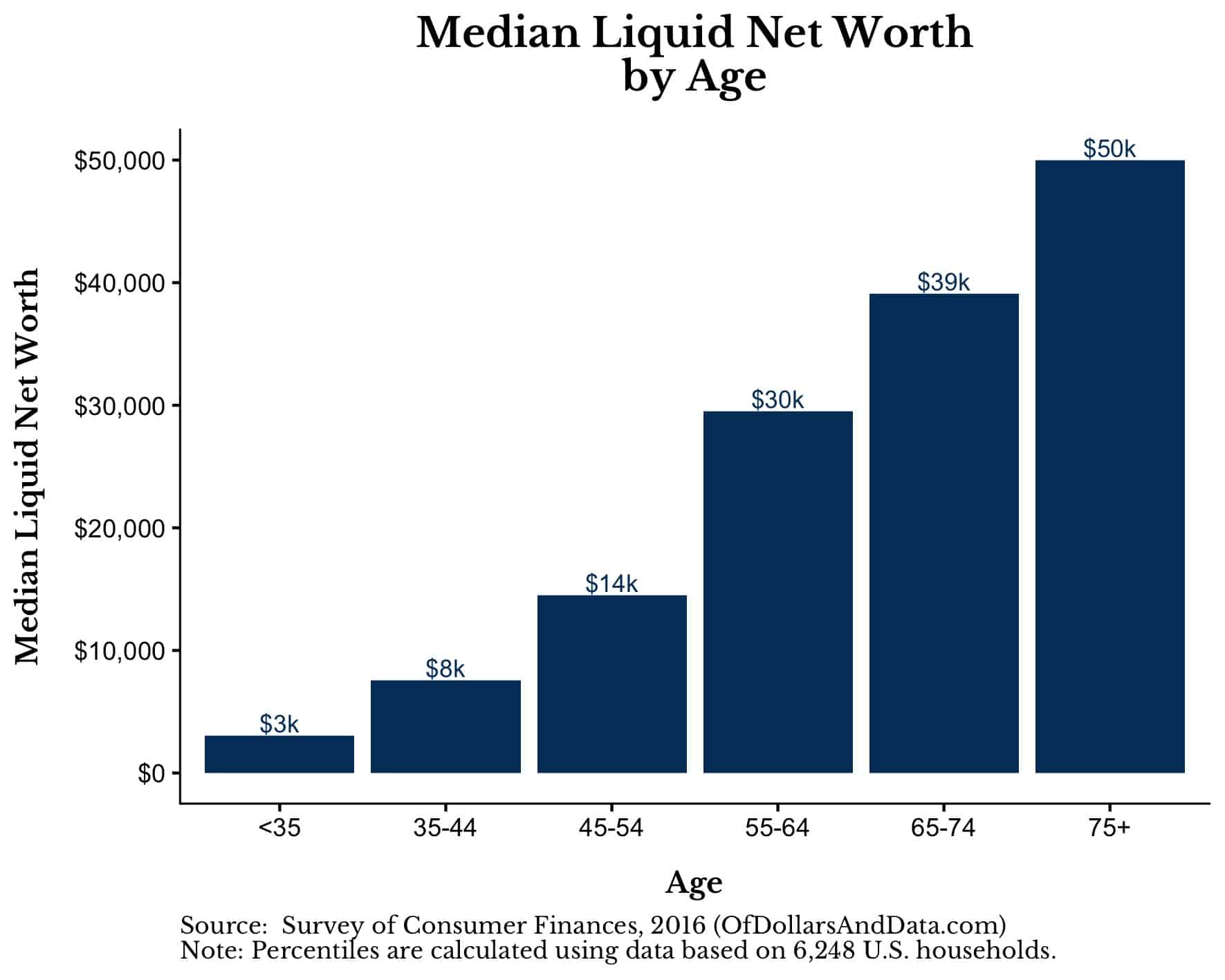
This is fascinating. Within a mere 10 years, Bitcoin has gone from a toy to something now intersecting directly with the US banking system.
With each integration point, Bitcoin gets more difficult to legislate out of existence or destroy through capricious police action. Aside from Tether, this is one of the biggest risk factors cited by those who have studied Bitcoin in detail.