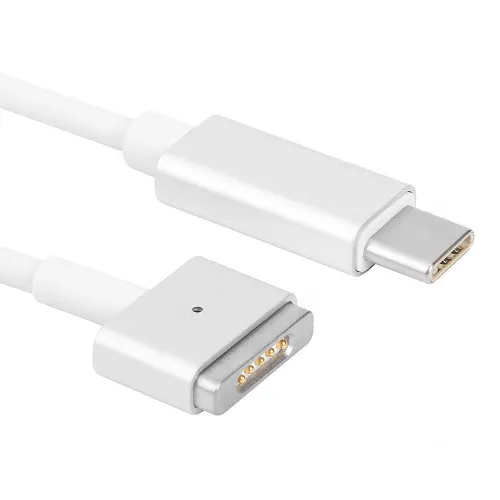
Indeed. I've had my XCover 6 for 3½ years now. I've dropped it many times, on hard surfaces (like outdoor concrete/brick). I've undoubtedly been fortunate. the plastic has gouges in it. there's (small) scratches on the screen (some from my keys), but the screen is not cracked. When it is dropped the back and battery pop off, which I think helps dissipate the forces. BTW, for anyone trying to extend their phone life, I strongly recommend those magnetic USB connectors. Reduces wear and tear on the USB port, and is also kinda convenient for quick disconnect.
> I strongly recommend those magnetic USB connectors
Note that these connectors are in violation of USB standard and potentially harmful as they expose the pins in an unintended way. For instance, notice that all the connection on the USB port are not all the same length, it is a form of protection, to make sure the power lines are well connected before the data lines make contact. With magnetic USB connectors, you lose that feature, in addition to potential issues with ESD, short circuits, etc...
I have a friend who swears by them and never had a problem, but still, that's good to know.
> notice that all the connection on the USB port are not all the same length, it is a form of protection
This was noticeable on USB-A connectors when you look closely where the two outside pins were slightly longer than the two inside pins: the Make-First, Break-Last (MFBL) principle. You can also see the same thing on SATA edge connector pins.
Take care googling for photos because many are CAD mockups misinform (because they are drawn pretty incorrectly and show no physical length differences).
USB-C does have longer pins for the ground, and the CC (configuration channel) connects last. A USB-C host doesn't deliver power until it is negotiated using the CC pins.
So USB-C via a "magsafe" connector is safe.
But maybe look for the two outermost pins to be longer.
You mention ESD which could be riskier since charged fingers or worse could touch contacts directly. However the lip around the contacts is usually grounded so any spark should be grounded first. I would also assume modern electronics are well protected against ESD (nobody wants occasional undiagnosable failures leading to refunds). Sure that stuff from earlier this century wasn't so well protected. YMMV if you are a sparky person in a sparky environs: weigh the downside costs of different approaches appropriately.
At least the USB-C ones I purchase are not flush - I never found those to be reliable. It's a male prong that looks pretty much identical in wiring to the male prong on the phone, that connects to a female one plugged into the socket. That plus a bit of a collar to help hold it in place. So I don't see why there would be any difference in grounding, it's the same connection...
(that plus the comments from the more knowledgeable person below)
Eventually they start wearing out, and I just replace them. I've had no issues with high voltages (45W+ charging on phone and steamdeck) and with peripherals (hub for example).
You want to get everything grounded before the data wires connect. But that's more about the shroud than the pins as far as I understand it, and a magnetic connector could ensure grounding if it was designed to do so. And for charging purposes you could skip the data wires entirely.
At least on Android, when my Samsung Galaxy Note (I loved that phone - replaceable battery, pressure sensitive stylus, IR blaster, OLED, audio jack, water resistant - they went downhill from there IMO) finally end of lifed, I just used the official Samsung tool to upload a community image on it. The process wasn't horrendously difficult. I don't know if people would do it, but it was a clear set of steps that even a tech novice could accomplish if following carefully.
So, they have an XCover 7 now - with similar specs.
Also, they committed to a rather long support cycle for the xcover6 (5 years I think?) - I have one and it is still going strong. I've replaced the battery twice - not because I desperately needed to, but... why not. They are cheap, and I use the older ones still as backup battery packs since they are fast to swap in.
Yeah they are really meant for businesses. Frontline workers, factory floors.
This is what we use them for and they do stand up to the abuse. Of course people treat them very badly as it's not something they paid for. Really long support too.
They're not good in terms of specs for the price but that is not what these phones are about.
Yeah, the specs were... decent... nothing standout. Really I was going over the list of things I had lost after the Galaxy Note got rid of all their features and decided the replaceable battery was the one I cared about the most. The ruggedness was just a nice plus.
So, as a long-time mercurial users, revsets in jujutsu were a major feature for me.
And if you don't want to use them, don't. But if you are looking to treat your VCS DAG as a queryable database they are awesome. And, they are great for avoiding having to chain a bunch of commands together, inefficiently, to get the same effect. Although you still can do that if you really want to. Just like you don't have to use jq to query JSON - you can do terrible cursed things with grep and awk and sed and it'll even work for simple cases. But you might want to give jq a spin - and really there are strong parallels in how they work.
I suspect they are replying to this part of the article:
"What you actually want to say is: “an element is effectively-dark if it has data-theme=”dark”, or if it has an effectively-dark ancestor with no effectively-light ancestor in between.” That’s a recursive relational definition. CSS cannot express it. CSSLog can:"
The entire article doesn't seem to mention the existence of :has() which is rather surprising given how recently it was written. Not even in the footnotes.
Yeah, that example is bad. The query doesn't require recursion, but they affirm it does by demonstrating a recursively-defined version of it. This is called "affirming the consequent"; "P -> Q" doesn't mean "Q -> P". Ironic, given the use of propositional logic throughout.
"Since 2005 China's Deputy Health Minister Huang Jiefu acknowledged on several occasions that approximately 65% of organ transplants in China were sourced from executed prisoners.[33][34][35] In 2006 the World Medical Association demanded that China cease harvesting organs from prisoners, who are not deemed able to properly consent.[36]"
...
"Experts have also expressed concern that in addition to executed prisoners, non-death-row political prisoners and prisoners of conscience are also being used to supply the organ transplant industry.[39][40] Researchers, including ones affiliated with The Epoch Times, the International Coalition to End Transplant Abuse in China, and the Victims of Communism Memorial Foundation, point out that data from China between 2010 and 2018 may have been falsified or manipulated because of "contradictory, implausible, or anomalous data artefacts" and because they match a quadratic equation with model parsimony that is one to two orders of magnitude smoother than those of other nations."
I remember reading a very similar chain last year, trying it on my Proxmox host, and then being surprised it didn't work. I'm sure it's not the only modern distro this way, but I can't claimed to have tried very many after that.
I don't have debian handy to check at this moment, but the devuan machine (and devuan is typically debian config for the 99% of things that are not systemd) I have installed using mostly defaults, does not have it enabled by default.
Yeah, the kurzgesagt episode on meat production did note that overall cows have a pretty good life right up until the final fattening feed lots which is pretty bad.
https://www.youtube.com/watch?v=5sVfTPaxRwk
They did note though, that it wouldn't cost that much, relatively, to give chickens pretty good lives. That really we're doing this just to drive the price down by pretty small amounts.
Even if food shortages aren't an issue, reducing the amount of land dedicated to food production is a win for ecosystems.
Not saying people have to go vegetarian, but reducing meat consumption or using more efficiently produced meats (in terms of land use) would overall make the world a nicer and more interesting place.
And, really, with the whole neu5gc thing, it might be that humans would be better off focusing on chickens and seafood anyway (clams being a pretty good option for seafood that is relatively environmentally friendly).
Grass fed cattle can use land that is generally not fit for vegetation farming... because of excess rocks, etc. Ruminants that are being naturally (grass) fed are also regenerative in terms of soil health.
They don't tend to "bulk up" as much as conventional (grain fed and/or finished) options though, so are more expensive to produce... the gas emissions are another issue that is largely different for grass fed, where the off gases are roughly the same as the grass's natural breakdown would release anyway.
In terms of water use, naturally grass fed cattle are mostly using water that fell on the land as rain in terms of how much water they use. It's not much from municipal sources, unlike vegetation farming.
Of course there are other ruminant options that are more efficient than cattle, such as goats and sheep, with similar benefits to the soil.
It just bugs me that cattle gets such a bad repuation... especially in that it's one of the few things I can eat without issue.
So, I was saying ecosystems. Filling the world with cows is not the same as natural ecosystems.
Also, kurzgesagt did a pretty good episode on meat production (edit - they did several, but one was on the production demands in terms of energy and environment), and if I'm to trust their figures, the "cattle grazing exclusively on the pampas" is far from the majority of world cattle. If it was, that probably would be an improvement, esp if it was done in a way that allowed other species to exist too (maybe bring some buffalo back?). The percentage would be dramatically improved if finishing lots were eliminated though (still a minority though). So maybe that's a simple option. Plus, that's the cruelest part of the cow's existence.
I don't think the answer is reduce though... I think it's increase... humans wiped out so many of the ruminant animals (buffalo mainly) that kept the grasslands healthy... we've largely over-farmed in the interim since. We need more ruminants, not less.
This means raising much more than we currently do, and probably a reduction in slaughter numbers for the next 50+ years to increase the domestic supply. Can't speak for other nations... but it's literally expanding grasslands as opposed to desert.
Yes. I saw that TED talk about desertification being reversed by ruminants, and while it got a lot of critics, it had some pretty good points. But, those ruminants would be better off not being beef cattle in terms of biodiversity. Also, if they were beef cattle due to the lack of anything better, hopefully it would be short term, and if you're making a case for use of marginal land, they really shouldn't be finished in a feed lot, since that is using a lot of cropland to support that.
... and only some places would (possibly) benefit from that.
I think cattle are fine... though I'm also okay with more Bison, goats, sheep, deer, elk, etc. I'm also more than okay with less use of feed lots and direct butchery of grass fed ruminants.
As for marginal land... personally, I can only handle mostly eating meat and eggs, doing much better with ruminants. I'd be just fine with the majority of uninhabited lands being used by mostly wild ruminants over any kind of farming, especially farming that is using chemical fertilizers and stripping the land.
I mean we have the strategic buffalo herd in Montana, and the cattle grazing you talk about is often by for profit farmers on public land.
Seems like we could reintroduce buffalo from our reserve, a much better solution than government managed/subsidized free range cattlemen. Get government out of the cattle business, end government handouts and all that other free market talking point stuff.
> Grass fed cattle can use land that is generally not fit for vegetation farming
Can, but that doesn't mean it always is. There's lots of cattle that never even comes outside, and is fed food that humans could also eat.
I recall reading that during the famine in Ethiopia in the 1980s, Ethiopian farmers were exporting beans to feed cattle in Europe because that was more profitable than feeding people in Ethiopia.
Beef is simply extremely inefficient. And so, unfortunately, is cheese (I can do without beef, but not without cheese). If cattle is grazing on land that's simply not usable for anything else, that's a completely different matter, but that's not how most cattle are fed.
I’ve vegan for 20+ years and find weird the obsession people have with meat that without even talking about milk. Literally there are hundreds of alternatives better for health, for the environment and for the animals yet we keep looking for justifications to consume them.
Yeah. I used to be vegetarian (I eat some meat again), and I love cheese, but I'm well aware that it's almost as bad as beef. Quitting cheese feels like a bigger sacrifice to me than quitting meat. But I've been reducing my cheese consumption lately. That's something at least.
I'm not arguing for ditching cheese either (I love cheese, esp goat cheese - which conveniently is often a more pleasant experience for the goats) but here is a recipe that I quite liked for a cheese-like cashew/brewer's yeast spread.
I'm pretty sure I transcribed this correctly. Let me know if anything seems off :)
    Pimento Cheese Spread
    Blend until smooth:
    1c. water (may use water from pimentos)
    ¾ c. cashew nuts or sunflower seeds
    2 T sesame seeds
    1¼  tsp salt
    3 T Brewer's yeast flakes
    ⅔ c. rolled oats (only if being used for lasagna)
    1 tsp onion powder
    ⅛ tsp garlic powder
    ⅛ tsp dill seed
    ½ c. pimentos
    ¼ c. lemon juice (or to taste)
    May add 2 T. arrowroot or cornstarch if used for spread
Cup and Tablespoon. Sorry, I probably faithfully transcribed a bit too well. Do let me know if it works. I haven't made it in a while. I guess I should try it again.
A little belated followup - I tried it, and I feel it was way too thin, even after adding corn starch. I would cut that water way down. Maybe even add as needed after initial blending. Not sure why that is, don't remember it being that thin.
The flavor is completely different but the umami of miso is crazy, if it would not be so salty i’d eat it by the spoonful. Honestly I don’t miss cheese at all, there are some replacements good enough for the occasional sandwich or pizza.
I'm not convinced by some of those. I'm a pescetarian, so I still eat cheese, but I enjoy unusual foods.
I don't find tahini to taste anything like yeast/cheese, though to be fair I mainly use tahini in hummus.
I'm not familiar with lactic acid fermented Tofu - does that go by a different name?
Tempeh seems more nutty than cheese-like to me, though I rarely eat it as my wife doesn't like the flavour or texture of it.
Personally, I'd recommend Japanese Natto if you're after a cheesy flavour - it's soy beans fermented in straw/hay and ends up becoming somewhat slimy/stringy, so it's a bit of an acquired taste.
> Natto
Any advice to try it? I haven’t had the courage yet but I guess it's time to face my fears.
> lactic acid fermented Tofu
The english name of the one I buy is "Lactofermented Tofu" [0], although their ingredients [1] lacks a coagulant but have ferment instead: I guess the tonyu+ferment produce lactic acid, which then coagulate the fermented tonyu into tofu. I wonder if that make a big difference with classic recipes that ferment the tofu directly [2].
> Tempeh
It's a fresh product and the taste really differ depending on:
- Ripeness. It can be ripped a few days to build an intense flavor when homemade or bought fresh.
- Ingredients. Same fungus (Rhizopus oligosporus) can be used to ferment others legumes/grains. I once made black-lentil-tempeh which had a very strong gorgonzola flavor with a firm and non-fat texture.
The only Natto that I've tried is pre-packaged and frozen, bought from a Chinese supermarket in Bristol, UK. It comes as five little polystyrene packs that have a small quantity of Natto (maybe 25g?) along with small packets of mustard and soy sauce. The Natto itself consists of the beans, but the oustide is somewhat slimy and very stringy (like cheese) and the flavour is very cheese-like. Incidentally, Natto is extremely high in vitamin K, especially K2, so be careful if you take an anticoagulant like Warfarin.
I don't think the fermented tofu is popular here, but I have seen fermented tofu sold in the same Chinese supermarket - it's sold in either glass or porcelain jars and doesn't usually have any english translation on them. I have got a jar that I bought a while ago, but I haven't had the courage to try it yet as the tofu looks blackened and murky.
Similarly, I've only tried Tempeh from mainstream supermarkets, so that might be why I don't find it to taste cheesy.
>Not saying people have to go vegetarian, but reducing meat consumption or using more efficiently produced meats (in terms of land use) would overall make the world a nicer and more interesting place.
I've seen articles and threads like this for decades at this point. And the only thing any of you have convinced me of is that I must start securing my own production of meat. This is, I think, the exact opposite of "more efficiently" at least from your point of view. I will be unlikely to reach the feed-to-gain ratios that professionals regularly achieve.
Swine and poultry already in progress, beef and more exotic stuff within the next 2 years.
shrug poultry is already several times more efficient than beef in regular production (to say nothing of if your coop just has chickens wandering around finding their own food), and healthier for you. And hopefully your swine and poultry are having overall decent lives. And, if your beef is entirely grass fed (I doubt you can afford a finishing lot) you're still overall not using cropland to fatten up cows (but maybe that's your goal, who knows)
Anyway, you do you. Just offering my opinion on this 'cause it seemed like a good place to do it.


reply