There are plenty of links in the article to support specific statements, you can just skip over the parts where he expresses frustration at the damage to an incredible asset the US has built over many years, and the long term consequences this will have for the US and for the world.
It’s a pity he can’t be as measured and scientific in his communication as the current US administration, but we can’t all aspire to that level of technocratic excellence.
Essentially yes. Companies paid the tariff costs, largely passed this on to consumers via higher prices, and now companies are due the tariff costs back. Consumers of course won’t get anything back.
I don’t think LLMs contradict the Pinker description - it just turns out that the output stream embodies a lot of information, and you can construct a model (of some reasonable fidelity) of the original sources from sufficient examples of the output stream.
It's basic economics in the sense that it's an oversimplified toy model. In the real world, every country I'm aware of gets a substantial amount of its tax revenue from consumption taxes, and indeed the US's lack of VAT means it's currently much more dependent on progressive income taxes than peer countries. (https://www.oecd.org/content/dam/oecd/en/topics/policy-sub-i...)
I responded to a comment that called progressive taxation a crazy “far left” idea - I’m not sure the second and third order details of taxation policy are really relevant here…
But ok - yes, sure, in real life it’s a mix and the mix is worth debating. Note also that consumption taxes often have exemptions/reductions to offset the most severe regressive effects.
Of course humans have a significant effect on climate change - the steelman versions of why that doesn’t matter are: 1) It doesn’t matter because we will figure out some technological solution in the future. Or 2) it doesn’t matter since I personally will be ok (because I am rich and/or live in a rich country that can afford to pay the costs)
I'm of the view climate change is real but not as big a deal as some people make out. A couple of reasons:
- Solar power has been growing exponentially for years and will continue for a while allowing carbon usage to be phased out and maybe carbon capture done.
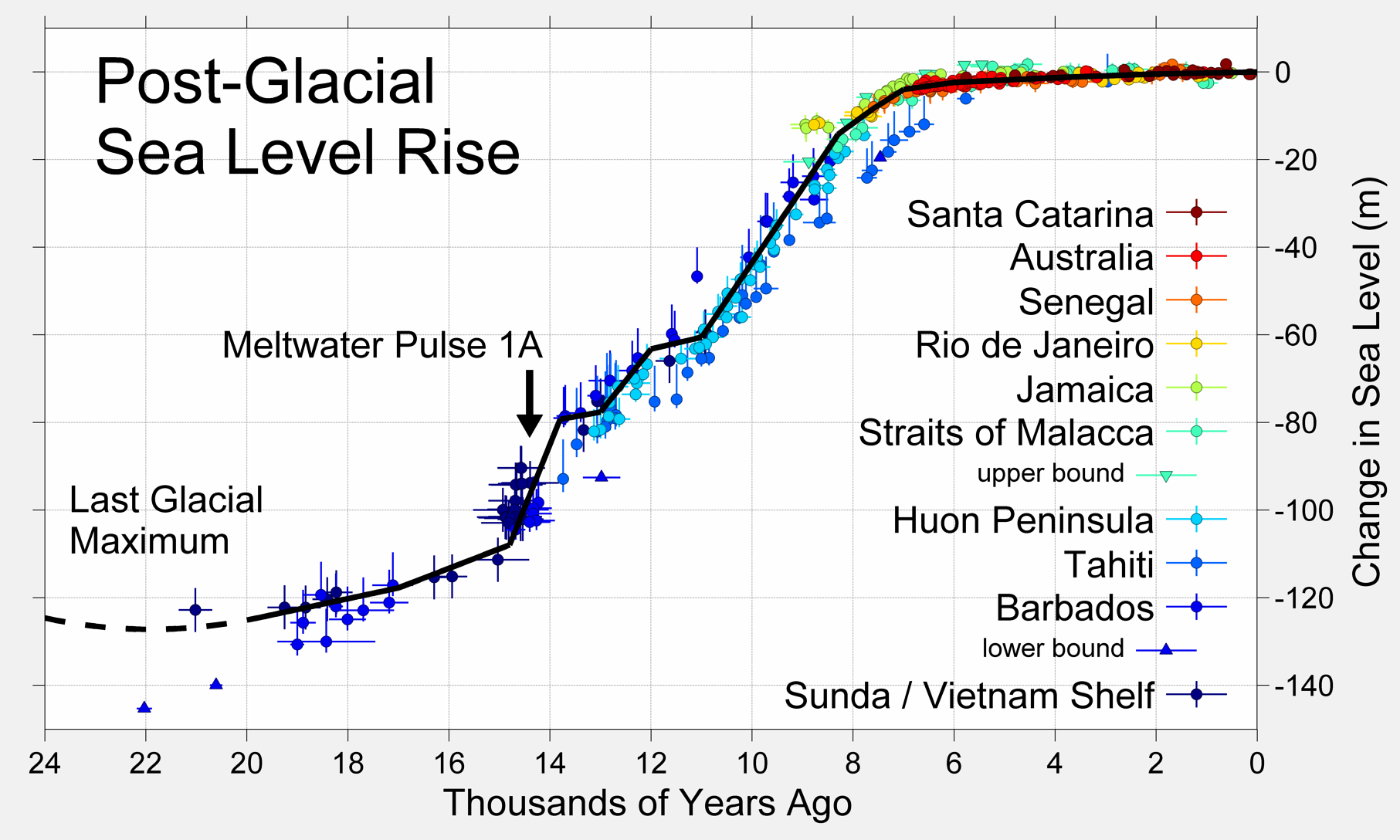
- The climate has changed naturally more than most people realise and life goes on. The sea is forecast to rise 60cm or so over this century but has risen ~120m over the last 20k years which was hardly noticed. (graph from wikipedia https://upload.wikimedia.org/wikipedia/commons/1/1d/Post-Gla...)
On point 2 - notice how flat your graph is for the last 6k years?
Also, why do you think the impact of past changes on a tiny group of humans living as hunter gatherers is of any relevance to 8 billion people living in the modern world (including, for example, in massive coastal cities?)
The US is the second largest manufacturer in the world - it's just moved into high end manufacturing. One of the difficult things about the current situation is how confidently wrong people are about the basic facts of the US economy.


It’s a pity he can’t be as measured and scientific in his communication as the current US administration, but we can’t all aspire to that level of technocratic excellence.