I agree. There's an epic productivity boost, but there's a valid concern about prompts leaking sensitive data to a competitor. Fortunately, I think we are fairly close to being able to run our own instances of highly capable LLM's without too much friction.
And what if the LLMs start producing the highest rated and most alluring science fiction? Isn’t banning them then tantamount to a cognitive bias against non-human intelligence? What is the ethical justification for such anthropocentric practices?
> And what if the LLMs start producing the highest rated and most alluring science fiction?
They haven't.
> Isn’t banning them then tantamount to a cognitive bias against non-human intelligence?
It would be, if they were, but they aren't, so it isn't.
> What is the ethical justification for such anthropocentric practices?
I don't know, because that isn't actually happening. The actual, real world ethical justification for banning LLMs is that they're producing a flood of garbage.
tl;dr student doesn’t appreciate the extreme privilege they live in (LA rent free?!?!?) and don’t realize this is totally untenable for someone scraping by trying to afford college (i.e. anyone in the USA not in the upper class).
From what I read I don't see how I'd make any conclusions about what they do or don't appreciate or think is tenable for anyone in particular else. Where do you see that?
As an American living in Germany I bike to work every day, even in the snow in winter. There are dedicated bicycle paths which are free from obstruction where I can commute, get groceries (I have a special trailer for heavy items), and enjoy a weekend with the family. I can cycle between cities, all the way to the Netherlands, which has even better dedicated cycling routes.
Should I choose public transport, it is ubiquitous and very cheap (even free for some people). Fast and slow trains, streetcars, some subways and buses, but most importantly frequent and with total coverage by law if I remember correctly, no one can be more than 500m from a public transport stop. Even in the countryside you can take public transport everywhere: I have visited rural areas entirely by train and even a farmhouse by bus with a short walk. This is typical European lifestyle at least for the wealthier northern continental countries.
There is a downside, however. Everyone - that is everyone except the very rich and those in the countryside - lives in an apartment. An apartment which, even by lower class American standards, is tiny, dark, grungy, often ridden with mold, and with non-existent amenities. For the price I pay in rent, including exorbitant utility costs, I could get a much nicer place anywhere outside the coastal elite urban cores. My fellow software developers, who are paid far above average for German engineers (or even doctors here) are in the same boat. Tiny and grimy is the norm:
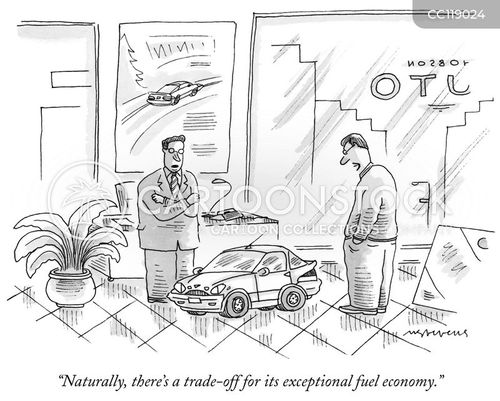
What I wish I saw less of in the car/transit debate was moralizing, and what I wish I saw more of was engineering tradeoffs. You can try to have cars and houses and transit and high salaries and (relatively) low taxes and what you get is NYC or SF - a playground for the rich and a dystopian hellscape for the average middle class worker. If you make transit ubiquitous and affordable with affordable housing and restrictions on cars you get everyone in tiny accommodations, the kind of mass single family home communities and even NYC townhomes and billionaire skyscrapers would never be approved by German town planners. Engineering tradeoffs, which can mean many tiny cars you never see sold in the USA:
Let's have more discussion on the tradeoffs, and maybe we can find solutions of which Larry David would say:
"You're unhappy. I'm unhappy too. Have you heard of Henry Clay? He was the Great Compromiser. A good compromise is when both parties are dissatisfied, and I think that's what we have here."
What I wonder is if you can combine the two using the higher-speed rail lines. Imaging one shooting out of the city and stopping at smaller but newer "ex urban enclaves" which themselves are quite walkable, but have more breathing room.
Reference for the uninitiated, a good read. Its veracity on the individual level may be questionable, but the techniques of subduing third world countries via heavy debt burdens is well documented.
Not actually $0, just rents another property on the same land. Would like to know the actual property taxes, maintenance and utility costs. No one except perhaps royalty pays $0.
Even royalty pays something, or has someone pay it for them. You can't beat entropy.
I bet in the right location in the country you could get those expenses darn close to zero, but never quite there - and maintenance would eventually be the bulk of it.
I worked that long in another country, as an American, and had kids there. Then I was laid off. The government didn’t care, my employer didn’t care, I had to leave and uproot everything. This is how it works in most of the world. Only in America do we think an immigrant “deserves” a job while letting native born citizens go hungry.
You do realize that basically 90+% of Americans today are all immigrants right? You do realize that right?
Essentially you are stating everyone who loses a job in the U.S. should leave the US.
Or alternatively you want to draw a line when the good immigrants are allowed to enter after which are the bad immigrants. And I’m sure that conveniently that line will ensure your family becomes part of the good immigrants.
Hm, not really. That would make you a second-generation immigrant. [1]
First-generation immigrants are folks who are born outside the US and naturalize. "In the United States, among demographers and other social scientists, 'second generation [immigrants]' refers to the U.S.-born children of foreign-born parents."
Not in the strictest sense, but it's not the bright line you're making it out to be either.
Unless your ancestors were in the Americas before Columbus arrived, you're an immigrant. First generation, tenth generation, a hundred generations from now, it doesn't matter. Your great great grandfather landed at Plymouth Rock? You're not native.
  Working from home is no picnic,
  and neither is it a sin;
  I rue those who think it is other
  than labor and struggle within.

  Simply refuse, my comrades,
  stand fast and don’t go in;
  parry threats, demerits, evals,
  if fired, grok leetcode again.

  Unless I’m literally starving,
  and maybe not even then;
  will I ever inhabit a cubicle
  trapped in the office again.