With any other media, you have to hope that the drives are still available. Paper routinely lasts hundreds of years and we all have readers built right in.
It's surprising that it can't be done programmatically, since "minimize the color difference above and below this super obvious line" seems like it should be a pretty straightforward success criterion.
Seamless WiFi roaming is mostly a client decision. The best you can do on AP is to:
a) optimize signal strength for coverage (stronger signals aren't always better in multi-AP deployment);
b) provide hints via 802.11k/v/r to help clients make, hopefully, better decisions;
c) forcefully drop and disassociate clients when signal is weak enough.
But if the client has bad WiFi implementation, there's nothing much you could do.
OpenWRT currently supports 802.11k/v/r, but optimizing coverage by adjusting signal strength and channels is left for experienced users to deal with manually. There is the are where some commercial offerings will do, but the result greatly varies. AFAIK there's no ideal system anyway coz physics is hard.
This is brilliant! The techniques remind me of a lot of my Toughbook modding, back in the day, which I did not document nearly enough.
I still have the shell of a CF-17 that's just begging for new guts... but I'd have to aim for something quite a bit lower-power as it's a sealed chassis with no provision for air cooling. Perhaps a CM4-based build...
Aaah! Why must other people be so productive! It gives me too many projects!
It's essentially random at any given moment. If I peek, mine will say it's running anywhere between 700MHz and 3.4GHz. Sometimes I think it goes even faster, but only if it's weirdly cold at the time.
Upgrading and Repairing PCs 4th edition even says directly, that some shady resellers will put a heatsink on a chip that they're running beyond spec, but that Intel designs all their processors to run at rated speed without one.
The cpu and heatsink was fully integrated into what looked like a NES cart, with an integrated fan and everything. It was not really possible to separate the cpu and the heatsink as the locking mechanism to keep the cart in place on the motherboard interfaced with the heatsink assembly.
So I'm a little dubious of that no-heatsink claim.
Screamtracker was sampling. Great for the days and much more accesible for the teenager I was than buying and controlling synths but that was not exactly same. More a competition to the early akai MPCs.
And we were mostly ripping those samples from records on cassettes and CDs, or other mods.
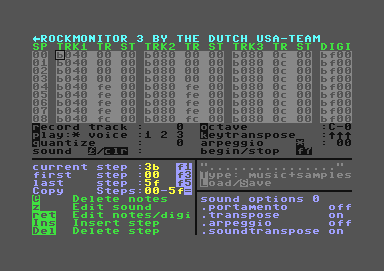
Well now that you mention that, my very first steps actually were with Soundmonitor on a C64, one of the OG trackers probably (even though not called tracker yet IIRC). I kind of forgot about that, as that was still very amateurish (I mean what I made with it, not the software).
I think branding and reputation basically encapsulates all the build quality and support and stuff you mentioned. Non-technical consumers will see this, decide that it's probably better than a Chromebook, and be right.
There's a compelling value case here. It might well be my first Apple purchase.
Last time I went looking for LFL's, the map data quality was terrible. There's no way to flag a defunct location as defunct, since only the "owner" can edit their own entry. If they don't respond, it's a permanent ghost on the map.
I've taken to mapping them in OSM using amenity=public_bookcase (and amenity=food_sharing for the similar little free pantry). This way anyone can update the entries over the years.


Not even kidding.
With any other media, you have to hope that the drives are still available. Paper routinely lasts hundreds of years and we all have readers built right in.
reply