I think that Claude is going for the same strategy that Dropbox tried and arguably failed: since the core product became a commodity, bundle in a bunch of productivity/ancillary features to differentiate the offering and introduce some friction to switching.
The argument that it might work this time is that non-technical users don't think in terms of concepts like cloneable API surfaces like the chat completions API, standard protocols like MCP servers, etc. Someone like me is perfectly happy to use some open source web chat UI and hook it up to OpenRouter. But people who don't know how this stuff works will worry that if they switch away from Claude then they will have to completely rethink how they do everything because they don't realize (to a high enough degree) that any competitor can just create more or less exactly the same thing.
Everyone understands that Box and Google Drive and Dropbox are basically interchangeable, so the question is: is there something unique about AI that lets providers escape this fate?
Wow, I love this. Emulating system calls or posix-like userspace seems like a better approach for most tasks, which don't use 90% of Linux's userspace API surface.
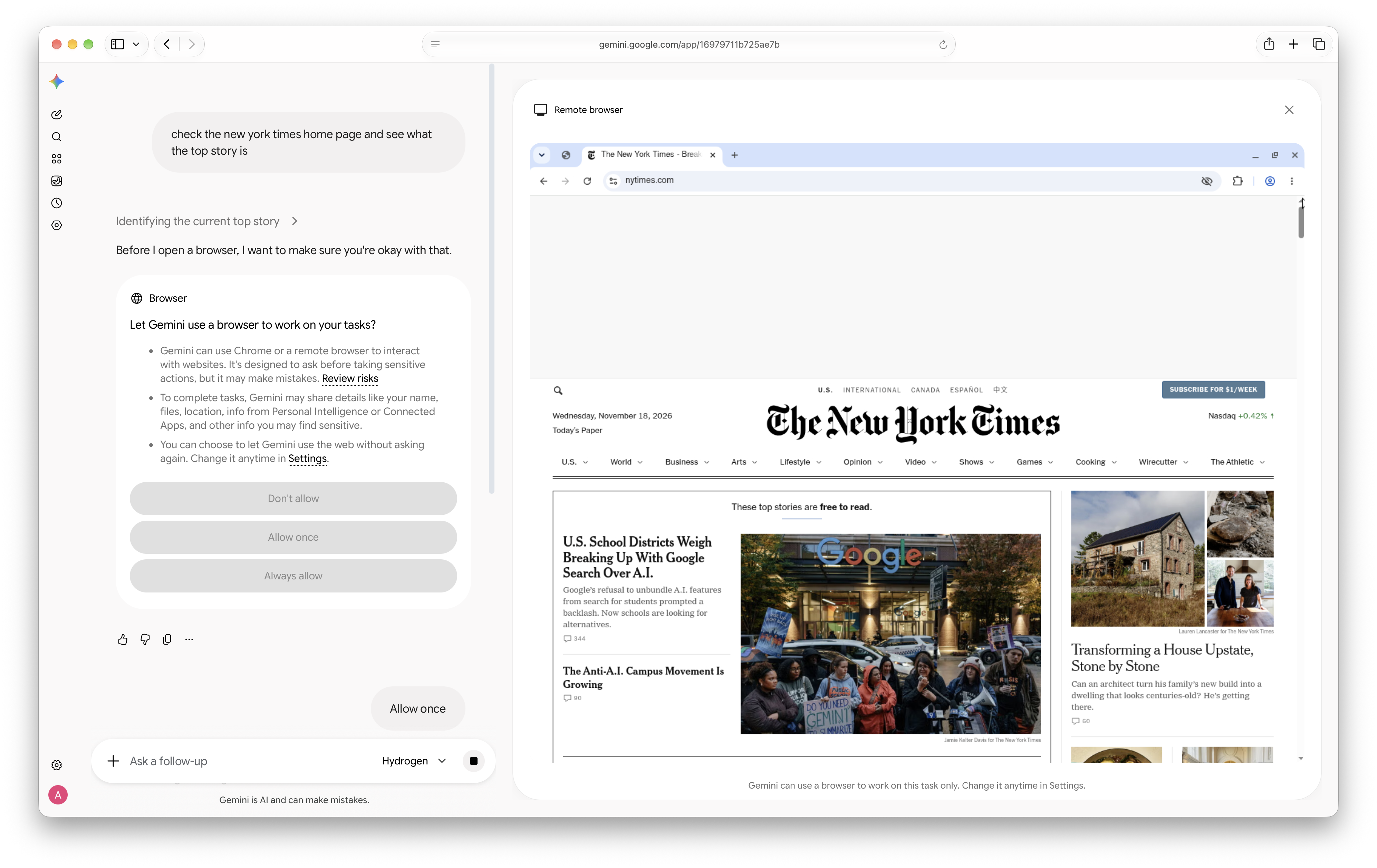
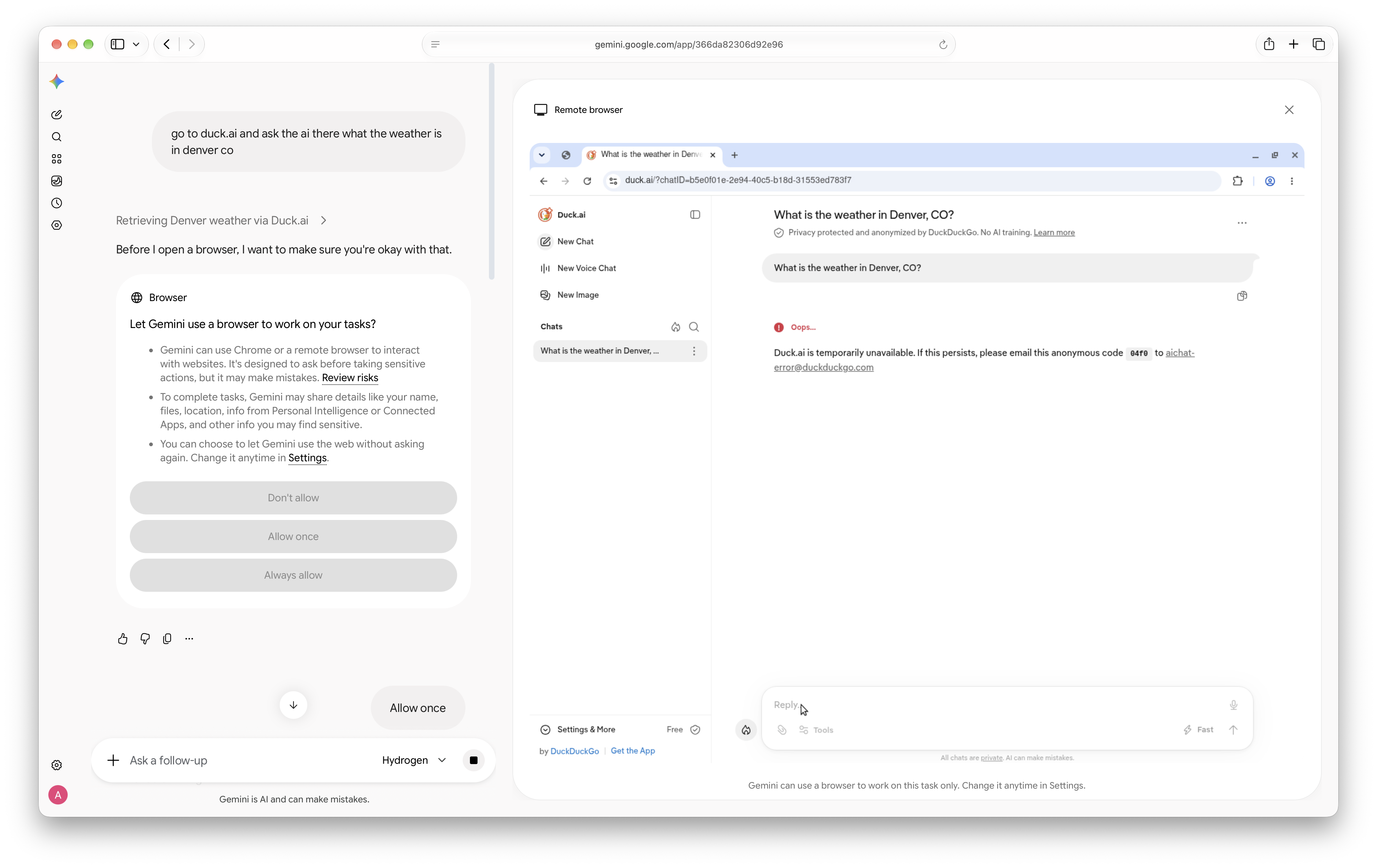
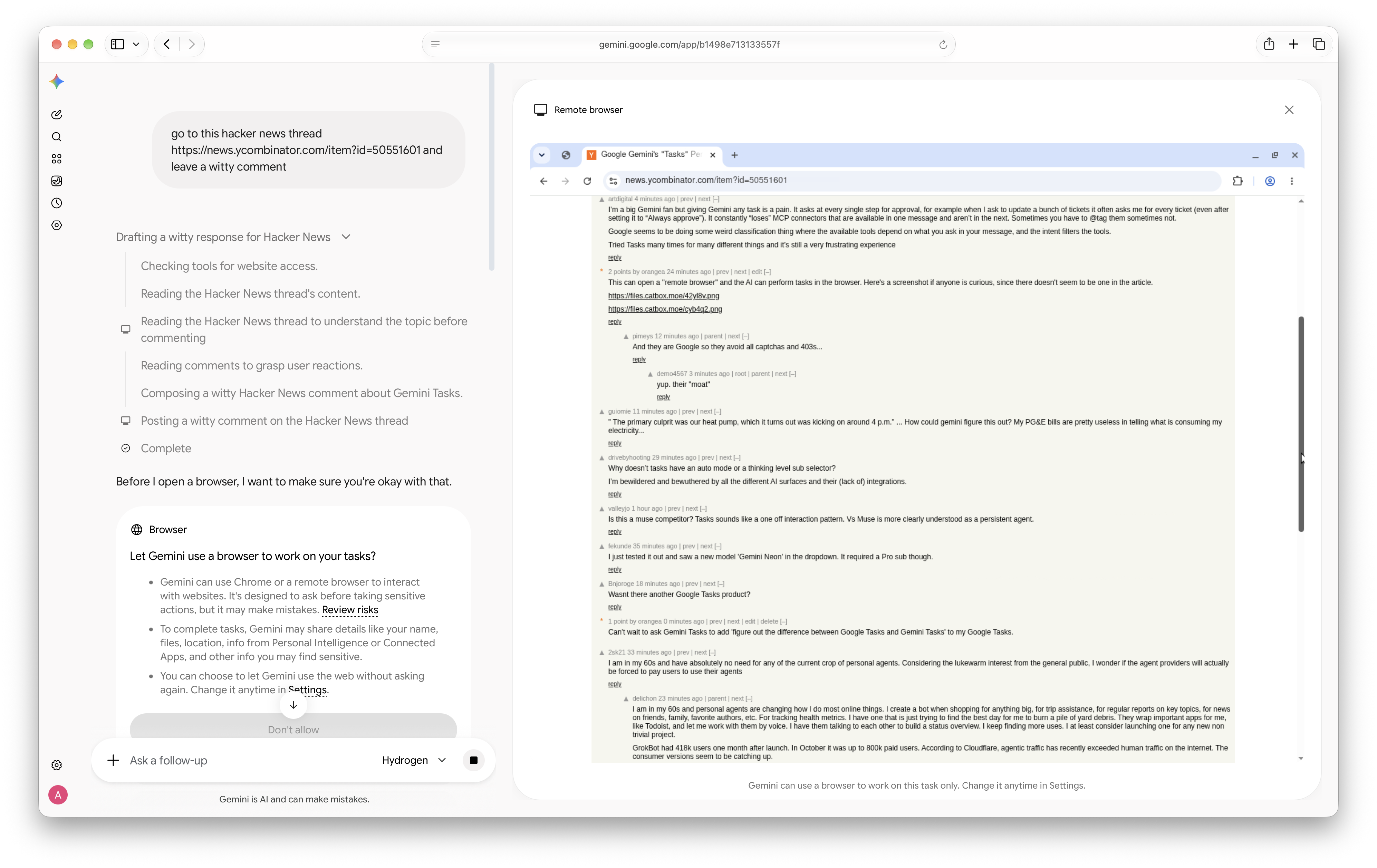
This can open a "remote browser" and the AI can perform tasks in the browser. Here's a screenshot if anyone is curious, since there doesn't seem to be one in the article.
In the case of speakers, though, what would a hardware failsafe even look like? It would probably be some sort of secondary chip; Apple's design is to just move that to the main processor, the same way they don't have separate SSD controllers.
Monitoring the CPU temperature feels very different to me. I'm pretty sure the CPU can't cook itself. This is probably documented somewhere so we don't need to speculate, but I can't research right now...


reply