ah. it writes and i edit it. me and Stanley Duckenmiller. it's a way better writer than i am. so is my cousin who is a golf writer for 30 years. so you're correct. i am excellent at editing though :)
Your parent comment reads like AI slop, so you may not be as good at editing as you think. Worth thinking about the impression you’re conveying about yourself.
Of course, but the users can’t be trusted to stay away from something designed to addict them.
Only real solution is regulation, although the how is still a big question mark.
I would ask, where is the line drawn between 'enjoyment and addiction.'
Is it the harm provided? Then what do we count as harm, and where is the line.
IE, There's no one stopping me from eating unhealthy, IE sugary foods, which are heavily addictive. I ride a motorbike, and I'd consider myself addicted to that, and it's got a high chance of harm, but we don't ban those. Ditto with gaming, social media, hobby XYZ.
I personally think the freedom to choose your vice is reasonable.
Maybe this freedom sounds reasonable at first. Pew Research says 36% of 13–17 year olds are on social media almost constantly [0]. This is not a problem that existed 20 years ago. The ease of access to highly addictive products is rotting the soul of society.
Instagram definitely doesn't have the option but youtube for instance does, there's a subscription tab that's collecting dust in most people's accounts.
Genuine question, did you put work into distribution so people knew about it first?
I've known a bunch of people who have said 'blogging is dead' but that's often shared with a lack of sharing the work in the first place or sharing it.
Health isn't a 'perfect or your unhealthy' it's much more of a 'Make the better option, most of the time' in which, similar to the original comment, I am quite happy that the chocolate I can have a treat with has less calories but feels identical in levels of being a treat.
I'd pay the same for chocolate bars that were half the size if they were easily available.
But if you want to indulge, there's a lot much much nicer quality treats than a mars bar, that's what I meant. That might be better for you but also a lot tastier.
But tastes differ of course. I love sweets and snacks and I eat too many but I never like the American ones so much. We have a shop nearby that sells American sweets but they are all so heavy on the sugar. Chocolates are too sugary, You can't really taste anything else. And things like nerds have this really strong artificial flavour. But that's personal of course and also what I grew up with.
Yeah but SMS is also a paid product in most places, same with phone calls, and data too, but given most places (Schools, your home, work, libraries) pay for wifi, platform provided messaging is free.
Not that the addictive apps are great, but if we're talking locking, it's deciding between 'paying for' and 'receiving for free' with lock in being constant
Reasoning models are the same speed. They’re just post trained with RL to do CoT inside tags like <thinking></thinking> before a tag like <response></response>
There’s no difference in the inference implementation, parameter count, or speed.
There's a difference in the latency distribution between when you submit a query and you see the response, which is what the comment is (clumsily) asking about.
But yeah, there are a lot of factors, so it's hard to answer, and tokens/s isn't the right question.
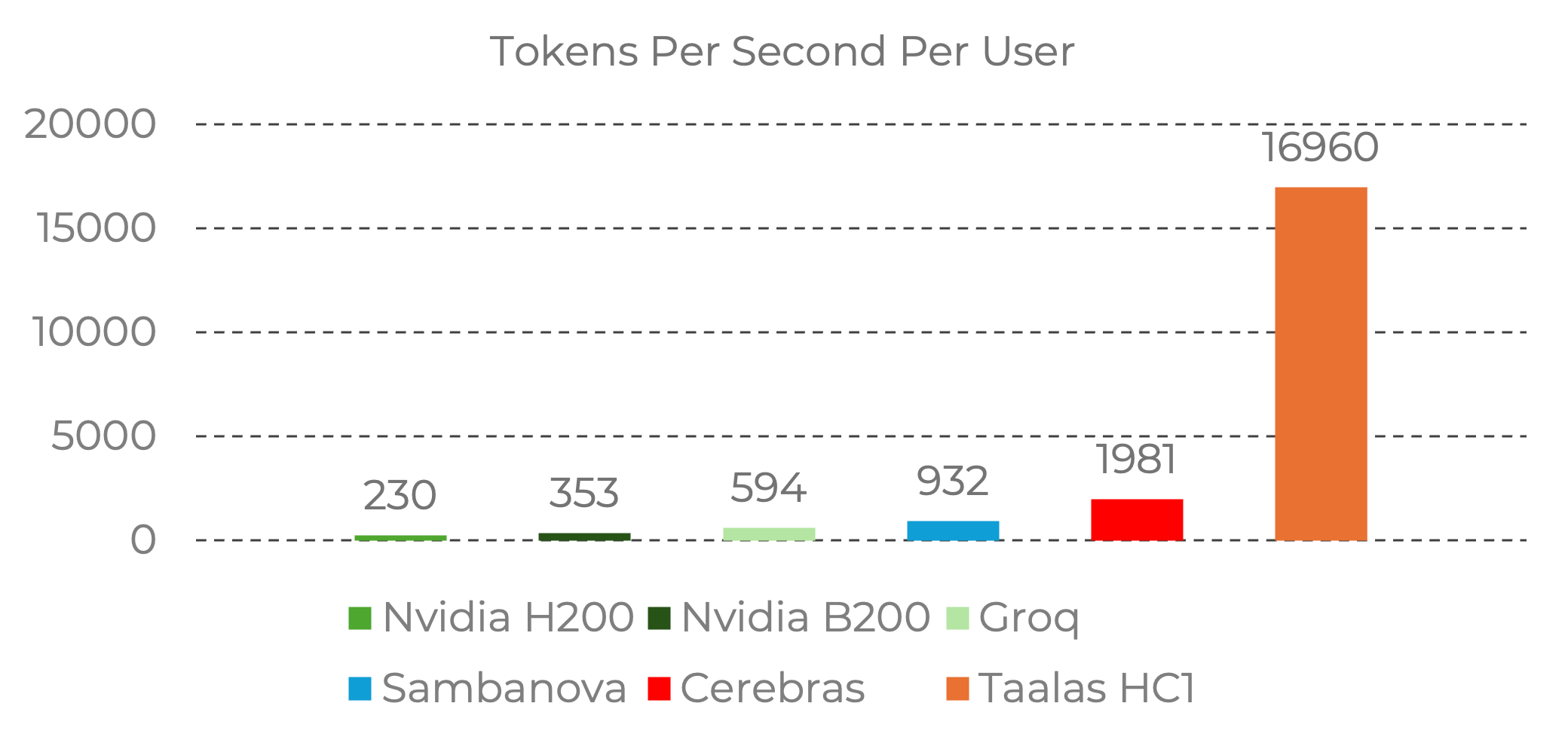
So this demo is around 90 times faster than typical speeds for the same model at openrouter, and around 30 times faster than the absolute fastest option available (Groq).


reply