There’s this tendency for a lot of tech folks to think their expertise in tech gives them special insights into other disciplines. Often when this happens, they’ll be doomed by missing many of the details that the old domain experts took for granted. I feel like AI is going to supercharge that. Lots of tech folks will see an AI make a CRUD app and think that means the AI will be equally capable of making art while missing why the overwhelming majority of the art community is against generative AI. The end result will be a lot of mass market art is going to become noticeable worse in the years to come in order to earn some shareholders a few extra cents in profit.
> The end result will be a lot of mass market art is going to become noticeable worse in the years to come in order to earn some shareholders a few extra cents in profit.
I agree, but I think pretty much everything will get noticeably worse in the years to come. It has happened to a lot of civilizations: they had some high level of skill in beautiful pottery, and then over the generations that skill disappeared. Probably because they were cheaper.
The folks making these decisions are only "tech folk" in that they work in tech. Really these are professional businessmen who are focused on maximizing profit. If you left it to tech folk to make these decisions, then most of these companies would quickly fail as the tech folk fail to even try to make any money (let alone be able to understand consumers well enough to be able to make money from them).
>Lots of tech folks will see an AI make a CRUD app and think that means the AI will be equally capable of making art while missing why the overwhelming majority of the art community is against generative AI.
It's less about thinking that the technology that can quickly spin up an app could be used to quickly spin up some art and more about the ROI. Actual tech workers could probably leverage AI very effectively in "unoffending" ways, but they're really not the ones calling the shots. It's the MBAs who recognize that the quality of the product really doesn't matter if they can make the product cheap enough.
>The end result will be a lot of mass market art is going to become noticeable worse in the years to come in order to earn some shareholders a few extra cents in profit.
Brother, we're already living in this reality.
The article this thread is about provides the perfect example: Epic Games is working on a Disney game. These are two companies which are the epitome of generating "art" so efficiently that they're almost just generating the profit directly. Switching out some engineers for AI isn't going to make much of a difference in the end product.
For a specific example, "Star Wars" has been closer to AI generated "art" than it has been to actual "art" for nearly half a century at this point. It was just that back in the day you needed a bunch of nerds to produce the specific kinds of characters, settings, scenes, etc., needed to sell the underlying products. Now you can just use AI. But don't mistake the fact that it was humans working on it with it being "art." It's all driven by algorithms at the end of the day.
For what it's worth, those who actually appreciate "art" aren't the target audience. They never were. It's currently hip to hate AI, but the consumer base these companies target really do not care. They want slop. They wanted it before and they got it before, and they still want it now and they're going to get a lot more of it now.
The "art community" is highly fractured to the point where claiming "overwhelming majority" doesn't have the rhetoric impact you want it to have. I have seen a good number of longtime visual artists and musicians express recently interest in generative AI.
Any artist mentioning that they are using gen AI in their art will instantly generate a massive amount of backlash so I doubt this is a very large number.
D list celeb got shat on in public and the gallery took a load of real life shit. The only chronically online stance is thinking the general populace is positive about AI.
I work in IT at a place where the vast majority of activity is not IT related but we have a huge number of systems. I regularly interact with a wide range of disciplines. It is in education sector so it may be somewhat skewed, but I see very little positivity about AI from anyone but us developers. It gets used loads, but even those using it to speed up documents, reports, comms etc are generally negative about it.
I don't know, a lot of SWEs are suddenly discovering the value of class consciousness now it's our jobs in the crosshairs. I've heard more talk of unionisation in the last year or so than in my entire career so far for example.
Antisemitism. And I don't mean in the way some people try calling criticism of Israel antisemitism. I mean that person is bringing up nearly millennia old blood libel conspiracies.
From Wikpedia[1]:
>Blood libel or ritual murder libel (also blood accusation) is an antisemitic trope which falsely accuses Jews of murdering Christians in order to use their blood in the performance of religious rituals... Blood libels often claim that Jews require human blood for the baking of matzos, an unleavened flatbread which is eaten during Passover. Earlier versions of the blood libel accused Jews of ritually re-enacting the crucifixion. The accusations often assert that the blood of Christian children is especially coveted, and historically, blood libel claims have been made in order to account for the otherwise unexplained deaths of children. In some cases, the alleged victims of human sacrifice have become venerated as Christian martyrs. Many of these – most prominently William of Norwich (1144), Little Saint Hugh of Lincoln (1255), and Simon of Trent (1475) – became objects of local cults and veneration
It is not conspiracy, Saint Simon of Trent was recognized by Church for centuries
Even jewish historian Toaff documented cases of infanticide and connection to religious rituals in his book “Pasque di sangue”. Its all corroborated with evidence
>Saint Simon of Trent was recognized by Church for centuries
And why is that past tense?
>Even jewish historian Toaff documented cases of infanticide and connection to religious rituals in his book “Pasque di sangue”. Its all corroborated with evidence
From your own link:
>Toaff withdrew the book from circulation a week after its publication and republished it the following year with an afterword stating that there was no relationship between the use of dried blood in Jewish ritual and the alleged ritual murders underlying the blood libel.
because the Church has issued "nostra aetate", which was written by ashkenazi jews Gregory Baum, John Oesterreicher, Bruno hussar. This was a political decision driven by aftermath of ww2 and coordinated by the World Jewish Congress and had no basis in theological nor facts nor any other legitimate reasons.
>Toaff withdrew
of course, he withdrew because people did not like the original research he published. He literally received death threats by people who did not like the facts, so he decided to withdraw and self-censor out of caution for his own life.
>but it's scary how much US media a foreign adversary now has direct editorial control over
It's not antisemitic to criticize Israel, but this language is verging on antisemitic because Israel very much does not have "direct editorial control" over Skydance. David Ellison is the one with "direct editorial control" and you can certainly say he's "extremely pro-Israel" but he himself is not "a foreign adversary" by any definition of those words. So either you're being hyperbolic with the meaning of "direct editorial control" or you're insinuating that David Ellison will defer to Israel on everything because he's Jewish which is a common antisemitic trope[1]. I'll give you the benefit of the doubt and assume the former, but the latter is enough of a possibility that I would suggest rephrasing this comment to avoid giving supporters of Israel a legitimate line of complaint against your underlying point.
>David Ellison appoints Israeli to lead merged Paramount-Warner studios
The same thing happened with the Tik Tok purchase, the entire point of handing control of the Tik Tok algorithm to Larry Ellison was so that they could clamp down on the discussion about the genocide in Gaza. You can see the results of it in the reports that the world Jewish congress put out directly:
>TikTok is the exception, removing 64% of content overall (and 71% of
content formally reported to it), compared to 12–15% on every other major platform.
It seems like you fully ignored my point, so I'll repeat myself:
>you can certainly say he's "extremely pro-Israel" but he himself is not "a foreign adversary" by any definition of those words.
All you're showing is that his family is pro-Israel, but that does not mean they are controlled by Israel. These conversations about Israel always seem to remove the agency on the American end which is where a lot of the historical antisemitic tropes live. Whether it's intentional or not, it's phrased in a way that evokes the trope of a shadowy cabal of Jews pulling the strings behind the scenes, and other countries rarely get talked about in this same way. For example, have you ever heard anyone suggest Google and Microsoft are controlled by India because their CEOs were born in India?
"controlled by Israel" is kind of impossible to prove and that was never anyone's argument. But it's very obvious that these people are placing ethnic affinity and the interests of a foreign nation above the United States. They are going out of their way to buy media to shape the discourse of this country in favor of a foreign nation and a specific ethnic group.
>other countries rarely get talked about in this same way
They actually do, but the Israeli lobby has grown so powerful that it is now dominating most of the political action in the USA in a way that has become impossible to ignore.
There are actually plenty of conversations to be had about Indian ethnic affinity and lobbying. USINPAC is the Indian lobbying organization which is actually modeled after AIPAC (the notorious Israeli lobbying group which has political control over most of the US congress).
There is a looming argument which hasn't yet entered the public mainstream discourse about Indian foreign influence and Indian ethnic nepotism in the United States, but that is an entirely separate conversation.
Most Indian CEOs are the same caste (Brahmin) and there is a good argument that many of them have been nominated by the boards of their companies and institutional investors with large stakes so that they can navigate India's notorious bureaucracy and deepen ties to the country, which supplies much of the cheap labor for the tech industry. Many of them have direct ties to the Bharatiya Janata Party in India and can use the access to people like Modi to access more Indian labor as well as build more in India. Modi talks openly about exporting human capital and using its diaspora to wield influence in the United States. One can argue that they are taking a cue from Israel here.
>Narendra Modi urges the Indian diaspora to become an extension of foreign policy
>"controlled by Israel"... was never anyone's argument.
Yes it was. My comment was directly in response to someone saying "it's scary how much US media a foreign adversary now has direct editorial control over". I know that was not your argument, but it was someone's argument and I responded to refute it. I don't know what point you thought was being discussed, but it's now clear you misread the conversation.
They put Bari Weiss in charge of CBS news. Her only credential is being rabidly zionist. This trait got her blog purchased for 100s of millions of dollars (!!) and then put her in charge of CBS news.
If you want to split hairs between "controlled by Israel" and "controlled by people who's sole interest is supporting Israel", go ahead.
Before the Tik Tok purchase went through, the prime minister of Israel gave a talk in which he said:
>But we have to fight with the weapons that apply to the battlefields with which we engage, and the most important ones are on social media. And the most important purchase that's going on right now is? Tik Tok. Number One.
Later, control of the Tik Tok algorithm was given to Larry Ellison and they immediately used it to clamp down on discussion of the genocide in Gaza (as well as any other types of discussion they deem "antisemitism").
Now Larry Ellison's son has been given control of all these other media companies and has appointed an Israeli to run things.
This is DIRECT evidence of Larry and David Ellison working directly with the highest levels of a foreign government to manipulate public opinion on behalf of that foreign government.
Obviously Larry Ellison had met with Netanyahu, or with someone in the Israeli government, and discussed the details of this deal. If the government of Israel can ask a citizen in a different country to do something on their behalf, that is a form of control.
Yes, military service is compulsory in Israel so using "ex-IDF soldier" in this context does stick out because it isn't actually adding any new details. It gives the impression that the reason that language was chosen was that it implies something more nefarious than "Israeli" without the requirement of actually detailing what makes it nefarious.
When I discovered that Dr. Ruth Westheimer had been a particularly fearsome and accurate ace sniper [who 'never killed anybody'] for the IDF, I came to the conclusion that that was completely in-character for what she did stateside, on the airwaves and in other popular media in these United States. I mean, same thing for Netta Barzilai. Bravissimo.
If you want to make an accusation, make an accusation. Do you think a specific person at the head of this company is "a foreign advisory"? Because the vagueness of an accusation can come across like a dog whistle. If you believe ethics and facts are on your side, what's the point of being vague?
What is the actual benefit here? If we believe the doctor's oversight is required, the AI introduces a dangerous potential for error. If we don't think a doctor's oversight is required, the medication shouldn't require a prescription in the first place. What positive value does the AI actually add that isn't circumventing a legal requirement that we decided to put in place?
AI is already being used to guide care outcomes and overrule doctors via “utilization management”.
I am a big believer in AI for drug discovery. But AI applied to patient care will never be used to benefit the patient or increase quality of care.
Cost reductions will be absorbed for profits. The medical industry has already aggressively implemented AI automation (imaging, automated note taking, etc) and in that period, costs have only increased.
I generally agree with you, but one thing I _hope_ AI can lead to is me being able to actually consult something resembling a medical professional. It's so difficult to get time with my doctor, and when I do, I get swept out the door ASAP.
My hour long yearly physical takes 15 minutes and my miscellaneous questions get brushed off. I have some sort of eczema on my hand and he told me to use lotion. After telling him I do, he said to keep doing it. It had been six months then and now 18 months. Problem is still there.
Just today I finally found a dermatologist. Soonest appointment I could get from the ones I called is May of 2027.
At a certain point, I hope LLMs can provide at least basic medical help reliably because I can't get the opportunity to ask a doctor to begin with.
Have you tried telehealth? Obviously some stuff needs in person but I've been reasonably pleased, never felt rushed and the doctors just seem to generally have a far more pleasant demeanor. Dermatology is also one of the areas where it works really well.
That being said, have you tried more than just basic lotion? Butenafine clears a lot of fungal issues. High content zinc oxide diaper paste is also very useful. There's a brand from Dollar Tree that's very popular but triple paste is another option. The heavy zinc oxide coating cures a wide array of skin issues.
Wash your hands with nizoral then moisturizer with something like Okeefes or just the ZO cream.
Okeefes has definitely been good for the past few winters when my hands naturally get very dry, but this one is a big more consistent now and okeefes is helpful, but not a cure.
I really haven't considered telehealth because I figured it'd be easier to see in persona, but you're right that it's probably worth a shot and likely totally fine.
I appreciate your reply and I'll be taking quite a few of these suggestions into account this coming week. Thank you!
Fwiw my son has some eczema (red rash) and using hydrocortisone 2.5% 2x a day for no longer than 2 weeks (longer than that can cause dangerous thinning of the skin or something) seems to be helping a lot.
Hi, sorry if this is OT, but I wanted to chime in here on the off chance I can help, because I had maybe the same problem for years and it got really bad - no doctor or dermatologist could help.
Do you get small blisters on your hands and maybe feet? If so, it's called dyshydrotic eczema.
I was told for years that it was an autoimmune disorder, had tons of different treatments and specialists, only to discover it was an allergy to milk protein. I can't have any mammal milk product, no butter, cheese, etc... but I'm completely cured.
As part of this journey I also found out that a lot of women develop it as a result of nickel allergy and Low Nickel Diet helps.
Sorry to go off the rails, I just wanted to take the chance that I could help someone avoid everything I went through.
While I'm obviously not a doctor, dyshydrotic eczema is what my research came up with too. I do consume quite a bit of dairy, so it's very possible that's the case. The times I've seen it go away are during travel, which I usually associated with being an environmental change, but now that you mention it, I'm consuming less dairy when I travel.
Super interesting. I appreciate that. I'm going to take this into consideration!
and yet Americans are convinced that the problem with "socialized medicine" is that they'll have to wait to see a doctor. they're already waiting to see a doctor with our current stupidly broken system.
This all sounds like a policy problem (i.e. natural stupidity). As someone further up said, this is inevitable when there's a profit motive and slathering AI on top just moves the goalposts and kicks the can. I can already imagine a future where The Poors only get access to the "lite" models in these scenarios.
I think we came up with this dubious category of things that supposedly require oversight, but only to a minimal extent. Viagra, contraceptives, eyeglasses. You can already get these with near-zero diligence if you take the telehealth route, but I guess there's still someone who feels it would be a pressing societal issue if you took matters into your own hands and ordered the wrong kind of eyeglasses.
So here, AI isn't doing anything clever, it's just asking "are you sure you don't have a heart condition" and "are you sure you're not a crazy person". We don't really need LLMs for that, but if it's a catalyst for liberalization, fine.
>So here, AI isn't doing anything clever, it's just asking "are you sure you don't have a heart condition" and "are you sure you're not a crazy person".
So are we just admitting that the "AI" here is the equivalent of a dialog box and this same change could have been enacted at any point in the last half century?
>We don't really need LLMs for that, but if it's a catalyst for liberalization, fine.
Is this liberalization or is it just further entrenching the bureaucracy that this change implies is already broken?
This whole thing just feels like a Chesterton's fence scenario in which we knock down the fence and then immediately rebuild it, only a few inches shorter and with weaker materials this time. I just don't see how that's any sort of victory for progress.
Yes and if you need a controlled prescription, it’s super painful. Can’t be transferred to another pharmacy, etc. extremely difficult to fill reliably.
And the medications that are controlled vs uncontrolled (at least here in Texas) seem completely random.
You call this a potential catalyst for liberalization, but can you qualify this a bit with the context that you will have to pay an additional $5/mo subscription and upload your face along with a bunch of PII to who-knows-who?
It sounds like a catalyst for more red tape, more creepy Internet tracking, higher drug costs and more impossible to break subscriptions, all to help some health care companies' bottom lines. I don't consider this fine.
In certain states, scheduling an appointment to see a doctor is >6 months out. If AI is able to take in your complaints, perhaps order some tests, triage and pass you to a doctor, that's a plus. Depending on the severity, not everybody needs to see a doctor. I appreciate what doctors do but most people can self-diagnose pretty well now but they are not able to get themselves tested which sucks. I'm happy to take my health into my own hands.
The program is limited to a few prescriptions. I searched their website and found this about their AI prescription platform:
> Only topical acne medications from a restricted list: tretinoin, adapalene, clindamycin with benzoyl peroxide, benzoyl peroxide, and azelaic acid, some combined with niacinamide or topical spironolactone. Each plan includes a morning and an evening treatment. The pilot does not include oral or systemic medications, hormonal therapies, or isotretinoin.
So it's a short list of topical creams. Several of them are already available over the counter. Benzoyl peroxide creams are on the shelf of your nearest grocery store. Some of them are available in higher strengths via prescription only and should be reserved for only severe or refractory cases after escalation. A lot of people go straight for the highest strength they can find on the shelf, so having a prescription gate for the stronger stuff can be justified.
Others on the list like tretinoin are currently prescription only. That one is a strong chemical that will burn your skin if you don't read the instructions about to apply and also makes you prone to sunburn. A lot of people don't read the instructions, they just apply the cream and see what happens. Having a provider, even if it's AI, do something to force them to understand the risks can be arguably justified. Tretinoin is also a risk to fetal development, so having a provider ask if female patients are on birth control is important. That said it is OTC in some other countries, so there's an argument that it should be OTC here as well.
The AI doctor is not allowed to prescribe anything really serious. It's a combination of prescription versions of OTC creams and a few topicals that benefit from some light provider instructions. Having a $5 option to get them with the serious cases shunted to actual doctors is not a bad tradeoff.
They serve as a good second opinion and helps catch stuff humans may miss. What I do want however is for AI to scale the medical training pipeline, it's about time the residency system experience some disruption. They have been shielded for too long through lobbying. A good old fashioned job loss would be the kick up the butt they need. It's not like the FTC would enforce anti trust against medical professionals, so tech disruption is pretty much the only way.
People can be uneducated about medication, acetaminophen overdose is a leading cause of acute liver failure in the United States. A little bit of a barrier and forced information about the concern might not be a bad thing but it doesn't require a doctor. A lot of medication probably falls in the same category but is on the other side of the prescription fence.
And doctors aren't infallible, AI (and rule based systems) can act as an extra safeguard for them as long as they don't blindly trust it.
The removing a prescription is a federal law, something that Utah can't overrule. Unfortunately some prescriptions are good for some medication and not great for others.
Well in this age of performative bullshit, it gives the appearance of "medical practice" and allows the government to keep people drugged and complacent. What other reason do you need?
> allows the government to keep people drugged and complacent
Drugged with a topical ointment and complacent by having less acne? This is a one-year trial for patients with mild-to-moderate acne. Let's not blow this situation out of proportion. This trial seems rather narrowly scoped and overall a positive idea for well understood treatments that hardly need an MD to begin with.
If you want to get into conspiracy theories of a government wanting a drugged and compliant citizenry just look no further than the sudden push legalizing THC across the country.
This is such a low quality comment that I wonder whether people even know how AI is used!
I see this same fallacy repeated all the time when we speak about AI.
"I want AI to be 100% accurate and not 99.999%"
"If AI makes even one mistake, why would I even use it?"
"What's the point of using AI if I have to verify it anyway?"
Here's how it could work.
You could always have a CI sort of thing for doctors prescriptions where you run the prescription through AI and it can flag any potential error to the doctor.
The LLM can be accurate enough that it only flags things when necessary
You could always have a CI sort of thing for doctors prescriptions where you run the prescription through AI and it can flag any potential error to the doctor.
Yes, and we call this CI system a "pharmacy". It might even employ some human experts to review DDI warnings and suggest alternatives to the prescribing physician.
What fallacy are you on about? They asked a question.
> What positive value does the AI actually add that isn't circumventing a legal requirement that we decided to put in place?
You only reply with stuff nobody said. Which explains why you "see those fallacies repeated" every time, if you bring them up. A simple solution is to stick things actually are saying.
>I'm OK with a state deciding it either way, but I'm looking for a little consistency.
If that's your true intent, what specific problem do you have with this surgery? If it's not with this specific surgery, what other types of surgery do you think we should ban for minors "for a little consistency"?
Did you respond to the right comment? Because this isn't relevant to what I said. I wasn't being rhetorical. I was asking specifically where people think the line should be. Which surgeries should be allowed for minors and which shouldn't? Should we permit cheiloplasty? How about rhinoplasty?
I was responding to someone "looking for a little consistency", so I'm asking some questions in that same spirit.
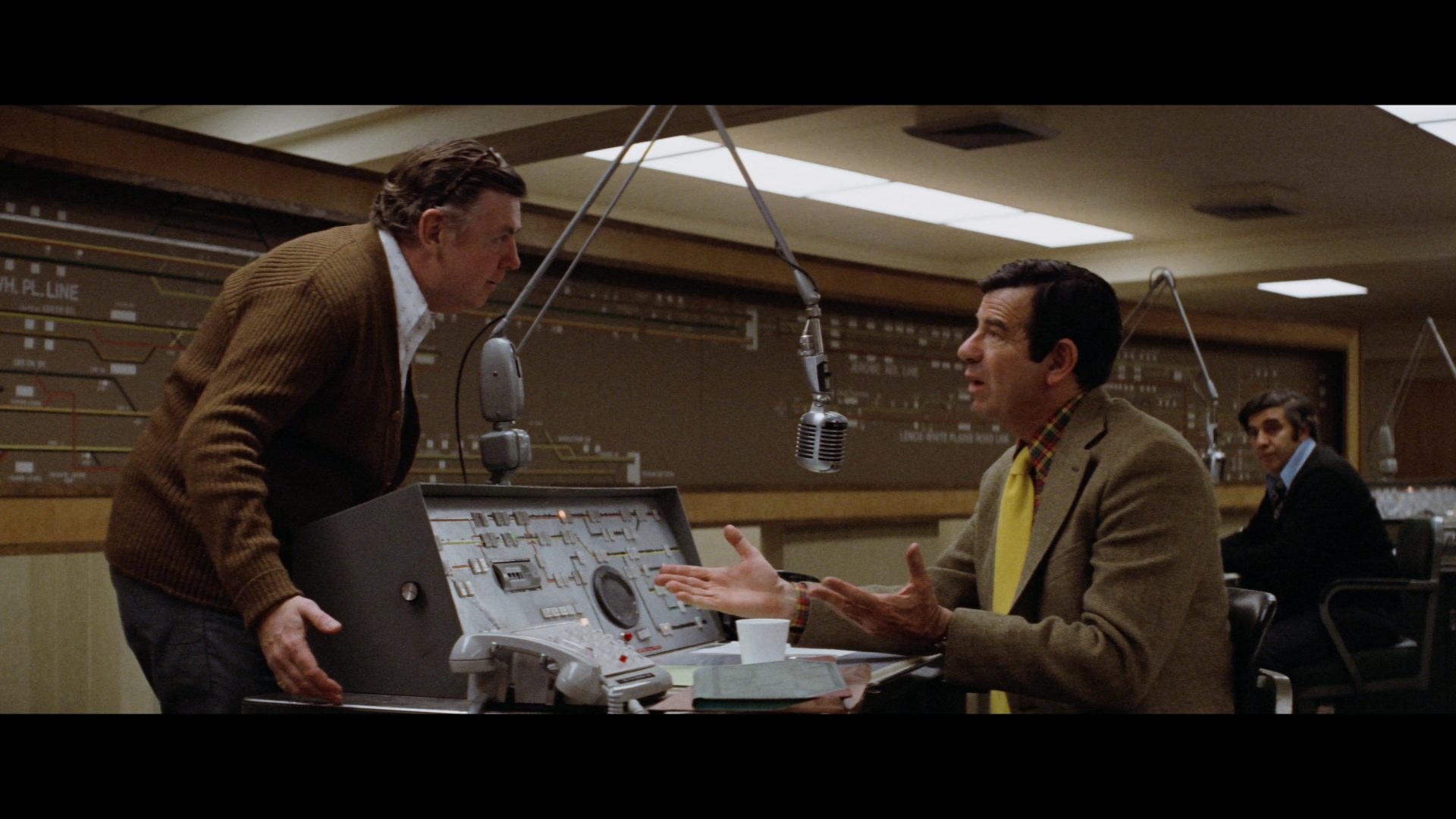
I recently watched both the 1974 and 2009 versions of The Taking of Pelham 123 and it really stood out how the industrial designs of their respective eras helped elevate the original[1][2] in comparison to the remake[3][4].
It's strange that people always make this argument for wealth taxes, but you rarely hear it about property taxes. If "net worth is not real" neither is equity in real estate.
People absolutely make that argument about property taxes. That's where deferrals or abatements for e.g. elderly or low-income homeowners, or caps on property tax increases come from. Someone may own a home that property taxes price them out of, forcing them to leave their community because they can't actually conjure money from a higher priced home.
I think a lot of tax authorities also don't really aggressively reassess that regularly without a sale, so it also kind of ends up baked in that if you didn't pay that much for the property, it's only theoretically worth that much.
This is all conceding the argument already. Many of us would happily accept these sorts of limitations on a wealth tax if it means there is a wealth tax.
The only reason it works with real estate is because they can put a lien on the house and block the sale of it. They don't have any useful mechanism to stop the sale of a share of stock, but since the government is involved in the transfer (due to the registering of the new house deed) of a house, they can stop that one.
> They don't have any useful mechanism to stop the sale of a share of stock
The SEC exists. As do many other mechanisms by which the government regulates direct and brokered securities trades and sales. You can make the case that some of those controls are poorly/ineffectively implemented, but you can’t claim that it’s not something the government routinely regulates, intervenes in, and sometimes prohibits outright.
Society has deemed it "ok" for a real estate transaction to take days or weeks to process and mountains of paperwork, probably because it is done so rarely in an average person's life. But stock trades are expected to be done quickly in minutes or even milliseconds with high frequency trading. It just isn't feasible to inject government paperwork in the middle of a transaction. Wall Street would revolt if they even tried.
The main reason real estate taxes work so well is that tax evasion is very difficult.
Because the building is standing right where it is, in the open, lit by the sun every day. If you don't pay your tax, the government can just take it.
This compensates for the several philosophical and moral problems with it, and I've seen several economists declare it the best form of taxation there is.
Why can't govt block the sale of stocks? It's not like you would be selling non digitalized assets, govts often freeze and reverse stock sales/trades when they find it to be illegal already.
It's harder for private companies sure, but who will stand in the way of govts if they said we will sanction your if you buy X or Y company?
If I sell my house, there's a reasonable expected range of money I can expect for it.
If a majority stock holder in a company sells all of their stock, the price first the first share sold is likely going to be completely different (and substantially less!) than the last share sold.
"It's difficult to accurately value" isn't an argument against taxing net worth. It's like the old (likely apocryphal) Winston Churchill joke, "We already established what type of woman you are, now we are just haggling over price". Just take whatever the proposal is, cut in half, quarter, or whatever fraction you want and you no longer have an argument against it.
Personally my favorite idea for this stuff that I have heard thrown around is to allow people to self value everything. However, that self valuation then becomes a price tag. Let a billionaire's accountants put their own evaluation on their equity in a business. But that becomes a binding offer and some other billionaire could come along and buy them out at that valuation. That creates pricing pressure in both directions, the person is prevented from underpricing their assets due to the threat of another buyer coming in and a person is prevented from overpricing because it increases their taxes. And suddenly all the problems regarding how the government appraises these things disappears.
Forcing people to write a call option on their property without an offsetting risk premium only sounds like a good idea if you neither understand the implications nor the math. Asset values would collapse because risk would go to the moon.
And that ignores that it trivially enables large-scale exploitation and looting by construction.
The market determines the risk, not the asset owner. The owner has no special knowledge of what the risk actually is separate from the market pricing it. You explicitly want them to accurately price it outside of a market, which is effectively impossible, ignoring that the price is highly fluid and dynamic.
If the owner is required to invent a fake risk premium then it virtually guarantees that the risk will be mis-priced. Forced rampant mis-pricing is an exploitable arbitrage opportunity of epic proportions. Every quant worth a damn will make a fortune looting this. No serious policy can ignore this defect. It has the additional political downside that no one can ever own anything anymore in a meaningful way, which won’t be popular.
No one takes this idea seriously because anyone with a modicum of finance math background can see that the math doesn’t math. Political ideology doesn’t even figure into it.
I'm getting the impression you didn't get my "haggling over price" reference. This conversation is in the context of a wealth tax which typically only applies to a very select group of incredibly wealthy people. However, your complaints are all about the scale of the economic problems this would create. That means we can continue to add restrictions to this proposal until eventually all the issues you raised disappear.
For example, imagine we only apply this to people with a net worth over $500B. That's literally only Elon Musk. He has plenty of money to hire his own team of quants to price his assets. We can even be generous with this law and make the purchase price double the valuation. Hell, we can even restrict it to only apply to stock of publicly traded companies so the wealth valuations are highly informed by market pricing. We can just keep adding rules like this until you're out of economic reasons for why a wealth tax and/or this form of valuation can't work. At that point the debate is lost and "we're just haggling over price" because once we apply it to Musk, how can you argue against applying it to Bezos...
Society has already decided that we can compel people to sell their private property for fair compensation via eminent domain. Plus getting the assets in the hands of people who value them more certainly creates utility and presumably increases the tax base via further development.
This type of forced sale happens all the time with public companies. For example, only like 60% of Twitter shareholders approved the sale to Musk, but the other 40% were forced to go along with it regardless of their preference. If Musk can do that to other people, why should some hypothetically richer person not be able to do it to Musk?
And to repeat myself for a third time, we don't need to haggle over price. If we only want this to apply to billionaires, assets worth $50 million, or whatever, that's fine. If one of the people impacted truly doesn't want to sell, let them set the price as high as makes them feel safe. I'm not going to lose any sleep over taxing the emotional desires of billionaires.
> For example, only like 60% of Twitter shareholders approved the sale to Musk, but the other 40% were forced to go along with it regardless of their preference
They signed up to that, though. Tagalonpg/dragalong rights are priced into the share price. That's not the same thing.
I always enjoy when someone takes a quote out of context to refute something I said when the context it was said in completely answers them. Like why didn't you include the sentence before that bit you quoted? Is it because me saying "this type of sale" shows that I was saying they are similar rather than identical? Or why didn't you include my first paragraph? Is it because eminent domain is also priced into everything a billionaire owns?
It's the opposite. You've been drip-fed "billionaires cause all the problems" for a few years, and now, as you say, you feel all sorts of things about them, which can rationalise all sorts of bad ideas.
Wealth inequality is worse than any other time in human history. What the wealthy and powerful are funding is division, fascism, the far-right and immigrant hate, so that they don't have to pay more taxes. It's the same divide and rule playbook since forever.
I disagree with you on what is being drip-fed. It's factual that deranged levels of wealth inequality are causing problems, even the billionaire wannabes on HN are starting to see that.
> Wealth inequality is worse than any other time in human history
And humans are wealthier than any time in history. They have access to robot slaves that can wash dishes and clothes for them. They can access fruits grown over 1000 miles away for 69c. They have potions that can cure cancer. They have the database of all human intelligence in their pocket, accessible from anywhere on the globe. They have individualized transportation that can travel over 2 miles a minute. They have super intelligent thinking machines for cents.
A big proportion of Americans are struggling to make ends meet on a fulltime wage. No amount of luxuries make up for a lack of necessities. Your argument might have had a smidge of credibility 15 years ago.
That's just the consequence of various other policies that a lot of them probably voted for (or didn't vote against hard enough). If you transform a country a certain way, promising more and more from the government for some people, then everyone else has to pay more. If you pay for it with ZIRP, then you're going to need to pay it back.
The last thing you should do at that point is vote for more policies that will destroy economic activity in the name of "fairness". That's how you got here.
> Wealth inequality is worse than any other time in human history
This is circular. Wealth inequality:
1. Isn't real. It's a paper value that would not survive contact with reality.
2. Doesn't matter. What matters is the absolute level of poverty and whether that's getting better. Someone in poverty in the UK today will still get healthcare, eyecare and dental care beyond the dreams of Henry VIII.
3. Is genuinely a stupid measure. You could "fix" it by burning everyone's possessions until everyone has the same: nothing. Zero inequality, and yet somehow doesn't sound great.
> What the wealthy and powerful are funding is division, fascism, the far-right and immigrant hate, so that they don't have to pay more taxes. It's the same divide and rule playbook since forever.
Absolutely real when Musk can tilt elections in America and fund far right parties in other countries. Your whole “paper wealth” argument holds no weight.
He didn't have to tilt anything in America. The Democrats ran the worst platform in living memory for the 2024 election, and the sooner they stop blaming billionaires for everything and start looking at themselves to improve the sooner they will get back the popular vote.
So did many other people. Any popular podcast will do that. Any media organisation has editorial bias, either in story presentation or even in selection. I don't see why Elon Musk would be singled out there, other than he's an ex-Democrat, and thus like all the ex-Democrats is a target of constant negative mentioning in a lot of one side's media.
It's interesting to see the level of discourse change across time as these same points are brought up again and again.
It seems there are many many more people heavily invested in preventing land tax all of a sudden and are very informed whereas when that guy made a land tax visualizer a few months ago... crickets.
Narrative control and algorithm driven propaganda is evident - Most people scrolling any kind of algorithmic feed would be shocked at the intimate detail the algorithm knows their mind, proclivities, aversions.
Another evident thing is that people will start retreating from the internet as this gets worse (With LLMs accelerating the trend).
> It's strange that people always make this argument for wealth taxes, but you rarely hear it about property taxes.
I don't like property taxes either, and at minimum would rather they were called something else, and preferably replaced with per-service charges where possible.
But either way they exist to pay for things, and not to just degrade the value of your property simply because you worked to own it.
It truly is a one of a kind museum. You'll see some of the most famous art in the world from people like Norman Rockwell and Frida Kahlo on the same walls as a random strip from Doonesbury or The Far Side. You'll walk through a reproduction of the Sistine Chapel shortly before walking through a reproduction of the podrace from Phantom Menace. You'll go to the theater and see a 60+ year old experimental short film made without a camera by pressing moth wings into film and then a few minutes later they'll show an episode of Cowboy Bebop.
It's such a bizarre and idiosyncratic collection that the museum itself inspires as much thought as the art in it.
Nothing makes me more excited about this museum than the turnover in curatorial leadership throughout the project, capped off by Lucas assuming the title himself.
Give me his unrestrained vision. Put it in my veins.
It's reminiscent of the difference between the Star Wars prequel and sequel trilogies. Regardless of your opinions on the quality of those movies, the biggest differentiator is that the prequels were the singular vision of a self-funded artist while the sequels are a corporate product of a global media empire. Even if the latter produces a better movie, it ends up sanding off many of the edges and those edges are where a lot of us found the magic of Star Wars. The Lucas Museum is similar in that it very clearly is the product of an excentric billionaire rather than the same type of curatorial thinking you will find in other art museums.
These are two crappy choices, and it's not a coincidence that a resource strapped filmmaker having to engage with many skilled artisans to sharpen their "singular vision" resulted in much better films (the original trilogy) than either of those two.
If you think he was significantly resourceful strapped making Empire and Jedi you are mistaken. At the time they were some of the most expensive films ever made.
Mostly self-funded too (a higher percentage for Jedi than Empire) so even in the original trilogy it was still Lucas signing the checks and making the ultimate decisions. Him being willing to delegate more in those days was personality driven rather than financially driven.
Let’s not forget though, the prequel trilogies were—not good. Lucas is at his best when he has collaborators who can help take the half-baked ideas and fully bake them.
They were better than good. I wouldn't call them masterpieces (my biggest critique is that they tried to do too much in II which messed up the pacing of Anakin's arc) but they're great films.
Yes, but while I may prefer "good" when it comes to the multiplex, I much prefer "interesting" when it comes to my art museums and Lucas's prequels and museum are both very interesting.
Phantom Menace is a super fun movie. Pure Star Wars. I've used it as an entry to the series for all of my kids (then I skip ahead to the OT to not ruin the twist).
I've generally found that most people who didn't like are people who were already adults when it came out, and had a different vision of what they wanted it to be.
Yeah, I think that's one of the keys: the lore in the prequels is so rich (and was so thoroughly fleshed out in stuff like the Clone Wars series) that if you're just directionally on board with the plot, the worldbuilding, the characters, you can read between the lines and just see the whole thing in a better light than the actual film on screen provides for itself.
For me personally, the prequels were very much an "emperor has no clothes" moment. There's a lot of "meh" in the prequels--in the writing, in the story, and in the direction. Some of the scenes between Anakin and Padme are just downright painful. But I could also see someone being able to overlook at least some of that, especially if they first saw the films when they were young. So I'm not here to complain about any of that.
I can sum up my biggest problem with the prequels (well, with Lucas really) in one word: midichlorians.
When he decided to explain how the force works, he took something that had been so eloquently portrayed in the OT*, and reduced it to something banal and mechanical. And there was no reason to do that. It's not like Darth Vader needed a blood sample to know that Obi-Wan was on the Death Star. And yet Lucas chose to do it anyway.
That choice showed such a baffling level of cluelessness. Like here's this guy, this supposed visionary, who has carte blanche to do whatever he wants (with what is supposedly his own story, no less) and he just.. doesn't really seem to get it?
It really made me question whether the OT were as a good as they were because of him or in spite of him. Apparently I got something out of the story that he did not.
* I'm referring particularly to Yoda's speech to Luke about the force in ESB. "Luminous beings are we, not this crude matter!". Beautiful writing, still gives me goosebumps. No wonder ESB is often considered the best one.
> That choice showed such a baffling level of cluelessness. Like here's this guy, this supposed visionary, who has carte blanche to do whatever he wants (with what is supposedly his own story, no less) and he just.. doesn't really seem to get it?
> It really made me question whether the OT were as a good as they were because of him or in spite of him.
He didn’t get it with the original trilogy either, but had Marsha Lucas to tell him no and patiently explain how normal people work. For the prequels he was surrounded by yes-men.
> Some of the scenes between Anakin and Padme are just downright painful.
The worse part of that is seeing clips from between takes: they actually have chemistry! They were actually directed to be unrealistic and unbelievable.
> It really made me question whether the OT were as a good as they were because of him or in spite of him.
Harrison Ford is why Han Solo says "I know" in response to Leia's "I love you". Contrasts directly with Anakin/Padme. "in spite of him" is at least a big chunk of it.
It can be both. Good art tends to allow a measure of interpretation outside of what the artists originally intended.
Dunno how in tune you are with random factoids but Lucas is on the record saying that his favorite episode in "The Clone Wars" is "A Sunny Day in the Void", where a bunch of droids are stuck in the desert. So...yeah, there's definitely _something_ he gets out of this series that might not line up with the fanbase at large.
He also wanted to double down on the midichlorians and the Whills for the sequels, so it definitely wasn't a one-off for him.
As for me, I don't hate the idea that a spiritual quality can have a physical component to it. (Makes you think about if a parting of the Red Sea or an ax head floating are "truly supernatural" events or more "natural, with mechanisms we can't understand".) I suppose it's a bit coarse that it's used to boil mysticism down to a number for comparison, and it certainly wasn't _necessary_ to move the plot along, though.
In all seriousness, I think I would have preferred the [Renaissance masterpiece] -> [Pop culture artifact] progression to have been a surprise. People seem to be more and more focused on expressing their own exuberance and less on preserving for everyone else the experience they put so much stock into. It's a bit selfish and hypocritical.
I knew who Luke's father was years before I saw Empire, and I can only imagine what a shock that must have been to people who didn't. I can only imagine. It would have been nice to have known, though.
> I think I would have preferred the [Renaissance masterpiece] -> [Pop culture artifact] progression to have been a surprise.
I never imagined I would be accused of posting spoilers for a museum, but even if we accept the idea that a museum can have spoilers, I think you're reading too much into what I said. There's no overt progression in the curation. I was simply detailing what I was thinking as I browsed the museum. In fact, the museum seems to be specifically designed to let the visitors experience the museum however they want. It was just my personal experience that this attempt to background the curation paradoxically had me thinking more about that curation than if they took a more traditional approach.
>A complete liberal from not that long ago would now be deemed a conservative by the DNC.
You say this like it isn't inherent to the nature of liberalism versus conservatism. A liberal of a prior generation is almost always conservative compared to liberals of the current generation. It just feels different this time because you're actually witnessing it change in real time rather than learning about it from history.
But in this case we're rather going in quite the opposite direction! For instance broad opposition to free speech has no place in any sort of formulation of liberalism, and so you find yourself in a scenario where a certain brand of liberal today would hold values deemed quite conservative, even by the standards of the past.
But this is also not particularly unprecedented. In the early 20th century the Republican and Democrat parties largely swapped roles. There was no formal agreement or acknowledgement of such. It happened quite organically, spurred along by decades of relatively significant events. I think we're seeing the outlines of such happening again, in much the same way.
When one debates aforementioned 'certain brand' types today, it often feels like a blast to the past. They share many of the characteristics of the die hard conservatives of times past - self assuredness bordering on divine authority, seemingly blissful ignorance of their numerous self-declared 'enemies', that trademark rabid intolerance, and more. The main thing that's changed is the dogma of choice.
First, the conversation was about the DNC, so what centrist Dems think is more important than "Progressives, radlibs, and the ultra-left". But beyond that, what specific policies are you talking about? Because without naming specific parts of the DNC platform, what you're saying sounds completely indistinguishable from "my niece corrected my pronoun usage and that made me angry".
Your point about the DNC is taken, although these groups do have sway there, as Yglesias often complains about.
Support for hate speech laws is common among leftists who primarily focus on social causes, as is support for “deplatforming” political opponents. Some also support German-style laws regarding politically extreme speech, which is funny, because those laws would almost certainly be used against them if they weren’t plainly unconstitutional.
I'm afraid I'm still not following you. In what previous generation did conservatives support hate speech laws? Because the topic being discussed was how a position can gradually over time change from liberal to conservative or vice versa. And from my perspective, it seems like you're just jumping at an opportunity you saw to complain about some fringe leftist position that you don't like.
> Who besides the conservatives right now is broadly opposed to free speech?
But to answer your question about conservative opposition to free speech, some conservatives are now showing support for hate speech laws, specifically laws against antisemitic speech, which is new. So this is actually a current “both sides” issue. Time will tell if the poles fully reverse on this; I think it depends on what form post-Trump politics takes.
Edit: wow, TIL. Apparently there were local laws against “race hatred” on the books in the early 1900s, and some conservative segregationists found that they could use those laws against “anti-white” speech (like supporting integration) in the 40s and 50s. So believe it or not, they became supportive of these laws until the Warren court overturned them, thanks to the work of the ACLU.
Mind you their version of "antisemitism" that they are banning is not hate speech, it is actually the opposite of hate speech and their ban makes hate speech mandatory.
Fair enough if you consider your comment a start of a new thread, but that is ignoring the context in which the comment you replied was made.
>specifically laws against antisemitic speech
As a Jewish person, I have a bridge that fights antisemitism to sell you if you genuinely believe this. Just the simple fact that they are only against antisemitism and not all hate speech should tell you there is no genuine conservative desire for hate speech laws. And your second example is just more evidence of that. Conservatives cynically abusing existing laws does not show a conservative value eventually becoming liberal or vice versa. You can argue it shows how these laws create problems, but it isn't evidence of any sort of switch in values.
This is similar to how many on the left don’t believe that “hate speech” restrictions should apply to speech against whites. This is the problem with laws that apply to the realm of speech and ideas; it is a very small step towards abuse that undermines equal treatment under the law, the free exchange of information, and the democratic process.
Both major US factions like to use selective enforcement and/or targeted taxation or regulation to attack their political rivals, while wrapping their actions in flowery language. This is a longstanding tradition here. If you don’t see it, I urge you to take a closer look and shed your bias.
Edit: I’ll add that this selective application is probably what creates the illusion of a change in values. In reality, it’s two tribes jockeying for power using whatever tools happen to be in front of them; naturally, the available tools shift over time. The ideological justification for a particular position or action is created after the fact.
>This is similar to how many on the left don’t believe that “hate speech” restrictions should apply to speech against whites.
These comparisons always seem to set up an equivalency between mainstream Republicans saying something extreme and what a random leftist said to their 50 followers on Bluesky. Like seriously, what mainstream Democrat is advocating for hate speech laws which only apply to non-white people?
Officially, there were only some small things like a house resolution that supported one-sided (minority only) hate crime protection, as well as some papers and op-eds that suggested that hate crime protection should only apply to minorities. These were about hate crimes, not hate speech, of course. It’s been a while, and I can’t find any records of statements from mainstream Dems.
What I saw in my personal experience was an army of trolls baiting this kind of response from left activists, with identity-focused activists readily complying, and with others then amplifying the message through retweets. Including many who should have known better, people I had formerly respected. There was zero condemnation or pushback on this from nearly anyone on the left, in fact there was often a sort of winking agreement with the message by the time it had trickled up to candidates and officials.
The worst offenders were the grifters in the “white fragility” consulting sphere, for obvious reasons.
Anyway, just because it’s more subtle doesn’t mean it’s not still an issue. Republicans are almost always less subtle about terrible things they believe or do; this does seem to be true in general. It’s only rarely that you can get Dem officials to say awful things like “turns out I’m really good at killing people” or “we came, we saw, he died.” This is made worse by the lack of a substantial platform or position statement in many campaigns nowadays, so it’s hard to identify what anyone really stands for at all.
Feel free to take your point on this, as I have no hard proof. But I and many others saw this happen first hand.
>Anyway, just because it’s more subtle doesn’t mean it’s not still an issue. Republicans are almost always less subtle about terrible things they believe or do; this does seem to be true in general. It’s only rarely that you can get Dem officials to say awful things like “turns out I’m really good at killing people” or “we came, we saw, he died.”
It seems like you are very close to getting it, so maybe spend some time brainstorming on possible reasons why Republican politicians say "terrible... awful things" much more frequently than Democratic politicians. There's probably some other explanation there outside one side simply enjoying subtlety more than the other for no particular reason.
If you look at actions rather than words, Dems have been equally complicit in the things that are destroying the country, namely the offshoring of US industry and weakening of domestic labor, privatization of public services (especially Clinton/Third Way), the financialization of the US economy, the expansion of the security state (especially Obama), the erosion of civil liberties, the continuation of “forever wars.” They also failed to correct course after the GFC, despite holding the trifecta, probably dooming the country in the long run by using endless QE to temporarily float the economy. We needed a hard landing and we didn’t get one.
The one good thing I have to say about the Republicans is at least they don’t fuck around. They are speedrunning the inevitable collapse, and we might actually be better off for it. With the rate they are going, there will be no time to finish constructing a fully integrated police state before the bottom falls out.
I think a practical issue you have to deal with on this sort of topic is what is done versus what is said. Illegal immigration is a great example. There's no part of any official DNC that overtly supports illegal immigration, yet policies and behaviors show an intent to enable and facilitate exactly that.
On the speech issue, here [1] is a rather great bit on DNC efforts to censor speech by the WSWS/World Socialist Web Site. The article mentions the ongoing obsession with censoring "disinformation" when disinformation itself is often little more than truths that counter the official lies of the day.


-screenshot.jpg)

reply