A subway is very different from an intercity railway network. For one, there's probably fewer different routes on the subway so trains conflict with each other less. Also, a subway doesn't have to accomodate freight traffic as well.
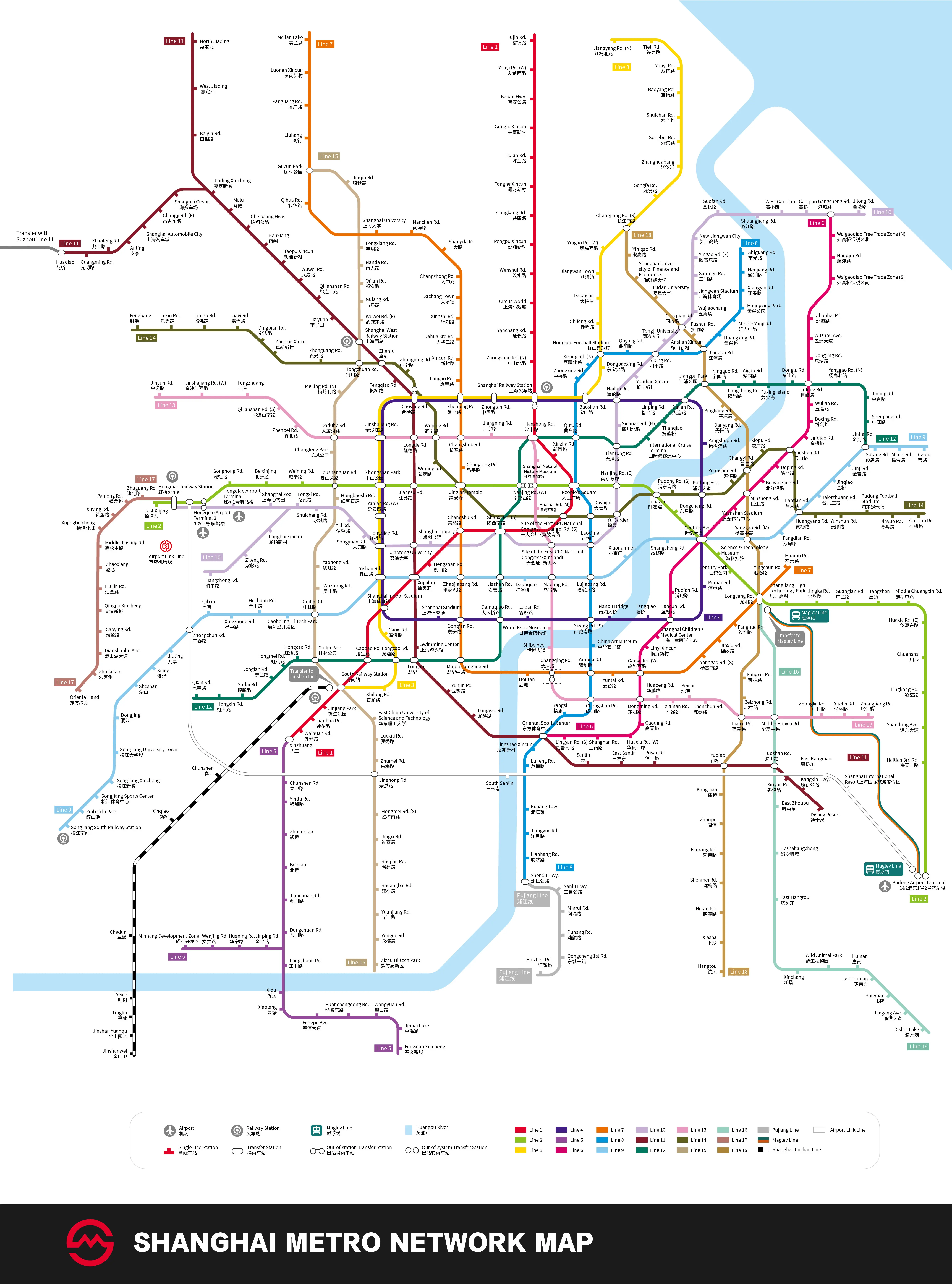
The German intercity rail network certainly identifies more lines, around 57 to Shanghai's 18, but this isn't directly related to the complexity of the topology. For example, line 14 appears to begin in Aachen and dead-end into Berlin, at which point line 95 begins in Berlin and runs out to Poland. As far as the routing is concerned, those could be the same line. But they're given different numbers. When the same thing happens (at a smaller scale) in Shanghai at the west end of line 9, the tail bit of the line going to Songjiang is still called "line 9". Note that if you want to ride out to Songjiang, at some point you're going to have to get off your "line 9" train and walk over to another station where a different "line 9" train will take you the rest of the way.
Discounting that, the two layouts appear to be roughly similar on the fundamentals, if differently scaled.
The most obvious difference is that the routes between major German cities are served by several lines. This is clearly meaningful in some cases; line 29 from Munich to Nuremberg continues north to Hamburg via Berlin while line 41 from Munich to Nuremberg continues northwest to Dortmund via Frankfurt and Cologne. On the other hand, line 8 from Munich to Nuremberg parallels line 29 for the entire length of line 8 (line 8 stops in Berlin, but line 29 doesn't).
My first guess would be that conflicts arise from the fact that the German trains are on the ground, and when their tracks cross, conflict can occur. This isn't true of a subway system; when subway tracks cross, they do it at different altitudes, allowing both tracks to be in use simultaneously.
Not only do tracks cross, trains also share tracks and platforms. In Shanghai only Line 3 and 4 share tracks and platforms.
Your map only shows ICE/IC lines, there are many more other lines which share the same tracks. This shows a more complete picture: https://www.deviantart.com/costamiri/art/Transit-diagram-of-... but it still doesn't show international trains and freight.
But yeah. I had the fortune to see Jaws on a bus in highland Bolivia (talk about a weird choice for forced onboard entertainment!), and it was more annoying than it was scary.
Profilers lie and some more than most. I’ve gotten 3x from code with a perfectly rectangular profile output.
Part of it comes down to a trick game devs steal from finance: give each task a budget and keep it to the budget even if it’s not the tall tent pole.
You should not spend 10% of your response time on telemetry and logging combined. Yet I pulled 10% TTFB out of just the logging and telemetry code on a project. It was a frog boiling situation. Every new epic used the new code and determining the cumulative cost wasn’t easy.
I'm 30 and I remember when this was still a thing in Russia. As soon as Communism crumbled and the new economy could provide enough food, literally everyone abandoned the dacha and the potatoes.
Most dictatorships make no less than a half-hearted attempt to convince the population to support them.
And then they make a point out of terrorizing the people who don't support them. Just so the others have no trouble discerning whether believing them is a good idea or not.
Does the industry even have as much junior folks as it used to? Because cutting them, or not hiring them in the first place, is an alternative to lowering their salaries.


reply