It would be a huge concern if people stopped vaccinating. I am definitely in favour of vaccination - but if my experiences are anything to go by, the government and healthcare establishment have done themselves and the public no favours in their approach to the issues.
At the peak of the autism-vaccination scare a few years ago, we were due to vaccinate our child. I researched as much as I could, but almost all the information out there was very basic and almost condescending. Rather than try face parents concerns head-on, the attitude was simply to say "vaccination" equals "good", with no hint of a balanced discussion to address real issues like side effects and harm from vaccinations. On the one side we were faced with almost hysterical rhetoric and supposed "facts" from the anti-vaccination groups and on the other, near apathy from the governmental organisations.
We did go ahead and get our child vaccinated, but after approximately 2 weeks she starting displaying very worrying symptoms, her eyes rolling backwards into her head, becoming floppy, making peculiar sounds. We rushed her to hospital, where the doctors steadfastly refused to admit even the possibility that her symptoms were related to the recent vaccinations. It was just "coincidence". At least one of my nephews suffered some sort of febrile convulsions after the measles vaccination - again coincidence apparently.
Even after all this, I still support vaccinations, because the disease is statistically far worse the than side effects from vaccinations.
In general, I've found that a very useful heuristic for evaluating the trustworthiness of a claim is to take the inverse of the amount of fear & outrage generated by it. So if everybody is screaming in very shrill tones about how outrageous some conspiracy being perpetrated on the American people is, it's probably false. If there's indignant recitation of facts & circumstantial evidence, it may be true but likely isn't all that important. If nobody is talking about it except for a few well-qualified voices, you should be scared.
So applying this to a few issues of the day - "vaccines cause autism" = false (this has already been established, the guy who published the original story admitted to falsifying data and lost his medical license over it). Pizzagate = false. Trump being the next Hitler is probably false. Clinton e-mail scandal = true, but inconsequential. Radical Islamic terrorism = terrible for folks in Syria, but inconsequential for most Westerners. Trump administration ties with Russians = probably true, also inconsequential. Global warming = should be moderately concerned, but likely not the biggest pending environmental calamity. That drunk driver you don't know about = will probably do you in. Either that or a constant diet of more calories in than calories out.
If they want to advocate vaccines, list the side effects of the vaccines (and how common they are), then list the side effects of getting measles (and how contagious it is).
During the vaccine "debates" it is very evident that discussion about the diseases that you're vaccinating against aren't readily discussed or available. If you pick up a leaflet at your pediatrician's about the MMR, it doesn't say what a measles infection is like, just talks endlessly about the vaccine.
So we're having the wrong debate "Vaccines safe or unsafe" instead of "Vaccine Vs. measles." That's why people think skipping vaccines is the "safer" option because they don't grasp what it is they're vaccinating against.
I got my daughter all of her vaccines on schedule. My biggest concern wasn't the vaccines, it was her getting freaking measles before she was old enough for her first MMR shot (at 12 months); there was a big outbreak at Disneyland in that period too.
Read about the former UK Doctor (found guilty by the General Medical Council of serious professional misconduct in May 2010 and struck off the Medical Register) that started it all:
There were a lot of studies trying to prove or repeat his "discoveries" only to confirm that he faked the results for the personal gain. But the bad media coverage of the affair and the small number of people who actually profited from the scare got us to where we are today. And of course, exactly the success of vaccination allows the existence of "antis."
I think that's because that encourages people to assess the issue for their children, but really vaccines aren't just for your kid, they provide herd immunity that saves the lives of newborns, the immunocompromised like children on chemo, etc. Also people forget the horror of life before vaccines for things like polio.
When I grew up, cases of the measles were common. I had them, my sister had them and many of my friends came down with them. I didn't come from a community of anti-vaxxers, either. It was just something that happened to kids, like the flu.
I'm not supporting the anti-vaccination movement, just pointing out that this world of pretty much no one getting the disease is the new normal and that we survived as a civilization before it became so. Obviously it would be better if everyone were vaccinated. I'm just trying to put it in perspective.
I wish we would stop with the vaxxers vs. anti-vaxxers. I think most people (including myself) fall into the middle - we don't believe they are entirely safe, but understand its the lesser of two evils and have to roll the dice.
What I dislike about the "pro-vaxxers" is their unwillingness to acknowledge ANYTHING negative about vaccines.
- There IS "stuff" in most vaccines that we should ALL agree should not be in there (formaldehyde, aluminum, etc). There is no "safe" level of aluminum for a baby. Some vaccines manufacturers make them without these things if you really do the research for each one, but the chance your doctor carries the perfect brand combinations of the ones without all the questionable ingredients is unlikely. For example, if you find out XYZ co makes the MMR vaccine without aluminum, it doesn't really matter because you probably can't get the version from XYZ co.
- The packet insert clinical studies that come in the vaccines are usually absurdly small. We should ALL agree millions of people are getting these vaccinations every year and a sample size of 500, 5000, or 10000 people in 1980 just doesn't cut it. There should be better ways to keep these studies current with much more data.
But no one usually wants to hear these criticisms. "The science proves its safe!" Sure, until it doesn't. Wouldn't it be great if we could just acknowledge the obvious issues instead of opposing everything the other side says?
Based on what scientific fact do you state "there is no safe level of aluminum for a baby?" We all, including babies, contain aluminum. That's the problem: i can't agree to "there's stuff in there that should not be" based on an opinion.
This is exactly what I always see happen. Common sense tells me formaldehyde and aluminum = not good. It's not iron after all. I don't recall every seeing formaldehyde or aluminum nutrition supplement pills. Yet people will literally argue that formaldehyde is naturally occurring and exists in our bodies and that's supposed to fly "scientifically". We need to do better.
> Formaldehyde and its adducts are ubiquitous in living organisms. It is formed in the metabolism of endogenous amino acids and is found in the bloodstream of humans and other primates at concentrations of approximately 0.1 millimolar.
Maybe "people will literally argue that formaldehyde is naturally occurring and exists in our bodies" because, you know, it's true?
Also considering that aluminum is the third most abundant element in the Earth's crust, I'd be very surprised if even ancient people didn't have some aluminum in their bodies. They could ingest more aluminum than we do simply by chewing on food with dirt.
> Maybe "people will literally argue that formaldehyde is naturally occurring and exists in our bodies" because, you know, it's true?
Sure, as a standalone fact. But the context of this topic is as an additive in vaccines given to babies 10-30 lbs.
I'm still amazed people will argue that it's fine to add formaldehyde and aluminum, and then justify it with ancient people. The lengths people will go to to avoid giving an inch to any vaccine concerns is crazy. I'd even take a "Yes, ok you have a point there, BUT still...".
Because you haven't demonstrated that the aluminium is harmful. Babies eat it every day, do you suggest stopping breast feeding because breast milk contains a lot of aluminium:
I'm not sure how much demonstration you could need. The page I previously linked to is thoroughly sourced to medical journals and the doctor even gives a balanced opinion:
> If I could sum up the aluminum controversy in three sentences, it would be this. There is good evidence that large amounts of aluminum are harmful to humans. There is no solid evidence that the amount of aluminum in vaccines is harmful to infants and children. No one has actually studied vaccine amounts of aluminum in healthy human infants to make sure it is safe. Should we now stop and research this matter? Or should we just go on and continue to hope that it is safe?
Regarding the aluminum in breast milk - I won't say its false because I don't know. But so far I haven't found that sourced anywhere. Just a lot of articles using it as a talking point.
"There is good evidence that large amounts of aluminum are harmful to humans."
But that's applicable to every substance in the universe!!! From serpent venom and uranium to oxygen and water. Seriously, you can die if you drink too much water and it's not pleasant.
Your argument proves too much, we can't ban everything that is harmful to humans in some doses. We can and do ban certain doses of certain substances, and that amount of aluminum is well bellow the damage threshold for humans.
> If I could sum up the aluminum controversy in three sentences, it would be this. There is good evidence that large amounts of aluminum are harmful to humans.
That large amount is well above what's in vaccines.
If you are injured by a vaccine you can't sue the manufacturer, you have to go though the Vaccine Court. Meanwhile the vaccines themselves can enumerate some hideous side effects.
No most people do not think they are "somewhat safe". Who do you know that has been injured by a vaccine? Any family? Friends? Friends of Friends? Why are you afraid of something you don't even have anecdotal evidence for?
In what way does an individual have the right to not be vaccinated? More generally, in what way can the state not impose on the individual's health (Especially when it believes it is improving it)? There is a lot of talk about rights here, yet no explanation of why the right to not be vaccinated exists. The reason why the U.S. has a Bill of Rights is because many things we consider rights are not inalienable.
The exact argument, and I present two quotes from the Supreme Court, that vaccines can cause harm [0] and that they therefore should not be allowed to be mandatory have been heard and refuted [1].
[0] "The defendant offered to prove that vaccination 'quite often' caused serious and permanent injury to the health of the person vaccinated; that the operation 'occasionally' resulted in death; that it was 'impossible' to tell 'in any particular case' what the results of vaccination would be, or whether it would injure the health or result in death"
[1] "It seems to the court that an affirmative answer to these questions would practically strip the legislative department of its function to care for the public health and the public safety when endangered by epidemics of disease. Such an answer would mean that compulsory vaccination could not, in any conceivable case, be legally enforced in a community, even at the command of the legislature, however widespread the epidemic of smallpox, and however deep and universal was the belief of the community and of its medical advisers that a system of general vaccination was vital to the safety of all."
Whether or not an individual has a right to not be vaccinated is really the question at stake here. AFAIK we don't yet have a direct SCOTUS decision on this and the default is that individuals can't be compelled to undergo procedures. That's not an argument either way, I'm just summarizing my understanding of the state of the world today. The discussion in this thread, at least my comments, are entirely about what I think the rights should be. I think it's very likely that we'll see a SCOTUS case in the near future about just this issue since we're getting close to a breaking point. My argument is that we're going to have a number of nasty things to contend with once we go down the road of forcing medical procedures for societal goods. As I mentioned else where in this thread there was a time when SCOTUS ruled that forced sterilization could be used to implement eugenics. [0] That's the type of thing I think we'd be opening ourselves up to by not respecting people's right to decline procedures.
To draw another parallel that may resonate with the HN crowd. The argument that decided Roe V. Wade was that a right to privacy under the 14th Amendment implies a right to choose whether or not to have an abortion. I can't see any way that argument is going to hold up in a world where a right to privacy doesn't also imply a right to choose whether or not to be vaccinated.
The case you are looking for is Jacobson v. Massachusetts [0], which is where I pulled my excerpts from. It held that the 14th in this case allows forced vaccination (Well, doesn't violate). I'm familiar with the Buck v. Bell (Forced sterilization is allowed, as you mentioned) case as well as Prince v. Massachusetts (Schools can require vaccinations), though the argument made by the courts in all cases was to the effect that the society out-weighs the individual in the matter of health. What we implement on-top of that is up to the legislature, but the courts have shown an understanding that the state has a role in health.
Point well taken, although I believe the decision did explicit say that vaccines can't be forced on people but people can be punished for refusal to take vaccines. Including being imprisoned and fined. Slight distinction, but still I was unaware of the ruling so thanks for sharing. In practice it seems that people are seldom forced to take vaccines these days, except maybe by virtue of being denied access to public school. Do you expect to see that changing soon? I think given the circumstances and the existing ruling it seems quite likely.
> Whether or not an individual has a right to not be vaccinated is really the question at stake here.
No, it's really not. Whether a parent has the right to neglect vaccinating their child is. There is almost exactly zero debate over mandatory vaccines for adults.
"Measles is one of the most contagious and most lethal of all human diseases."
Okay, I'm not a scientist, but I'm pretty sure that sentence is not accurate.
The percentage of people that die from measles is extremely low, and it's hard to tell if it's the disease that causes it, or simply the fact that the person was already very weak (and therefore would have died from another sickness such as complications of a cold).
"Most lethal" is accurate if you're talking total deaths, not death rate, and if you assume the non-existence of vaccines. Pre-vaccination, roughly 7-8m children died every year from measles. By comparison, HIV currently kills about 1.1m, TB kills 1.5m, and malaria kills about 438k. This is an admittedly misleading definition of "most lethal", though, because it incorporates its contagiousness as a factor and assumes no vaccines and developing-world conditions. In the developed world, the death rate from measles is only about 0.2%, which is comparable with some of the more virulent influenza strains, but still an order of magnitude less than the 1918 flu pandemic.
"It causes the most vaccine-preventable deaths of any disease."
"In 1980, the disease was estimated to have caused 2.6 million deaths per year."
It would be an unbelievably cruel experiment, but if "anti-vaxxers" would win in the US and force it on everybody, in about, let's say, a decade there would been enough children deaths (it's 2 from every 1000 infected!) to prove them wrong.
As long as the most of children are vaccinated, it's the vaccinated ones who protect those of "anti."
Yes, only of 12 million children younger than 5 in the US, "only" 0.2%, that is, 2 of 1000 infected would make 25000 vaccine preventable children deaths in one epidemics, if nobody would have been vaccinated.
To answer to wmboy's question "how does it compare to malaria" -- malaria wasn't treatable with vaccines up to now, there are very recent successes to develop one which is still only 25%-50% effective (has a relatively low efficacy and it was only recently, 2015, approved for use outside trials). https://en.wikipedia.org/wiki/Malaria_vaccine I don't think you'd like mosquitoes biting you if you would travel, for example, to Africa, where malaria is common.
I tracked down a stat, "Death from measles was reported in approximately 0.2% of the cases in the United States from 1985 through 1992. As with other complications of measles, the risk of death is highest among young children and adults. Pneumonia accounts for about 60% of deaths. The most common causes of death are pneumonia in children and acute encephalitis in adults."
I had an adult co-worker who had never been vaccinated for measles and had contracted it as an adult. He had to take expensive eye-drops regularly for the rest of his life, or he will go blind. He grew up in Utah.
I mentioned Utah because it's in the middle of the United States, rather than Sub-Saharan Africa. My coworker had all the benefits and access to modern medicine, and now he faces blindness.
Those are two separate questions: (1) what is the leading cause of death and (2) which disease is most deadly and/or transmissible.
If the author of this opinion piece is correct, it could well be that vaccination is keeping the most deadly disease from causing the most deaths.
Another way this could happen would be if measles killed people so fast they couldn't infect others, although I've never heard anyone make this claim.
Although I don't think the argument is compelling, it is a great question: is there some other reason that measles isn't killing as many people as it used, other than vaccination? To answer that question, we do need scientific research not logic.
Exactly...correlation does not imply causation. Better sanitation, access to clean water, access to better medication and healthcare could also be related
When that happens, it's most likely because that person has a weak immune system, correct? So what evidence do we have to say that person wouldn't have died from the next disease to come along (e.g. diarrhoea or simply catching a cold and dying from pneumonia?).
Just a question... kind of playing the devil's advocate, but I think it's usually ignored by most people when talking about vaccination.
Subacute sclerosing panencephalitis (SSPE) isn't due to an immunocompromised state. That happens in normal people who get measles. It's rare in adults that contract measles, but much more common in kids that get it.
A similar disease called progressive multifocal leukoencephalopathy (PML) is due to an immunocompromised state. Patients with HIV and those taking certain medications with multiple sclerosis are at risk.
Sorry I missed the 'later in life' in your original comment. Either way, I'm pretty sure the author of this article didn't have that condition in mind when he penned the sentence.
It's extremely low likelihood of death compared to other more lethal diseases. I'm pretty sure AIDS, leukemia or malaria are more lethal to children than measles is.
And as far as "the leading cause of death", diarrhoea or pneumonia are arguably the biggest cause of deaths in children.
Diarrhea and pneumonia are symptoms, not diseases, comparing them to a disease like measles (for which, incidentally, both are among the common complications) is not really sensible.
This article does not explain why anti-vaxxers are winning, but it demonstrates why. It repeats tired establishment arguments that the diseases that vaccine protect against are dangerous, but does not address or even acknowledge the legitimate concerns of parents who have seen first hand, or have heard from trusted sources, serious adverse reactions to vaccinations. Loud denials by the medical establishment along with efforts to use state power to compel vaccinations, legal immunity for vaccine makers, and brutal retaliation against doctors who question the orthodoxy do much to help the anti-vaccination movement.
Possibly, I think the anti-vaxxer movement has more to do with a distrust of authority, particularly scientific authority, than it has to do with an actual fear of autism. If / when a measles outbreak happens there's still a question if people will be willing to accept medical science as an answer to the problem or if it'll be cast again as the villain. People are starting to distrust science, and there's no guarantee that scary diseases will change that, even if it seems to us here on HN as if it should.
Be sure to also read all the stories of healthy, active teenage girls who after getting the Gardisil shot had their health severely decline. Then read story after story of these same girls (all over the world) being told all their symptoms were made up and that they needed to see therapists instead of medical doctors. This type of behavior is why more and more people are questioning vaccines and their safety. The medical community acts as though vaccines have 0 side effects, even though the drugs clearly state they have side effects. I have read countless stories of parents whose child experience severe reactions right after vaccination and then the pediatrician or ER doctor never even thinks to consider that maybe the vaccine caused the problem.
I have a sister in law who when she was a young girl got a vaccination and then within 24 hours was unable to walk for several days, basically paralyzed. This caused her mother, who is an ER doctor, to delay vaccinations for her younger siblings.
I just wish the vaccine establishment would just be honest and admit that some children have to suffer or even die for the benefit of the "herd".
> I just wish the vaccine establishment would just be honest and admit that some children have to suffer or even die for the benefit of the "herd".
I think this is the problem. If doctors told parents that their child could die or become paralyzed from vaccination, and that they can't predict it or stop it, then vaccinations would be much less popular. So the establishment lies for a good cause (to protect the herd).
Rarely do I get into Facebook arguments online, but this seemed to be the best solution -- posting picture after picture of children with measles and polio.
True, but their actions aren't isolated to themselves, so I'd rather see disease rates not increase. Enough exposure can still infect vaccinated people, and we end up needing to pay for unvaccinated people when they get sick.
If unvaccinated people could be easily avoided and economically separated, they I'd totally be fine with them choosing to put themselves in danger.
I predict church donations and anti-minority violence going up rather than vaccination rates. Them gays brought the ire of god upon this nation, and killed my poor baby!
Even if they did cause autism, the risk is less than the historically-verifiable risk of contracting measles, isn't it? If you take whatever the observed increase in autism is, blame it 100% on vaccines, and compare it to the number of historical measles deaths, are vaccinations still a good idea?
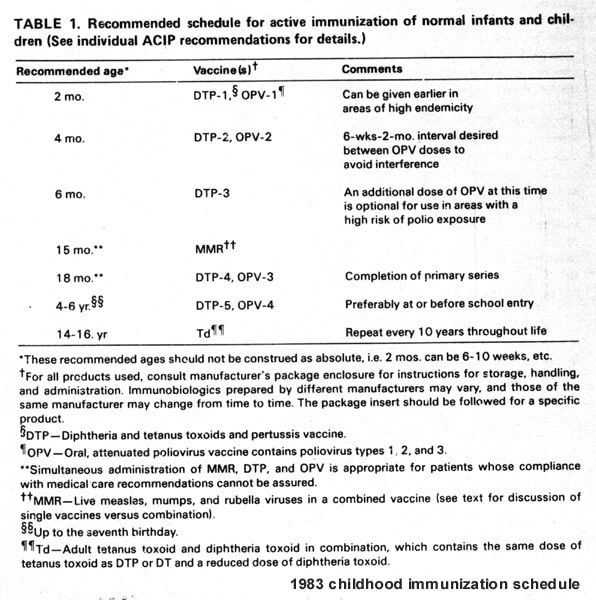
I was likely (born early 70s) vaccinated according to the first schedule, although my parents allowed me to get measles, mumps and chicken pox. Since they've passed, I can't ask them for their exact reasoning as to why.
Just commenting: there is a big difference between the likely vax schedule that a 45yo of today got, and what an infant born this year or last, will get.
They don't test what happens to someone when they get all those shots. Also chicken pox is reality is no big deal and all my siblings had it as a child.
That's the solution, unfortunately. Kids dying, the kids of rich idiots who decide not to vaccinate. Maybe we can get back polio and it will be just like when my grandma was a kid and she would get told not to leave the yard at certain times of year.
Not really, they aren't necessarily far on either side. They arexamples of uniformed opinions, one of which is predominant on the left and one on the right (though with a sizable left component), but lots of the people with those opinions are otherwise moderate members of the right or left. Extremism and ignorance may correlate (or not), but at a minimum they are distinct issues.
I see both of those issues on both sides of the fence personally, just for different reasons.
I live in Southern USA and there's a lot of agriculture here, a lot of the farmers I know are conservative and anti-GMO. But I think they're mostly against it because of all the food patents and monopolies. Most of the left-leaning people I know are more against it because "we need more research/we have a poor understanding of nutrition".
There are those who cannot take vaccinations due to medical conditions and there are those who opt-out from vaccinations due to beliefs. Guess who suffers damage for no fault of their own ( not blaming the children of the parents who are making the choice ).
> There are those who cannot take vaccinations due to medical conditions
Those folks are relatively rare though.
Seems to me that living surrounded by contagion is part of the human condition, and that all of us have the right to take action to protect ourselves (and our children) from that contagion, but no-one has the right to violently force someone else to protect himself.
There's always a little chance of getting infected even with the vaccine.
Herd immunity makes that chance orders of magnitude smaller.
It's not about forcing people to protect themselves. It is about forcing people to not increase the chances of my kids dying of a completely avoidable issue, just because these other people believe in fairies.
No, this is the first I've heard that, but sounds like another myth made up to deal with the first one:
>"Since transplacental immunity and waning of maternally derived measles specific antibodies play an important role in determining the optimum age for vaccination of infants against measles..."https://www.ncbi.nlm.nih.gov/pubmed/10829850
EDIT:
It looks like you may have heard about IgA maternal antibodies, which are not the relevant type here:
>"The vast majority of maternal antibodies are of the IgG isotype. In humans, maternal antibodies are preferentially transferred before birth transplacentally, and in animals of veterinary importance, preferentially through uptake of IgG in the intestine from colostrum within the first 24 h after birth. These passively acquired antibodies enter the bloodstream of offspring and act as a protective shield throughout the body in the same way as actively produced antibodies. Sometimes IgA antibodies contained in breast milk are also referred to as maternal antibodies. However, there are important differences in the action of passively transferred IgG and IgA antibodies. Upon transfer after birth, IgG antibodies are present in the bloodstream of the neonate in a finite amount that declines over time. These IgG antibodies suppress vaccine-induced immune responses. In contrast, IgA antibodies are continuously supplied through breast milk from the mother and protect the gastro-intestinal tract against pathogens without having an effect on the immune response. For the purpose of this review, the term “maternal antibodies” will be used for passively transferred IgG antibodies."https://www.ncbi.nlm.nih.gov/pmc/articles/PMC4165321/
Some people are unable to get a vaccine, largely if you are immunocompromised (new born, AIDS, extreme other sickness, immunosuppressors etc). By having a large portion of the population not able to transmit the disease you have herd immunity that protects those that can't get it.
You also reduce the load & cost to our healthcare system.
>"Some people are unable to get a vaccine, largely if you are immunocompromised (new born, ...)"
This is wrong. In the case of newborns they do not give the vaccine because the baby is already immune (which interferes with the vaccine):
>"The most important factor affecting the success of measles immunization is the disappearance of maternal anti-measles antibodies."https://www.ncbi.nlm.nih.gov/pubmed/14604165
Yes, it seems that vaccination of the mother leads to less protection of the infant. That is why some argue the vaccination age needs to be lowered:
>"An increasing proportion of children in the United States will respond to the measles vaccine at younger ages because of lower levels of passively acquired maternal measles antibodies.
[...]
Our data indicate that, in the future, when virtually all women of child-bearing age will have vaccine-induced immunity, the recommended age for vaccination may be able to be lowered further without diminishing vaccine efficacy"https://www.ncbi.nlm.nih.gov/pubmed/8545224
This isn't politically acceptable because people harbor a myth about the reason newborns are not vaccinated.
You're missing the "herd effect". There are cases where children are too young or have another health issue that prevents them from being vaccinated. These children rely on the greater population to be vaccinated and to help decrease their chances of becoming infected.
Some who are vaccinated will still contract the disease. Some cannot be safely vaccinated because of preexisting medical conditions. For both groups, herd immunity provides additional protection; herd immunity is frustrated by those who choose to not vaccinate.
vaccines are not perfect. Thus, some people who have the vaccine could get the illness. We rely on "herd immunity" to protect those people.
Also, some people are unable to take the vaccine, and again we rely on herd immunity to protect those people.
By not vaccinating their children anti-vaxxers are not just risking the health of their own children but are risking the health of the wider community.
I can understand the anger, it's quite horrifying that diseases we thought were eradicated are making a comeback. On the other hand I'm also horrified by the idea of shipping people off to Alaska for refusing to submit to a medical procedure. That's a very dangerous precedent that could be applied in all sorts of heinous ways.
What exactly do you think grants you a right to herd immunity? You might really really want herd immunity, but you don't have a right to it. Your rights stop at theirs just as much as their rights stop at yours. They do have a right not to be subjected to medical procedures, you don't have a right to herd immunity. It's frustrating and regressive but herd immunity is something we have to decide on as a herd, and currently we're deciding against it.
It's not about rights, it's about public safety. I don't have an inherent natural human right to have people obey traffic laws, but they save lives and a majority of people support them. And more then 2/3s of parents in every state of the nation vaccinate their kids. It's the tiny minority of people who refuse to that fuck it up for the rest of us, much like people drinking and driving cause car crashes.
Sorry, to me it is about rights and it should be to you as well. It is also very much about public safety to me, both are important. But to me forced procedures would be an unacceptable violation of rights not worth it for the public safety gains. I can understand the point of view that eroding those rights is worth the public safety gains. I cannot understand the point of view that this is not, on some level, about rights.
Driving licenses restrict rights because the alternative, anyone being allowed to drive anything, anywhere, in any condition, is utter chaos and would result in tens of millions of people dying from avoidable catastrophes.
So long as people have a right to "life, liberty and the pursuit of happiness" then they must acknowledge that certain things must be done to protect that right. Mass vaccinations is one of those things.
I guess I think rights go hand in hand with duties and responsibilities, including one's duty to other humans, and the responsibility of the government to act on behalf of the governed for the common welfare.
As a society we've worked hard to eradicate things like polio, measels, and other violently contagious diseases that left uncheecked would destroy the lives of hundreds of millions of people.
As a member of that society I have the right to benefit from our collective efforts because those efforts were done for me, for you, for everyone, without exclusion. These things were given to us by our ancestors, by our governments, by our own individual contributions.
Right now there are people working tirelessly and facing extreme risk to elininate the tiniest pockets of polio in the world. They are killed on a worryingly regular basis because of a form of anti-vaxx sentiment: http://www.bbc.com/news/world-asia-36090891
If you're a staunch libertarian your position should be that I can do whatever I want so long as I don't infringe upon your rights, and one of the most fundamental rights is a right to live and do what I please.
Unvaccinated people can strip you of your right to live.
Could use the same argument for vegetarianism, environment causes, gun control, etc.
If it were up to me guns and hard liquor would be banned and cars would have limited speed. These are all things that affect me even if I don't use them.
If you can frame vegetarianism in a way that someone eating meat causes another person direct harm, maybe you have a case.
Environmentally speaking there is more of a clear connection, though it is more of a sliding scale. Is someone smoking next door an imminent threat to my life? Not typically. Is someone experimenting with highly radioactive materials next door an imminent threat to my life? It could very well be.
There's often a lot of grey, but there are times when the threat is obvious. A deliberately unvaccinated child is a serious health risk to everyone they interact with. If there's enough of these children around the risk grows.
Vaccinated children are already rife with disease, they're more vulnerable than adults. Unvaccinated ones may as well be radioactive.
I don't know that hard liquor bans are something you could argue for. America tried that already and it didn't work out at all.
I think it's facinating that we are likely moving to cars with limited speed (driverless controls), and that we have tried banning booze.
At least banning alchohol as a constitutional ammendment was rather ineffective and led to some wild crime and an eventual repeal. On the face of it, though, it's an interesting social experiement whose outcome probably wasn't very obvious at the time. At least to the proponents.
The guns though? I'm not at all sure how America could even try banning that. Perhaps we just need to look to another country to see how that affected society. It also has that awkward bootstrapping problem: how do you take the guns from the people? They're by definition armed, after all...
I think this is sorta on the nose, but I would rephrase it as "Do we have a right to not be subjected to medical procedures?"
And the answer to that seems to be fairly strongly in the affirmative. I imagine we will be approaching a more nuanced legal view of such things in the near future as we battle to understand where rights really stand. (Much like many of our rights, there are exceptional situations - like the oft quoted yelling "FIRE!" in a movie theater - and perhaps vaccinations should be treated similarly.)
EDIT - I was pointed to some interesting CDC info below, and there is an interesting scenario possible: make measels a quarantinable disease. This would become a choice with teeth. Choose to vaccinate, or risk isolation. Thankfully, the CDC seems like a fairly serious outfit, and I'm not worried about abuse of power in this way, but it does rephrase the topic a bit.
From that site, it seems that isolation and quarantine is largely done at borders between states and country. It's also very serious, and it's not something the CDC takes lightly: the last major enforcement of the rule was in 1918 for the Spanish Flu (though it cites there were other minor applications - the ebola scare last year may be one small instance of that).
In context of this, I would imagine that measles would need to be added to the list of diseases quarantine is enforced (I haven't spotted this list yet).
EDIT: found the important list, and it mentions specifically measels are NOT on the list:
  The list of quarantinable diseases is contained in an
  Executive Order of the President and includes cholera,
  diphtheria, infectious tuberculosis, plague, smallpox,
  yellow fever, viral hemorrhagic fevers (such as Marburg,
  Ebola, and Congo-Crimean), and severe acute respiratory
  syndromes.

  Many other illnesses of public health signficance, such as
  measles, mumps, rubella, and chicken pox, are not
  contained in the list of quarantinable illnesses, but
  continue to pose a health risk to the public. Quarantine
  Station personnel respond to reports of ill travelers
  aboard airplanes, ships, and at land border crossings to
  make an assessment of the public health risk and initiate
  an appropriate response.
At some point, there is a social contract. In exchange for the benefits of being part of society, you play by the rules of society. For example, I may not dispose of feces in ways that allow it to get back to groundwater. This holds even if it is on my own property. In the same way, people do not have the right to infect others with preventable diseases.
With individual decision about vaccination, the minority gets to overrule the decision of the majority. The majority of people are vaccinated. The majority of people have, in effect, voted for herd immunity. A minority of people have voted against herd immunity. Because it requires 90-95% vaccination rates for herd immunity to occur, the minority wins that "vote". This is unreasonable.
When such "decisions" mean me and my family are incurring a substantially higher risk of getting some deadly disease, things are no longer so nice and well-manicured as you describe them.
I don't think it's nice or well-manicured at all, quite the opposite in fact. I just can't get myself to a point where I think it's reasonable to force a medical procedure on someone. Forced medical procedures have been used in too many evil ways in the past, always under the guise of a greater societal good. I agree that the societal good (herd immunity) is very real and very important in this case, I just can't square myself with the costs of obtaining it.
Right now we're debating whether it's reasonable or not to "force" a medical procedure on someone.
When epidemics break out and people start to die, all the reasonable parts of this debate will go down the drain, and more forceful approaches may be adopted.
Keep that in mind when you're thinking about what's "reasonable" and what isn't.
Typhoid Mary was an asymptomatic carrier of typhoid fever. Her work as a cook resulted in numerous outbreaks and deaths. She was informed of the risks, and warned not to return to the food industry. She ignored these warnings, changed her name, and returned to work as a cook. As a result, another outbreak, and more deaths.
Refusing to vaccinate is just as irresponsible as Typhoid Mary.
It isn't punishment for refusing to submit to a medical procedure, any more than drunk driving is punishment for driving. It is refusing to take basic medical care, resulting in the decreased health of society.
Another result was that she (Mary Mallon) was imprisoned/quarantined for the remainder of her life (after being released from her first quarantine and being told not to work as a cook, changing her name, working as a cook, causing more outbreaks and deaths). 23 years...
She refused medical procedures that could have removed the infection (removal of gall bladder) and as such died in imprisonment/confinement.
I'm not suggesting we should lock up anti-vaxxers, but if there is an outbreak of polio then those people who refuse to be vaccinated put at risk those who cannot be vaccinated.
Stealing a $1 candy bar can mean a life in jail if it's your third strike.
Deliberately avoiding vaccinations for your kids and causing a measels outbreak in a school where multiple children die carries no penalty. Maybe it should.
Do we? Last time I checked we put people in cells for committing crimes. What sorts of prisoners are you talking about here? It's not obvious to me but perhaps I'm being thick.
No, we put people in cells because they represent a threat to the general public. Of course, it doesn't always play out that way in reality, but their are a limited number of options re punishment as well.
Society has a right to protect itself. If your decisions put my life, as well as thousands of others, in danger unnecessarily then you represent a significant risk.
>> On the other hand I'm also horrified by the idea of shipping people off to Alaska for refusing to submit to a medical procedure.
If a very small minority of people are going to endanger the lives of millions - or billions - of others shipping them off to a colony for refusing to submit to the procedure is kind in my opinion. I guess it depends on whether you have a more utilitarian outlook on ethics or believe personal freedom is more important. And I believe the 'dangerous precedent' you mention should be easy to protect from in a lawful democratic society. You should be entitled to your personal freedom and rights until they start infringing on the basic rights of others.
> And I believe the 'dangerous precedent' you mention should be easy to protect from in a lawful democratic society.
It's not easy to protect from at all. There was a time in this country when we had forced sterilization of poor people. [0] It was justified using all the same language that you're using here and seen as an incredibly progressive policy. It's not easy at all to protect from these kinds of abuses. Quite the opposite in fact.
> You should be entitled to your personal freedom and rights until they start infringing on the basic rights of others.
Anti-vaxxers aren't infringing on any of your basic rights, they are putting you at risk but you don't have a right to herd immunity from diseases. They do have a right decide which medical procedures they undergo, again that may be regressive but that's currently the way it works in our country.
>> Anti-vaxxers aren't infringing on any of your basic rights, they are putting you at risk but you don't have a right to herd immunity from diseases
I have the "Right to Life, Liberty, Personal Security". By putting my life in danger they are infringing on that right. Now they also have the right to "Freedom from Torture and Degrading Treatment" which forced vaccination may be treated as. But one right has to take precedence and I would argue it is the former.
I don't think it's a dangerous precedent, in the sense that precedent happened a long, long time ago. These sorts of diseases are horrific, and quarantine is usually applied with extreme predjudice. Quarantine is no joke, and is a last line of defense.
That said, quarantine might be overkill. But isolation really is a valid solution. It's just awful. But refusing vaccination is also awful, since it can lead to far more brutal suffering than the inconvenience of uprooting one's home.
Honestly it's just a crap situation, where each solution that isn't vaccination is just a measure of weighing the ultimate amount of suffering and choosing the least bad.
I'd be interested in seeing a counter example. But I'm pretty sure for someone to be guilty of manslaughter there has to be an actual death, not just a risk of death.
Reckless endangerment might be a more reasonable charge, but I think that assumes herd immunity as the baseline of risk and thus anything that raises that is endangering you. As I've argued elsewhere in this thread, we don't have a right to herd immunity, it's something we'll either do or not do as a herd and currently we seem to be choosing the latter.
It's definitely irrational, although "stupid"? Not sure. I've seen fairly intelligent people falling victims to such delusions.
Kid is born. You rejoice. Kid develops autism. You're devastated. Doc tells you it might be genetic, partially. The rational part of your brain goes "genes, mutations, alleles, etc". The irrational part of your brain goes "you mean my man-juice was bad and spoiled? how dare you? I am a real man and I'll see you in hell!"
So at that point it depends on which part of your brain wins. Is it the part that gave us Einstein or Plato? Or is it the part that we're sharing with pigs and jackals?
I think this model explains a lot of completely irrational things bouncing around the world these days.
Intelligent people can behave stupidly, it happens all the time. You can call it "being irrational" or "getting emotional" or simply losing your mind, but whatever it is, stupid is as stupid does.
Being intelligent about things means remaining objective and weighing facts and observations, not just chugging the anti-vaxx Kool-Aid and calling it a day.
Maybe they're not stupid, though? I think they just think they can have the benefits of herd immunity without their own kids having to go through vaccination (which does entail some discomfort and risk). I suspect they're probably mostly right.
OK on reflection maybe the "stupid" theory does fit the facts pretty well. Still, I think that for every evangelical antivaxxer, there are a fair few people who are just like "As a parent I have the right to do what I think is best for my own child [and I don't give a fuck about yours]".
"I think the risk that my child might get polio and develop horrific, crippling, and permanent physical disorders that will make the rest of their life a struggle is acceptable given how horrible autism is!"
Ask someone older than 70 what polio is like. They all have stories of someone they know being struck down by it, and even those that squeaked through and survived never did well.
They are wrong. There are known limits to the number of unvaccinated people we can safely have, and those spots should be reserved for people who actually can't be vaccinated.
>"Many people are going to suffer horribly, measels is no fun, and many will die because of these stupid, stupid anti-vaxxers."
Actually it has been expected for quite some time that there should be a gigantic measles epidemic:
>"The second scenario represents the impact of a vaccination programme that reaches high levels of coverage (85% of all new-borns) which are, nevertheless, not high enough to lead to eradication of the agent. However, for the first 15 years after the introduction of vaccination, it appears as if eradication has been achieved, there are no infections. Then, suddenly, a new epidemic appears as if from nowhere. This is an illustration of a phenomenon known as the ‘honeymoon period’. This is the period of very low incidence that immediately follows the introduction of a non-eradicating mass vaccination policy. This happens because susceptible individuals accumulate much more slowly in a vaccinated community. Such patterns were predicted using mathematical models in the 1980s6 and have since been observed in communities in Asia, Africa and South America7. Honeymoon periods are only predicted to occur when the newly introduced vaccination programme has coverage close to the eradication threshold."http://www.ncbi.nlm.nih.gov/pubmed/12176860
The reason is that they underestimated the infectiousness of measles (via airborne routes) when first implementing the vaccination policy. Vaccine effectiveness is not high enough to eradicate the virus, thus we should see a honeymoon period followed by a very large epidemic:
>"The Center for Disease Control (CDC) led in mounting the program
with a formal paper at the American Public Health Association annual meeting
in Miami in the fall of 1966. Two colleagues and I wrote the “official statement”
which outlined in detail unqualified statements about the epidemiology of
measles and made an unqualified prediction. My third position in the authorship
of this paper did not adequately reflect my contribution to the work.14 I will make
but two quotes:
1. “The infection spreads by direct contact from person to person, and by the
airborne route among susceptibles congregated in enclosed spaces.” (Obviously
the ideas of Perkins and Wells had penetrated my consciousness but not
sufficiently to influence my judgment). 2. “Effective use of (measles) vaccines
during the coming winter and spring should insure the eradication of measles
from the United States in 1967.” Such was my faith in the broad acceptance of the
vaccine by the public and the health professions and in the infallibility of herd
immunity.
The results of this prediction are well known. The reported incidence of the
disease dropped from a level of 400,000-500,000 cases a year during 1960-1964, to
250,000 in 1965 and 200,000 in 1966. This clearly reflected the use of the
early-type vaccines in private practice. Incidence further dropped to 50,000 in
1967 and to 25,000 in 1968 but since then has continued a fluctuating cou~s e .T’~he
variability can be related to the degree of the total national effort, and the
availability of federal funds to defray vaccine costs. Eradication remains elusive
although intensification of effort during the past 12 months appears to have
brought incidence to a lower point, near 12,000 cases.
There are many reasons and explanations for this rather egregious blunder in
prediction. The simple truth is that the prediction was based on confidence in the
Reed-Frost epidemic theory, in the applicability of herd immunity on a general
basis, and that measles cases were uniformly infectious. I am sure I extended the
teachings of my preceptors beyond the limits that they had intended during my
student days.
In the relentless light of the well-focussed retrospectiscope, the real failure
was our neglect of conducting continuous and sufficiently sophisticated epidemiological
field studies of measles. We accepted the doctrines imbued into us as
students wikout maintaining the eternal skepticism of the true scientist."
https://www.ncbi.nlm.nih.gov/pubmed/6939399
I'm glad they go into DEFCON 1 when there's measles on the loose. I'm worried they'll be told to back off by the President because of "fake news" or some shit and then it'll turn into a crisis of epic mismanagement.
Remember when China bungled SARS? That's what the US will do if there's an outbreak now.
This is a lie, measles is completely harmless, I had it, hundreds of kids in my town had it nobody dies. I expect the similar situation in other cities; it was Poland 80's. The idea that stuffing healthy infant with coctail of dirty substances gives any adventages is ridiculous for me. You can google vaccine ingredients and check wiki. I didn't give injection to my daughter and she is pretty healthy.
Anybody else find it mildly annoying when articles like this spend a paragraph saying "as a/an X, Y, and Z ... blah ..."
In this case the follow-up is "I’m worried that our nation’s health will soon be threatened because we have not stood up to the pseudoscience and fake conspiracy claims of this movement."
You have to be a scientist and have daughter with autism to worry about this? Really? As a person who's not a scientist and doesn't have an autistic/disabled daughter am I allowed to be worried too?
I mean it's nice that you're an expert and have experiences, but they're mostly superfluous prefix to your main sentence there...
(That said, I would support a law allowing for the parents of unvaccinated children to be charged with manslaughter or attempted manslaughter when pre-vaccination infants, those on chemotherapy, or similar come down with a disease like measles and live in the same vicinity, go to the same schools, etc.)
Mandatory vaccination is definitely a contentious subject, although many do not understand or acknowledge the subtleties.
Pros for this position:
1. The individual is incurring some level of risk by not vaccinating.
2. Society is incurring some level of risk if the individual's risk of getting the disease is increased (although shouldn't this not affect people who are vaccinated anyway?)
Cons:
1. You are mandating a person subject themselves to a medical procedure, a very personal violation of that person's liberty.
2. Taking a forced vaccine incurs its own (low) risk. A distant family member of mine contracted Polio from a Polio vaccine. The 'anti-vaxxers' have claims of other unhealthy complications of vaccines, some of which are probably true to a degree.
The only argument I see for mandatory vaccination is that it has to be done before the individual in question can legally consent, so perhaps 'society' should have greater say than the individual's parents for what's best for their child, similar to how society imposes certain education requirements, even for home schooling.
> 2. Society is incurring some level of risk if the individual's risk of getting the disease is increased (although shouldn't this not affect people who are vaccinated anyway?)
No, that's not how it works. A vaccine that is not 100% effective can still be the difference between "exponential growth" and "peters out quickly". I'm not trying to be rude, but that is kind of epidemiology 101 - meaning, take that as an indication that you are not fully informed on this topic.
>"A vaccine that is not 100% effective can still be the difference between "exponential growth" and "peters out quickly". I'm not trying to be rude, but that is kind of epidemiology 101 - meaning, take that as an indication that you are not fully informed on this topic."
And in epdiemiology 102, you learn a near-eradicating policy is one of the most dangerous things you can do:
>"Then, suddenly, a new epidemic appears as if from nowhere. This is an illustration of a phenomenon known as the ‘honeymoon period’. This is the period of very low incidence that immediately follows the introduction of a non-eradicating mass vaccination policy."
Do you think that is the logic employed by even one out of 100 anti-vaccination people? Do you think your post is an argument in favor of higher vaccination coverage or lower?
A self-defeating statement. Also, note the question mark at the end of the original sentence with which you took issue.
> A vaccine that is not 100% effective can still be the difference between "exponential growth" and "peters out quickly".
This seems logical from a mathematical standpoint, but you're missing a big piece. If we are consequentialist here / interested in the most realistic scenario, then we have to recognize that most people will get vaccines regardless of whether or not they are forced to do so. So now it's a different comparison: 95% vaccinated with a 95% successful vaccine vs. 100% vaccinated with the 95% successful vaccine, and the practical improvement is no longer so compelling as to prove that not taking away people's freedom to choose will really have such a negative effect on society.
Free riding is one of the fundamental problems of coordinated human action. If you take away disincentives to free riding, people will free ride. If there is a big outbreak of disease because of, the backlash could potentially be even worse than the disease.
This isn't the same as socialist free-riding, because the people who chose to vaccinate (or 95% of them, if the vaccine is 95% successful) are inherently enjoying a different privilege during disease outbreaks, by not getting sick. Flu season is a great example of this -- people who don't want to get sick get vaccinated and shouldn't care whether you do. They only get sick if the vaccine covers the wrong strain (i.e. it was useless) or in the occasional event of failure.
Using the flu example - people who aren't vaccinated can be carriers without symptoms who can then infect others - for example elderly or immunocompromised people who can't receive the vaccine.
If vaccines had no flaws, this would be easy. But they are far from flawless, so the cost-benefit analysis does not seem compelling enough to forcefully subject people to medical procedures, in my opinion. There's still the argument for doing what's best for the children, but that's a bit different, and no less controversial (whether the state or the parents should have the final say). Based on your other posts ("Do you think that is the logic employed by even one out of 100 anti-vaccination people?"), it seems like you care more about dispelling some of the illogical arguments of 'anti-vaxxers' than you care about actual issue itself.
Here in Victoria, Australia, they have a "no jab, no play" law, which I think is an interesting practical take on this.
The legislation means that if you don't vaccinate your child, you miss out on childcare rebates and can't access licensed daycare (doesn't affect primary school and later, presumably because vaccinated children are less vulnerable by that age, but also I suspect because the law would collide with other legislation related to schools, and uneducated unvaccinated kids would be a terrible outcome :).
I'm actually still not sure how I feel about this. On the face of it, it's a fair, risk based approach (e.g, minimise risk to others) but it also places more pressure on the poor than the rich.
> Plus all the claims of other unhealthy complications of vaccines, some of which are probably true to a degree.
This is the type of thing that gives anti-vaxxers fuel. Don't give them the benefit of the doubt, don't say more research is needed before deciding.
Fine, you can choose not vaccinate your kids. They should be banned from public schools, and pretty much anywhere else. If you don't want to vaccinate them then they should have to live a shitty isolated life, because you sure as hell shouldn't get to make them or others sick with your idiocy.
In my country vaccination rules are rather strict!
But: I've heard many stories about anti-vaxxer parents who managed to bribe doctors to throw out the vaccination but then do the bookkeeping as the if the child were vaccinated.
And this is the worst imaginable setup... :(
Maybe in richer countries, where the doctors are well payed (by the state or whoever enforces the vaccination rules), this would not be a problem...


At the peak of the autism-vaccination scare a few years ago, we were due to vaccinate our child. I researched as much as I could, but almost all the information out there was very basic and almost condescending. Rather than try face parents concerns head-on, the attitude was simply to say "vaccination" equals "good", with no hint of a balanced discussion to address real issues like side effects and harm from vaccinations. On the one side we were faced with almost hysterical rhetoric and supposed "facts" from the anti-vaccination groups and on the other, near apathy from the governmental organisations.
We did go ahead and get our child vaccinated, but after approximately 2 weeks she starting displaying very worrying symptoms, her eyes rolling backwards into her head, becoming floppy, making peculiar sounds. We rushed her to hospital, where the doctors steadfastly refused to admit even the possibility that her symptoms were related to the recent vaccinations. It was just "coincidence". At least one of my nephews suffered some sort of febrile convulsions after the measles vaccination - again coincidence apparently.
Even after all this, I still support vaccinations, because the disease is statistically far worse the than side effects from vaccinations.