Because a pint is a defined measure, but a cup is just… random. Should I use a big cup or a little cup? A teacup? A coffee cup? What about that giant mug from can measure butter in cups but also flour, and oil and water. I can pour 50ml of liquid by eye and be accurate to a ml. I can cut 50g of butter from a block and be accurate to a couple of grams. A cup though? God help me.
See, I had no idea about that because we just don’t use cups here. But as I pointed out elsewhere it’s not about liquids - the thing that confuses me with cups is solids because 50g of butter = 50g of flour but 1 cup of butter does not equal one cup of flour.
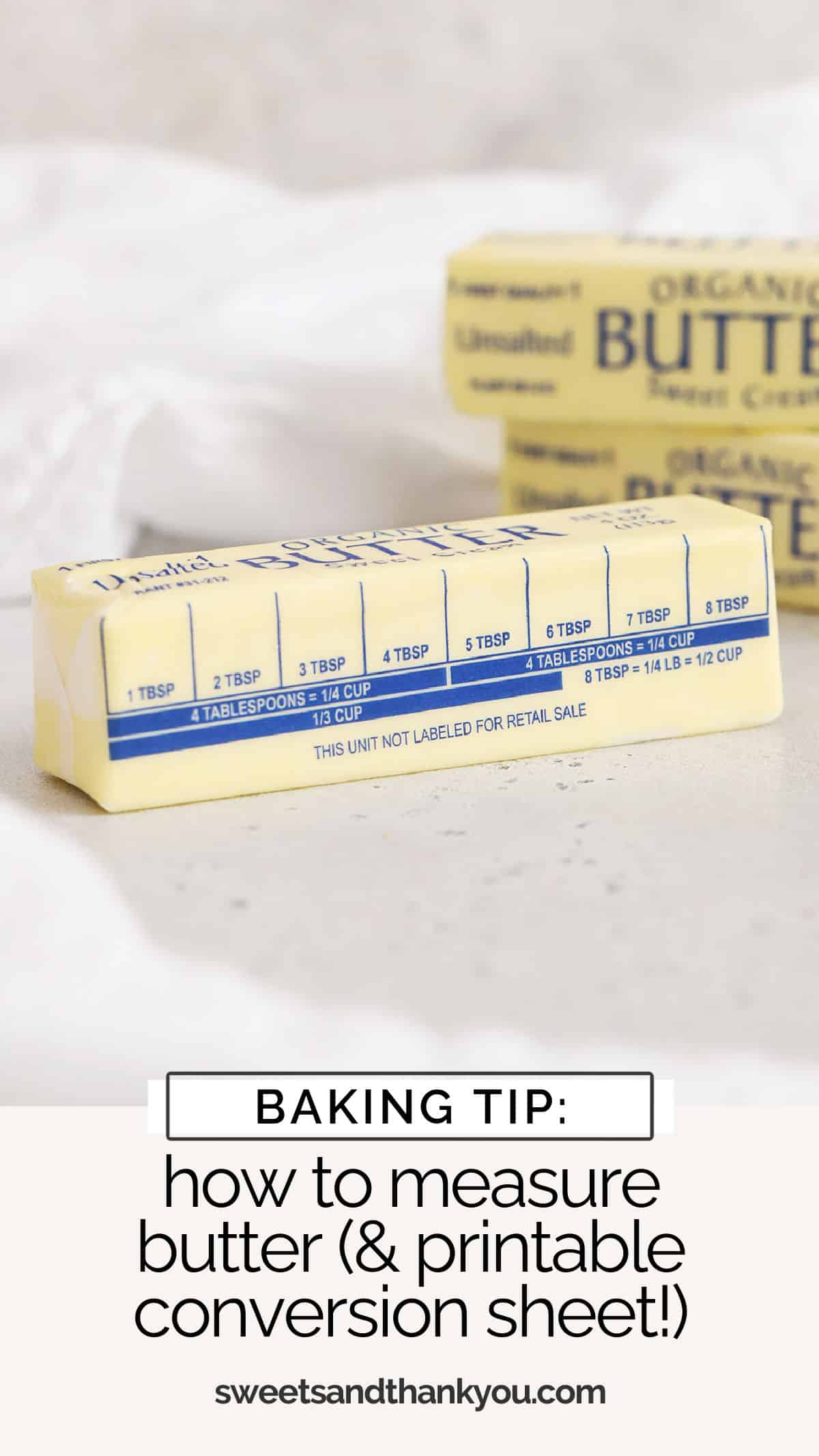
Well your butter example is pretty easy for lots of butter sold in the US. They're sold as a box of sticks each stick wrapped in thin wax paper. The wrapper has marks for every tablespoon of butter. Each stick is half a cup. A box is four sticks so it's two cups aka a pint. So if you need a cup of butter, it's just two sticks.
Which is an example of how I'd rather things just be consistent instead of mixing units. If things are sold in pints, I'd prefer everything else I work with to be in tablespoons/cups/pints. If things are sold in liters and kilograms, I'll want things sold in reasonable divisions of those as well for the given application. When you just know half a cup is one stick or you need two tablespoons aka two ticks on the wrapper, its easy. When cream comes in pint bottles and you need a cup, you know its just half the bottle.
I do agree though, things start falling apart when recipes ask for like 2/3 a cup and you've got a pint, but if you're the kind of person who can figure out pouring something to +-1mL one could also learn how to pour just about 2/3 a cup every time.
So hold on… butter is sold in sticks, marked in tablespoons, collected in boxes and split into cups?
This is great work, you’re a creature after my own heart!
This thing about cups is that 50g of flour = 50g of butter but 1 cup of flour does not equal 1 cup of butter. For me cups make sense for liquids but not for solids.
Cups are a volumetric measurement, not a mass measurement. 1 cup of flour == 1 cup of butter in the same way that 500mL of flour == 500mL of butter. You just don't normally measure flour in mL.
This is confusing because there are fluid ounces (usually labeled as FL OZ) which are a measurement of volume and are subdivisions of cups (a tablespoon being 1/2 FL OZ, 8 FL OZ in a cup) while there are also just ounces (OZ) which are a subdivision of pounds which is a measurement of weight. Which, weight and mass aren't necessarily the same things.
Because cups are a volume measurement, 1 cup of brand X flour might be a different amount of grams than 1 cup of brand Z flour. Still though, 1 cup brand X == 1 cup brand Z == 1 cup butter == 1 cup maple syrup, when measuring in cups. Different amounts of mass, same amount of volume. Loads of people cooking at home don't really care that much, or they'll just standardize on one brand of flour so its pretty close every time. Or for the majority of the dry goods for baking they'll end up buying some form of mix to use that's already measured they just need to add butter/oil/eggs/water/whatever. Professional bakers and those who really care will use scales and go by mass/weight for their measurements and not by "cups" for things like flour.
Here's an example photo of a pretty typical stick of butter:
They'll pretty much always have marks for tablespoons. Some of these other markings on the wrapper will vary from brand to brand. Each stick is 8 tablespoons, which is 1/2 a cup. They are then sold in a box of 2-4 sticks, which is either 1 cup or 1 pint (a pint being 2 cups). Like this:
I greatly prefer this pre-graduated way of selling a product like this which is pretty much the standard of normal butter sold. There are other butters and margarines which are sold in tubs or odd sized blocks, but those are usually marketed as "spreadable" butters or have things like honey or other stuff mixed in and really more like spreads rather than stuff you'd normally cook with. Not that you need imperial units to have pre-graduated packaging though, just saying its nice having it.
Its bad when a recipe calls for like 1 cup of peanut butter which is sold in jars by weight. Absolute mess trying to measure it by volume.
Cinnamon sugar is very tasty on toast. I just picked up their Maple Me Crazy, it's nice to just quickly spread on a waffle when in a hurry to get out the door. Butters with herbs is pretty common, it's nice in a dinner roll or something like that. This isn't the only brand that makes products like this.
Meanwhile, back over here in Europe where we are clearly in the dark ages of culinary-tech if we want something sweet and buttery we have a brioche with confiture and butter. Or a scone with jam and clotted cream. Or a Swedish cinnamon bun. :)


I do not understand cups!