Of course we do, we were doing them until about the mid-70s and then the ultra-wealthy figured out how to game the system and we got “Greed is Good” Geckos running things since.
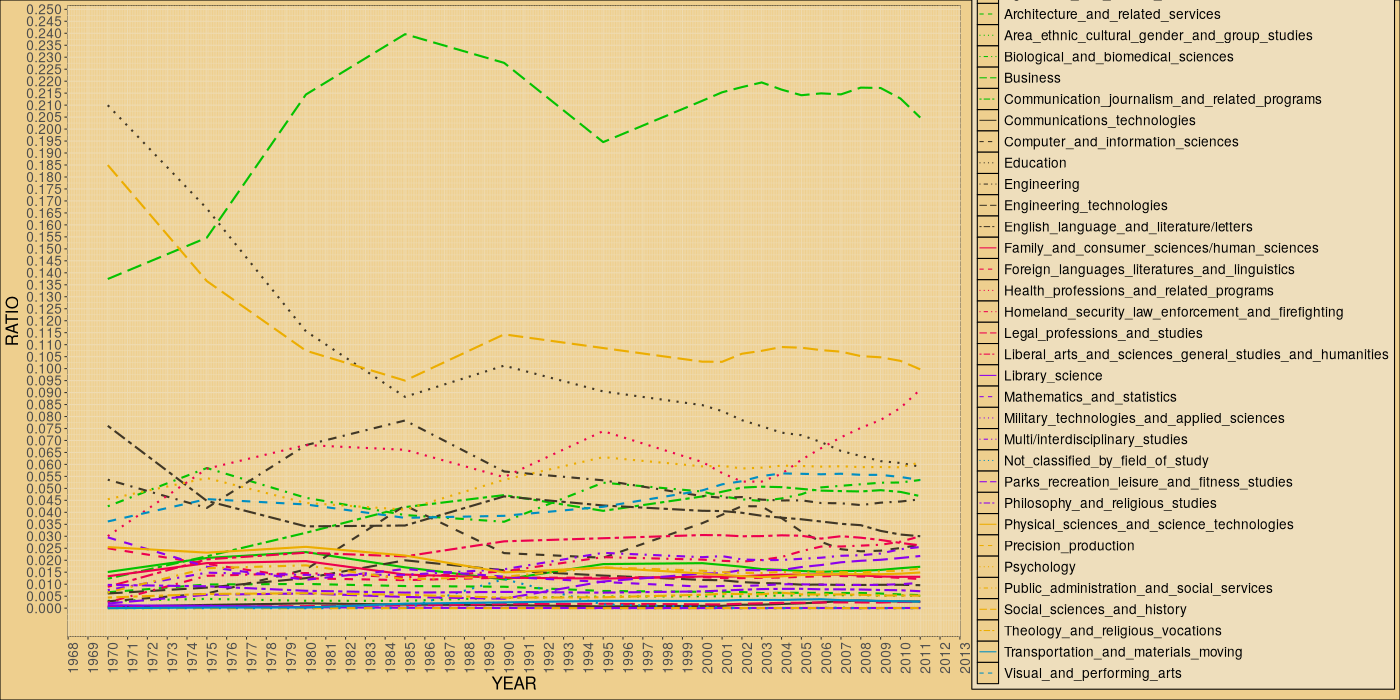
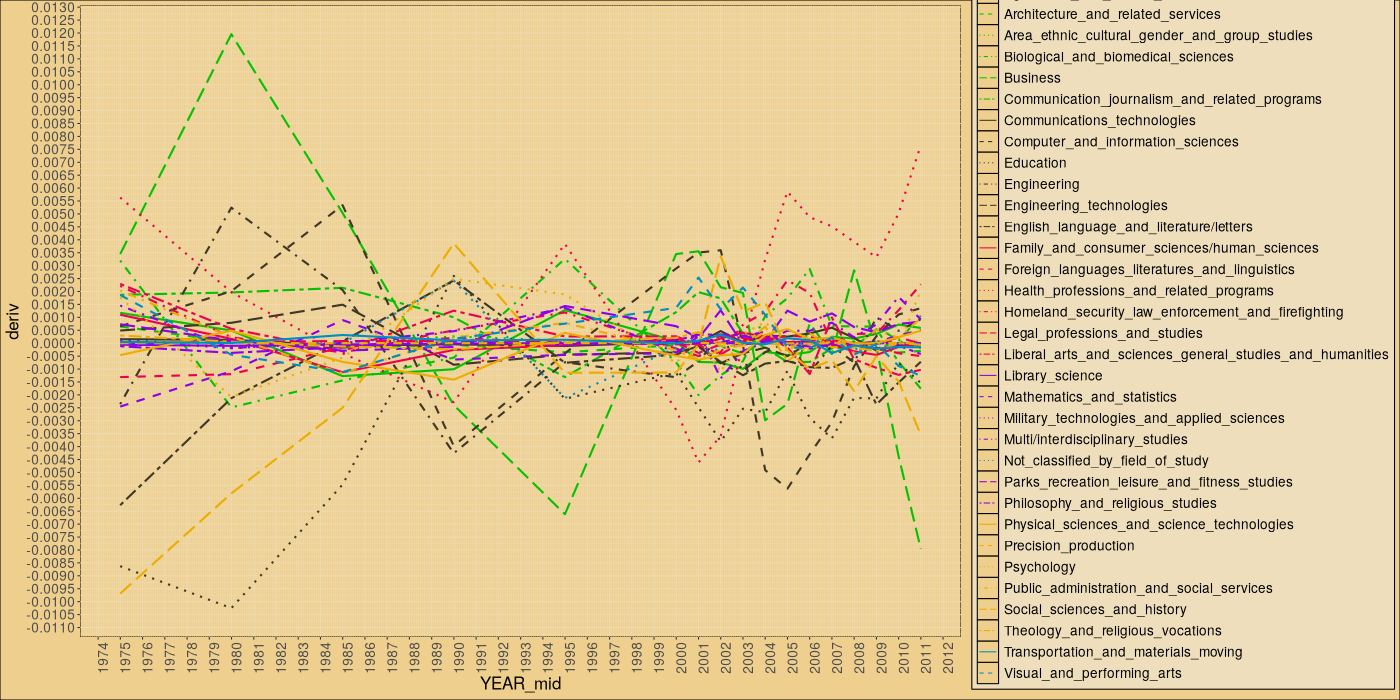
And, in case anyone needed proof, this is reflected in the US degree-completion-data, when measured as a percentage (https://galacticbeyond.com/two-percent-programmer/plots/over...), and when measured as a derivative of percentage (https://galacticbeyond.com/two-percent-programmer/plots/deri...). That green top-line, is business-majors, and those two lines that declined from top to average are social-sciences and education (all data from 1970 to 2011). In 1970 1 in 10 graduates were in business, 1 in 5 were in education and in social sciences. By 2011, 1 in 5 (or 2 in 10) were in business, and 1 in 10 were in social sciences and 1 in 20 were in education. Healthcare went from 3 in 100 to 1 in 10.
> and we got “Greed is Good” Geckos running things since
This phrase is the opposite of an exaggeration. It sounds like it should not be true, but it really, really is. To be fair though, if you told me in 2015 what the headlines for the 2020s would look like, I would assume you are some kind of satirist or comedian.
What do you mean "of course we do"? Take education for example. Even in the 70s it was recognized as nothing better than something that create pencil pushers for the government and businesses..If we have more funds, we would just do more of the same...
So, take a look at my previous comment (I am sibling, not parent). The pencil pushers are still being manufactured by the educational system itself, but they major in Business now, not Social Sciences or Education. This is due to government policy from 1980s incentivizing the creation of more business entities (they each need accountants, and managers, and so on), which caused a few generations of people to go down that route. The tragedy here is that these generations have internalized the idea that the practical and profitable is more valuable than the aesthetic and beautiful. Instead of cultivating human beings that can contemplate and appreciate, we are cultivating human beings that can analyze and optimize (this is fine, but it is possible to have too many of them, which creates a competitive dynamic that _everyone_ has to participate in, that _nobody_ can opt out of, and that most people (80% or more) -- even very capable and strategic people -- are likely to lose).
What I am saying is that the paper pushers are allocated elsewhere, they are more miserable and shallow minded now, and they have a corrosive long-term effect on society and culture, even though they contribute positively to economic growth. In way, it is trans-generational debt with extra steps.