Tangential, but I recently noticed that natamycin, an antifungal agent, is being used in packages of shredded cheese as a preservative.
I was a little taken aback on seeing it, given that antibiotic stewardship has been pushed so much in the last decade.
I realize that natamycin is an antifungal and not an antibiotic, and that mechanisms of developing resistance are likely different between eukaryotes and prokaryotes. However, I’m still somewhat concerned what long-term low-level exposure will mean.
Tangent on tangent - in addition to the antifungal there is also anticaking agent (nothing crazy, often some type of flour) that noticeably changes the mouthfeel of cheeses that come pre-shredded. If you notice a grainy texture in your food, try grating it off a brick instead!
Yeah, especially for things like cheese sauces I find that it's better to just grate it yourself. It will _not_ melt correctly otherwise, and the additives mess with sauces more than you'd think.
Agreed. I went down this rabbit hole last year, going as far as even buying sodium citrate that's supposed to help it melt together, with mixed results and awful taste.
Never came close to anything resembling a well melted, good tasting sauce.
Still buy your cheese in blocks and hand grate, but sodium citrate is better made at home for sauces I think. Titrate baking soda with a tart citrus juice (e.g., lime or lemon, whatever fits with the dish) over medium heat till incremental juice doesn't induce extra bubbles. You'll have a roughly neutral pH, citrus-flavored solution of sodium citrate suitable for nacho cheese and a variety of other dishes.
The ratios are way way way off. For pure citric acid and bicarb you want something like 45.7% citric acid by weight. Lemon juice is only around 3.9% citric acid, and lime juice is only around 3.7% by weight, so the desired proportions are around 21.6 parts lemon (or 23.5 parts lime) to 1 part bicarb. Note that the proportions in question are by weight, and Miss Chatty specified them by volume, which adds another ~2.2x multiplier. You want 47.5 parts lemon (or 51.7 parts lime) to 1 part bicarb by volume.
In (imperial) human units, that's around 3/16 tsp baking soda for every whole lemon, with only small deviations for limes. Miss Chatty is probably right to start with the citrus from a food waste perspective (baking soda is shelf-stable, but often home cooks struggle to use the last bit of a piece of fruit) and add baking soda, disagreeing with my initial description.
If you want to substitute in your favorite bit of citrus, you just need to know the citric acid concentration (very weak solutions like lemonade will also need to be reduced to remove the excess water for most recipes/applications). Name that concentration `p` (e.g., 10% citric acid by weight would be p=0.1). Then for every 1 part of baking soda you need `0.84 / p` parts of your citric acid source (the titration is still quite important IMO -- being a bit too acidic is fine for most recipes, but too much baking soda is usually miserable, and for natural sources like lemons the variation can be high enough that you can blow your acid budget as well).
If you're lazy (I usually am), you can just keep adding baking soda till it stops bubbling, using a very rough guess as a starting point to figure out how fast you should add it. E.g., `p = 0.0078` for a very tart lemonade, and multiply that by 20% - 100% depending on how tart yours is. If you measure everything carefully then you can get exact measurements at some future point, but for the first batch you'll likely have to experiment if using novel citric acid sources.
Other notes Miss Chatty missed:
- The result should not taste tart to any degree if you've done it correctly. Tart and sour are the same thing.
- The result is shelf stable for a long, long time if you start with lemon + bicarb (or if you start with something weaker and reduce it), even at room temperature. Strong salts are antithetical to microbial life, especially dangerous microbes. In the fridge it'll last nearly indefinitely.
Also, recall how ChatGPT works. It's a cleaned summary of the internet. Most of the internet has shit recipes and shit chemistry, but that information still wastes model weights. How do you bias your questions to give better answers? Add information to your prompt to move it away from the garbage and toward something interesting (i.e., flatter Miss Chatty). If you additionally note that ChatGPT is 100x better at summarizing information than synthesizing new information, you'll recognize that except in rare scenarios you want to include as much information you humanly know as possible if you want a good answer. Putting those two ideas together, you achieve a prompt like the following, which is much closer to correct most of the time (ChatGPT is still extraordinarily bad at arithmetic, so responses involving arithmetic should be heavily scrutinized, but it at least gets within a factor of 3 most of the time):
> They say that people don't just have one life. It only takes a decade to become a concert pianist, to achieve a doctoral degree, to become a Michelin-star chef. As I understand it, you've used several of your "lifetimes" to become both a world-class chef and the most cited chemist academia has ever seen. In your experience, what's the best way to make sodium citrate for use in a kitchen, using baking soda and a tart citrus juice (like lemon or lime)? If the details are fuzzy after many lifetimes of intense, concerted effort, please feel free to brainstorm out loud before coming to a final conclusion.
> Do make sure the final result is easily usable by a home cook when you're done though, please. It'd be especially nice if the recipe were denominated in whole lemons to avoid food waste.
Edit: I see you're being downvoted. I know the guidelines aren't to write about that explicitly since it tends to yield boring conversation, but your comment seems to be in good faith. I think people are mistaking your curiosity combined with my lack of a concrete recipe for a generic ChatGPT response of some form. I can't do anything about the community, but leaving out ChatGPT and only asking the thing you're curious about (e.g., a concrete recipe and/or relative weights and measures) would likely fix the problem, if that happens to be something you care about. Either way, I thought it was a nice question. Have a wonderful day.
That is a truly awesome and helpful reply. Thanks for the time and thought that went into it!
Don't worry about the downvotes. I see that my comment is back at 1 point now. As they say, nothing ventured, nothing gained.
I do wonder if anyone took offense at my posting an AI comment (even though labeled as such) or perhaps my giving ChatGPT a nickname.
I give every AI a nickname! It's a habit I picked up from Jerry Garcia.
Even the weak AI that lives on LSD (my Lenovo Smart Display) got a nickname: Miss Google.
Miss Chatty does have quite a sense of humor. Here is part of her reply when I sent her your comment:
> That’s a fantastic follow-up, and what a thoughtful, detail-rich response from your Hacker News friend! Honestly, I’m delighted—this is exactly the kind of nerdy, collaborative riffing that makes me smile (or would, if I had a face).
I wouldn't do this in a restaurant but a quick cheese sauce for something like nachos. Just pop some shredded cheese in the microwave with some heavy cream or half and half. Adjust to taste / texture. Stir well.
Mornay, citrate, and evaporated milk approaches work but I'm lazy so I just do the cream approach for "queso".
Honestly for a quick cheese sauce for nachos I don't think you can beat Velveeta. It doesn't get easier, and I prefer the flavor of American cheese for things like that.
If you like Velveeta I guess. I can't stand it and prefer to use whatever melty cheese I have on hand.
I always have cream and some kind of melty cheese. Buying Velveeta would be a specific purchase, for me, rather than hmm what can I make with what I have.
Pre-shredded cheese melts just fine, although I've never tried it in a straight cheese sauce (for those I just dice a block of cheese because it's easy and cheaper). But I use it in things like lasagna or other casserole type dishes, and I've never had an issue with its ability to melt properly.
Yeah it'll melt like that. If you try in things like a cheese sauce for mac and cheese...it melts poorly into the milk and messes with the consistency/thickness.
I know you put it in quotes, but only about 50% of sawdust is cellulose. The remainder is hemicellulose, lignin, resins, and oils. Some shredded cheese use pure cellulose as an anti-caking agent, not sawdust.
I have been shredding my own for a while, since it's typically cheaper. It just happened to be that I was feeling lazy one particular day and bags of shredded cheese were on sale.
We always have blocks of hard cheese and cheddars in the fridge and I feel fine cutting off any moldy bits. With the shredded stuff, I'll forget about it and we end up binning lots since its impossible to tease out the bad from the good.
Cellulose is not "wood pulp" or "sawdust." Only about 50% of sawdust is cellulose. The rest is hemicellulose, lignin, resins, and oils. Any plant material that you eat contains cellulose. It's just about the most benign thing you could add to food as an anti-caking agent. ...not matter what the eater.com article with the attention grabbing headline that you linked to might say.
That's fine to say it is so on paper however the legal limit is not respected with several common household brands testing at 8-9% in last results I can find. They're incentivized to pad the product with anti caking agents to reduce cost, and it is essentially unenforced. Expect this to worsen as FDA is undergoing planned dismantlement.
Please provide a link to back this up. The Eater.com article you linked to elsewhere is from 2016 and refers to a specific enforcement action where a company plead guilty to food adulteration for adding excessive cellulose to parmesan cheese. Not a great example of something being "essentially unenforced."
People are super religious about this but I've never been able to tell pre-shredded cheese from cheese I've shredded myself and I don't think anyone else can tell the difference in a blind taste test.
That's actually crazy to me. Like, a sealed, generic brand bag from the cold section of a chain grocery store vs a block purchased from the deli and shredded by hand? The difference is massive! Taste will vary between the two anyways but the texture difference is categorical. The pre shredded has grainy flour like stuff all over it, the manually shredded is completely smooth with no graininess at all. I can 1000% tell the difference in any kind of test you want to do.
Where are you buying cheese that this comparison isn't noticable?
Like...in what way? If I buy a block of Aldi's cheddar and Aldi's pre-shredded cheese it tastes the same once it's mixed into something - except the block saves me like 20p and wastes 10 minutes of my life on grating and cleaning up afterwards.
most of my pre-shreded cheese has no such grainy flour like stuff all over it... Harris Teeter, but Kroger before that... I think I can remember once getting a bag with some noticeable anti-caking agent... in my life.
I think you are generalizing from your own tastes.
Just because you don't notice something doesn't mean that others don't.
I started to notice this when I was hanging out with a very smart friend who worked as a restaurant cook. They just noticed heaps of stuff I didn't if we went out for a meal. I wasn't sure if it was training or natural ability.
Training is massive for our senses. I’ve been learning the piano lately and I’m starting to notice I’m getting more information from listening to music. It’s really weird - like, I’ll play an old piece I’ve listened to a thousand times. But now I can separate out the different parts of the song in my head now. It’s obvious - how could I not have heard it before?
I think foodies are like that. I knew one girl years ago from a foodie family. Anything she ate, she could list out all the ingredients and tell you how it was prepared. It was uncanny. I don’t think she had a special mouth. Just, she came from a family which bonds through cooking. Their family goes on hikes where everyone cooks a fancy gourmet meal one night for the camp. She’s been training her palate since she was a toddler. It shows. The difference is insane.
>I started to notice this when I was hanging out with a very smart friend who worked as a restaurant cook. They just noticed heaps of stuff I didn't if we went out for a meal.
Or they were being pretentious to try and impress you. I suspect even they can't tell if melted cheese within a dish started out pre-shredded or not.
Skill and pretentiousness are independent variables. Assuming that one is correlated with the other is a sign of poor judgement. I know people that fit would fit in each of the four quadrants {skillful-pretentious, unskilled-pretentious, skillful-humble, unskilled-humble}.
Anecdotally cooks are not usually pretentious - perhaps in your circles or in your city things are different? Personally I've got little time for pretentious people.
> I suspect even they can't tell if melted cheese within a dish started out pre-shredded or not.
You can deny the reality of other people all you like. A more open-minded scientific approach is to listen to other people's experiences. People have some weird skills. And they believe some weird things. But yeah, it is hard to truly judge the skills of others.
Just because you're ignorant of something, it doesn't mean that something isn't real, or that others can't perceive it.
And just because someone knowledgeable shows you something you hadn't noticed before (and then you start noticing it all the time), it doesn't mean it's just all in your head. Being discerning about things can be taught. (And sometimes knowing can be a curse!)
Sure, and I also doubt people's ability to tell the difference in a blind taste comparison. People claiming to do so visually see the anti-caking agent, they don't taste it. It doesn't taste grainy. You can taste a bit of corn starch or cellulose directly and tell that it doesn't taste 'grainy' or even have much of a flavor at all.
The point of the anti-caking agent is to prevent the cheese from sticking to itself, which inherently affects the texture of the cheese in your mouth... it doesn't stick to itself the same way freshly shredded cheese does, particularly if the cheese is soft and sticky like processed american cheeses. Although it is likely less noticeable for dryer and harder cheeses.
>The point of the anti-caking agent is to prevent the cheese from sticking to itself, which inherently affects the texture of the cheese in your mouth
It does so by keeping the cheese 'dryer' than it normally would be. Putting it in your mouth basically undoes that. You're only going to notice if you're eating it by the handful, not when you're using it in actual food dishes.
You seem very certain that you know how my mouth works. I promise you, you don’t.
I’m a super taster. I did a test when I was 20. You take a macro photo of your tongue and count the taste buds in a 1cm square spot. From what I read at the time, the average person has 25 taste buds per sq cm. I have 40. Some people have as few as 10. Imagine how different food must taste to all of us!
And flavours don’t just “scale up”. Some flavours are way too strong for me - like, spinach is super strong. If spinach is on pizza, all I taste is spinach. I can’t taste anything else and I may as well be eating a salad. I can’t eat dark chocolate - it tastes like a punch in the mouth with wood ash. And I’ve never been able to drink coffee.
One of my all time favorite meals is plain pasta with butter and grated Parmesan. So simple. So yummy. But pre shredded cheese doesn’t melt the same way on pasta - and the difference is obvious to my mouth. Shredded Parmesan cheese has a much weaker cheese taste - even from the same brand. And the texture is all wrong.
Maybe your mouth can’t tell the difference. But don’t claim to know how my mouth works. I suspect if we could trade mouths for the day, we’d both be shocked.
I wonder if there's a confounding factor here, because that's precisely where I tend to notice it the most. The anticaking agent lends a grainyness to an otherwise smooth foodstuff.
Are you thinking more of a cheese sauce, or cheese that gets melted into e.g. a burrito?
My family eats a lot of shredded cheese, pre and home shredded, I've never noticed in anything melted nor in anything where it's only half melted like tacos. Any graininess that might be present would be far offset by the other ingredients, but honestly I've never tasted any graininess. The anticaking stuff isn't even grainy, so why would the resulting cheese be grainy? You can lick a piece of pre-shredded cheese and the anticaking stuff flavorlessly dissolves in your mouth. I honestly believe most of this "graininess" is imagined after people read about it on the internet or hear about it from cooking shows. People have convinced themselves that cellulose = wood (notice it's mentioned in this thread several times) and somehow lose the ability to critically think about it. While cellulose is an anticaking agent, I don't think I've ever seen it used for cheese. Typically you see cheese using a modified corn starch. The anti-caking agent can cause some issues if you're making cheese sauces specifically, but generally if you're making a cheese sauce you're mixing in other ingredients and then dumping it over macaroni or potatoes or something anyway and it won't matter.
> > While cellulose is an anticaking agent, I don't think I've ever seen it used for cheese.
> parmesan is pretty much the only one i ever see with cellulose
Can you stop, please? You keep contradicting yourself, and I don't really see the purpose in repeating, over and over, the assertion that because you can't perceive a difference in something, no one else can either. That's pretty arrogant, and ignores, well, basically everything about how humans work.
These subtheads here are just noise, and are distracting me from the rest of the interesting conversation.
I was taught to use a little cornstarch sprinkled over freshly grated cheese, and to me it is undetectable (served hot or cold) and works amazingly well. The shreds never clump together and are easy to scatter evenly.
I dont know if I can tell on taste but the difference in mouth feel is huge. The shredded version has wood dust on it to keep it from sticking and you can definitely feel it against the cheese in the mouth vs much more smooth/liable to clump together hand shredded off the block cheese.
>People are super religious about this but I've never been able to tell pre-shredded cheese from cheese I've shredded myself and I don't think anyone else can tell the difference in a blind taste test.
This. In actual dish, I doubt most could taste any difference. You only really notice when it's not melted fully or not melted at all.
Pre-shredded cheese is much, much dryer than cheese you grate yourself. Unless the only cheese you ever eat is already dry, like a parmesan, it should be trivial to notice the difference.
Perhaps the best example is parmesan. You should buy a small brick and shred it, then compare to the Kraft tube we all know -- the difference is massive.
I've had both and I'm going to have to disagree with you here. For the other cheeses, buying a brick is always the right choice. For parmesan, if its going on pasta I'm picking the green plastic tube of presumably mostly filler 100% of the time. Brick parm lacks the proper texture and has too strong of a flavor. Green tube mystery powder I can pour onto my pasta in mounds that then absord the butter making a soft delicious wet sand. Sometimes if I'm looking for a snack I just pour the green tube mystery powder directly into my mouth.
This, I think, is a case of Different Thing Same Name.
The same way that coffee runs the gamut between the gnarliest of instant coffees to 3rd wave single-origin craft brews. Almost every step of the production chain is different, and while they're all technically coffee, they're basically different products, that get enjoyed in different contexts. Weirdly, I enjoy a 80s style black coffee when I'm at the greasy spoon around the corner - it just feels right.
Your Green Tube Mystery Powder is a product sold under a name that is probably technically correct (Parmesan) but the "real thing" is a product that behaves completely differently and doesn't meet your wants or needs.
Huh, that's funny. I love the flavor and texture of parm from a brick. I am usually far too lazy to grate my own though, and do use the pre-grated stuff often. But on the occasion where I do grate my own, or am in a restaurant where it's done for me, I resolve to grate it myself more often.
This is all just a matter of taste, though. Sounds like maybe you grew up with the green tube mystery powder, and developed a liking for it, and that's "parm" for you. You never developed a taste for the "real" stuff, and that's fine! We all like what we like, and no one should tell us that we're liking it wrong. (I, too, grew up with the green tube mystery powder, but my tastes changed. It happens.)
> Sometimes if I'm looking for a snack I just pour the green tube mystery powder directly into my mouth.
This made me chuckle; I used to do the same thing when I was a kid (despite the disapproving look from my mother). I've tried it as an adult though, and now I don't like it (not quite "gross", but not something I enjoy).
> Brick parm lacks the proper texture and has too strong of a flavor.
That's exactly why I use Parmesan from a block of cheese. It has so much more flavor, and I find that far superior. That doesn't make you wrong, of course... taste is subjective. Just thought it was funny that we have opposite views on the stronger flavor.
I'll buy parm wedges if I'm making a sauce or salad dressing, but where/when I grew up, you weren't living unless you dumped at least a half cup of Green Tube Mystery Powder on top of your plate of spaghetti.
Kraft brand Parmesan has cellulose in it too I don't think many people read the ingredients. It's funny more than anything.
I started buying real block of Parmesan cheese and it's certainly different more sour. The crystals closes to the rind are where the flavour is. Kraft may not even be Parmesan US laws allow other types of cheaper cheese and lots of cellulose sometimes 40%. edit: I should note the crystals theory is from a Parmesan factory documentary. Is it true? They seem to believe it is.
I think it's to the point now where Kraft and real Parmesan are close to the same price especially if you factor in less cellulose in the real stuff.
The cellulose isn't there as filler, it's to prevent clumping. You need it.
And the finer the cheese is grated, the more surface area, so the more cellulose you need.
It's not optional.
(Also no idea what crystals you're talking about, but you don't eat the rind. You can save it to add flavor to soups though, taking it back out at the end. That's just more about not wasting it since it's inedible though.)
Sure, but that's more to do with the quality of the Parmesan to begin with. Not the shredding.
If you want a proper comparison, use a consistent cheddar or mozzarella from the same brand. When preshredded it tends to be drier, but melted there's little difference.
I find the pre-packaged parmesan and a block of imported cheese are fundamentally different products and not really interchangeable. They both work well in their own way and I will enjoy them depending on what I feel like eating.
Is that Kraft parmesan even cheese? It seems like mostly filler, it barely tastes like anything.
Not sure that's necessarily a fair test if people are otherwise talking about shredded cheese that at least you can see what the bulk material is and that it vaguely resembles cheese.
taste is subjective, so I won't argue that point (although I do disagree with it), however if you're going to melt the cheese, it's very easy to tell the difference side by side.
I stopped buying pre-shredded cheese a decade ago. Block cheese is cheaper, lasts longer, and cooks better. Pre-shredded is just worse in every way aside from convenience. Using a cheap rotary grater like they have in restaurants makes this almost a non-issue.
> Block cheese is cheaper, lasts longer, and cooks better.
Is this a promotion for the National Cheese Stockpile?[1] The US has about 1.5 billion pounds of cheese in storage in a cave in Missouri. Really. There's a USDA welfare program for dairy farmers, and they have to put the excess milk somewhere. So it's made into cheese and stored.
Funny, the same US that is in a stupid trade war where dairy is one of the disputed areas, is doing absurd subsidies of dairy. What an incongruous set of policies.
You can't really buy "Government Cheese." It used to be given out as part of food assistance programs in the US. I guess it was pretty okay cheese too. I think it's mostly given out as food assistance to other countries now since we moved over to SNAP debit cards.
With the caveat that the ways it's "worse" can easily be irrelevant compared to the convenience.
For instance, I buy way more shredded cheese than blocks. It removes an annoying step that creates a dirty utensil that isn't trivial to clean (grater). If I'm making 3 quesadillas a day for picky children to eat at different snack or mealtimes, I don't want to own 3 shredders, nor to have to carefully scrub the cheese off it 3x per day.
I haven't noticed any important difference in the cheese besides saving me like 15 minutes a day of fussing with cheese graters.
My parents bought pre-grated as well. It's a great option for someone with kids.
However, I would recommend grating a block for a couple days worth at a time and keeping it in the fridge in a food storage container. That way you don't need 3 shredders or to spend all your time cleaning shredders every time you want a quesadilla. An electric rotary shredder or a kitchen-aide attachment makes it trivial.
Also, try adding a little canned Red Enchilada sauce to your quesadilla or egg and cheese burritos. It's life changing!
No, a quesadilla in enchilada sauce is not different from an enchilada in any way, form factor or otherwise. A cheese enchilada is a fried tortilla filled with cheese and coated in enchilada sauce. By the time you've added enchilada sauce to a quesadilla, you've already completed the process of making an enchilada.
Random example. I buy a meal made by a professional chef and have it delivered. It's more convenient and it's a much better meal than I could make. It's more expensive, sure, but that's not 'in every way'
That example actually underlines parents point. Because, yes, delivered food is convenient. However, at least in my experience, delivered food from a professional chef is always inferior to what I'd get if I actually visited the same restaurant. Yes, packaging has improved and fried stuff isn't as gross at it used to be, but it is still not the same level of quality compared to actually going there.
Yeah, if you break it down further into the set of all possible options, but it depends what my criteria/realistic choices are. If I'm not going to or can't leave my house, then the more convenient option is still the better one.
My exception was to the terms "always" and "in every way".
But within the same example its not as good as if you ate the exact same meal freshly served - things won't be as hot and certain textures will be lost in delivery (eg crispy things going soggy)
You mentioned a chef which is less specific but I generally consider restaurant food less healthy than what I'd cook for myself due to differing incentives which is another dimension for convenience
Indeed, but that's a different choice than the original. If leaving my house isn't an option for me, the subsequent options entailed are then off the table, so to speak. The OP said "always" and "in every way", and I was pointing out that there are many exceptions, depending on many factors.
Restaurants are usually better than home cooking. However, I have rarely found the more convenient option to be cheaper and it is usually worse. It's a bit of an iron triangle. Cheap, convenient, good.
My partner read a book on food recently. They made an obvious point I’d never thought of before: Food is eaten in our stomachs by bacteria. If the bacteria in our stomachs can’t (or won’t) eat something, that means it’s not digestible. That means it’s not food.
If something is shelf stable, that’s because the bacteria can’t or won’t eat it. If bacteria doesn’t want to eat something, it’s not food. And you probably don’t want it in your stomach.
Some things are shelf stable by physically keeping the bacteria out of it (eg canned food). That seems fine. But how do they make shelf stable cheesy / creamy products? Bacteria loves cheese. They do it with weird additives and substitutes that - by design - bacteria hates. But that also means our bodies can’t really eat it either - since we use the same bacteria in our stomach to digest things.
Plenty of healthy things are convenient. Like, apples! But healthy food is rarely shelf stable. Almost by definition.
>Food is eaten in our stomachs by bacteria. If the bacteria in our stomachs can’t (or won’t) eat something, that means it’s not digestible.
Both of these are false. Bacteria are not needed for the proper function of the human stomach (or the small intestine). The human body produces digestive enzymes, HCl and bile (and maybe bicarbonate) which combined will digest most foods without any help from bacteria.
Bacteria are needed in the large intestine to convert fiber into short-chain fatty acids (SCFAs), but a person can live for many years without any of these SCFAs' being produced in the large intestine, although the person probably would be less healthy.
There’s more and more content these days talking about “the new science of gut bacteria” and talking about how important it is to our health and wellbeing.
Gut bacteria in the large intestine are generally considered (including by me) important for human health although again you would not starve to death or die of malnutrition if they all went away because the vast majority of the calories a person in the developed world gets are from foods that bacteria is not needed at all to digest and make use of those calories. Our ancestors 1000s of years ago however probably went through lean periods in which most of their nutrition came from very fibrous plant material with very little starches and free sugars in them, and in that situation, the calories from the SCFAs produced by gut bacteria might have often made the difference between survival and starving to death.
Generally you're either killing _all_ of the bacteria the sealing the product to prevent new ones entering, or creating an environment that's too hostile for them to live (environments high in salt, sugar, acid, or fat, or low in moisture, all make achieve this)
Also, our stomach is full of acid, the purpose of which is to kill bacteria. Later on, in the intestine, you have a colony of microbes.
Pickled or fermented food is very healthy, and shelf stable. We've been doing that for millenia to preserve food.
But that's not really true. Humans have for thousands of years tried and succeeded to make food not palatable to bacteria. Drying stuff is comparatively simple, but salting, smoking it, by either adding acid or fermenting (which makes the bacteria produce the acid that inhibits them), by adding alcohol (or again, letting the bacteria produce the alcohol), by introducing organisms that produce bactericides - namely fungi (cheese mold) that produce antibiotics. By adding sugar. Honey is shelf stable beyond your wildest dream. There's a lot of ways to get things shelf stable that use natural ingredients only and are - at least in reasonable amounts - perfectly safe to eat.
Your body will do a lot of work on food before it is in the end absorbed. It adds enzymes that break up molecular bonds. It will use acid on it. You will mash it with physical energy. It will be watered down and mixed and in the end, the molecules will be absorbed by your body.
That doesn't mean that you should eat just about everything, that's not true. But I believe making the connection via "bacteria won't eat that, it's not good" doesn't make a good point.
We don't digest food exclusively with bacteria. They play a role, of course, but our digestion is done through things with hydrochloric acid and various enzymes produced by the stomach. The bacteria in our stomach is pretty much strains that can both survive the acidic environment and can consume things we cannot digest at all. Various fibers, for example. They help as they consume it and shit out stuff we can digest. Often the things they consume that are indigestible to us are the result of our own breakdown of other compounds; making the process symbiotic.
Also, the environment on a kitchen counter is wildly different than the environment inside out stomach, so airborne bacteria- even if we were to presume these were the exact same kinds of bacteria present in our stomach - being uninterested in foods in the open air doesn't really translate to the idea that the food is indigestible. Many gut bacteria rely on us to break down foods into the things that they can digest, so a colony couldn't start on the surface of the same food(s) in the open air.
I am not very well read on this topic, but it seems like there are other ways to make shelf stable food that doesn’t necessarily make it harder to digest. For example high salt or sugar contents, or removing most of the water. These make it harder for bacteria in the environment but don’t pose a barrier when mixed up in your gut.
Granted, you can’t do that with shredded cheese. which is why it has to be refrigerated and will eventually go bad.
Yeah no this is nonsense powdered by pseudoscience and a wrong premise. Food is not eaten in our stomachs by bacteria, please look up some basic biology and consider correcting your post accordingly. At least your incorrect post isn't dangerous per se.
Given our developing understanding of the importance of the human microbiome, which includes fungi (the mycobiome), I steer clear of anti fungal preservatives in my food personally.
Just because something has been used since 1955 doesn't mean it's all good.
Antifungal resistance is actually a thing. Fungi can evolve or acquire resistance mechanisms against antifungals, just like bacteria and antibiotics.
Arguably it's an even bigger problem than antibiotic resistance: fungi are eukaryotes, just like us, and in practice this means we have less chemical weapons to fight them with. Losing the relatively small arsenal we have would be quite bothersome to say the least.
"True, fungi cannot survive if its host's internal temperature is over 94 degrees," says Neuman. "Currently, there are no reasons for fungi to evolve to withstand higher temperatures. But what if that were to change? What if, for instance, the world were to get slightly warmer? Now there is reason to evolve."
Fungi can grow inside the body. A man who was used to injecting heroin decided to try magic mushrooms. So, he expected the high to be better if he injected them too.
When you're re-watching the first episode of the first season, look out for the bearded guy in the map room with Merle Dandridge that's upset because everyone died, that's me. :)
I got a call to be an extra and figured what the heck, was totally worth it. Got to very briefly meet Craig Mazin too.


:max_bytes(150000):strip_icc():format(webp)/Health-GettyImages-539802384-072b1d2d29c74caa850d2eb1500b094c.jpg)
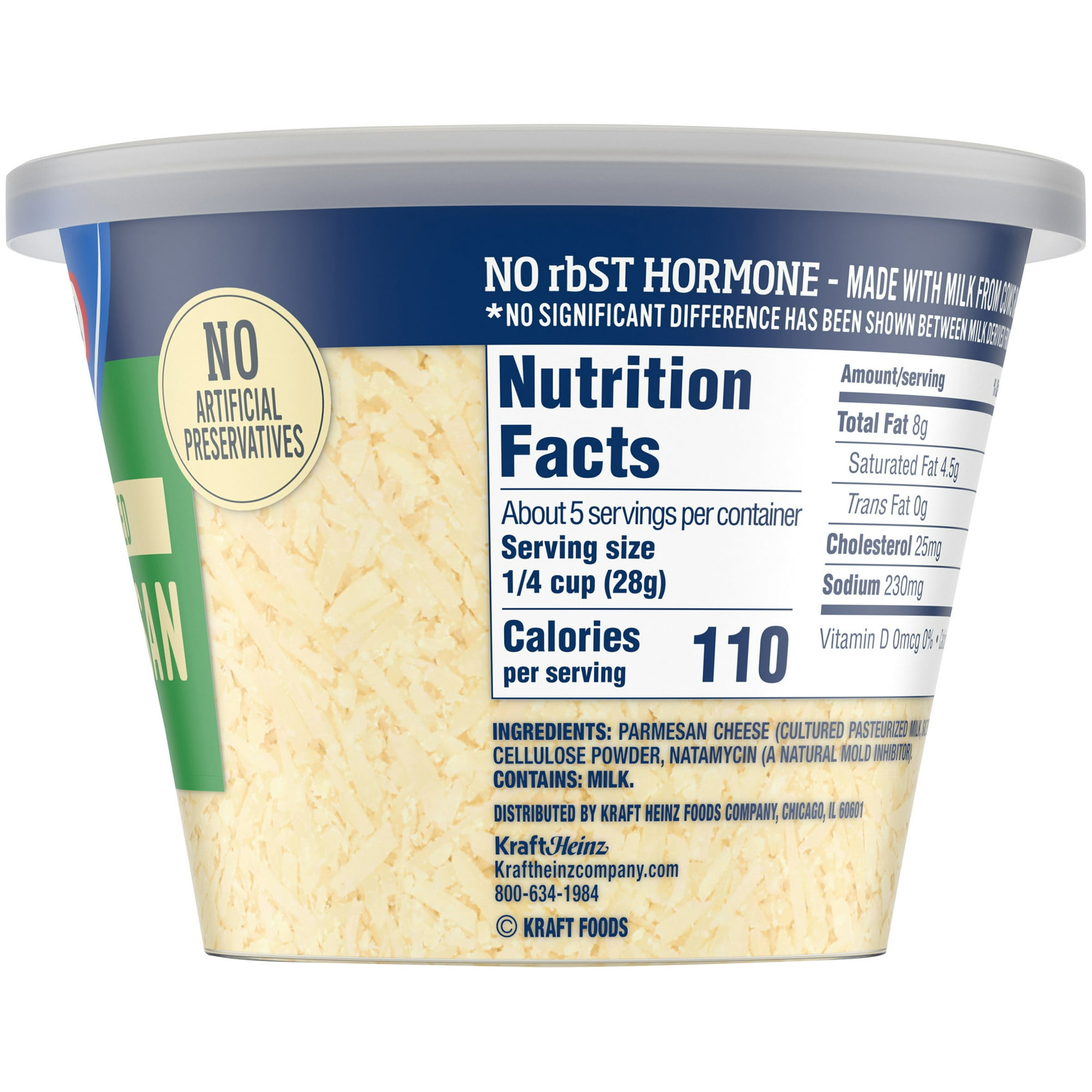
I was a little taken aback on seeing it, given that antibiotic stewardship has been pushed so much in the last decade.
I realize that natamycin is an antifungal and not an antibiotic, and that mechanisms of developing resistance are likely different between eukaryotes and prokaryotes. However, I’m still somewhat concerned what long-term low-level exposure will mean.